BTCFREE

vip
Age 2.1 Yıl
Peak Tier 1
No content yet
As time passes, soaring oil prices are becoming increasingly unfavorable for bulls~
View Original
  • Reward
  • Comment
  • Repost
  • Share
Global financial markets have started showing signs of reaching a "tipping point" ~ It's approaching the edge of collapse ~
High oil prices are weighing on inflation, interest rates won't come down; geopolitical conflicts keep escalating, sentiment continues to weaken. On the surface it looks like volatility, but underneath it's actually liquidity tightening and confidence eroding. Many people are starting to shout "collapse," but from a trading perspective, this is often a signal that trends are reaching critical nodes ~
The end of a trend is often accompanied by extreme emotions. When the ma
View Original
  • Reward
  • Comment
  • Repost
  • Share
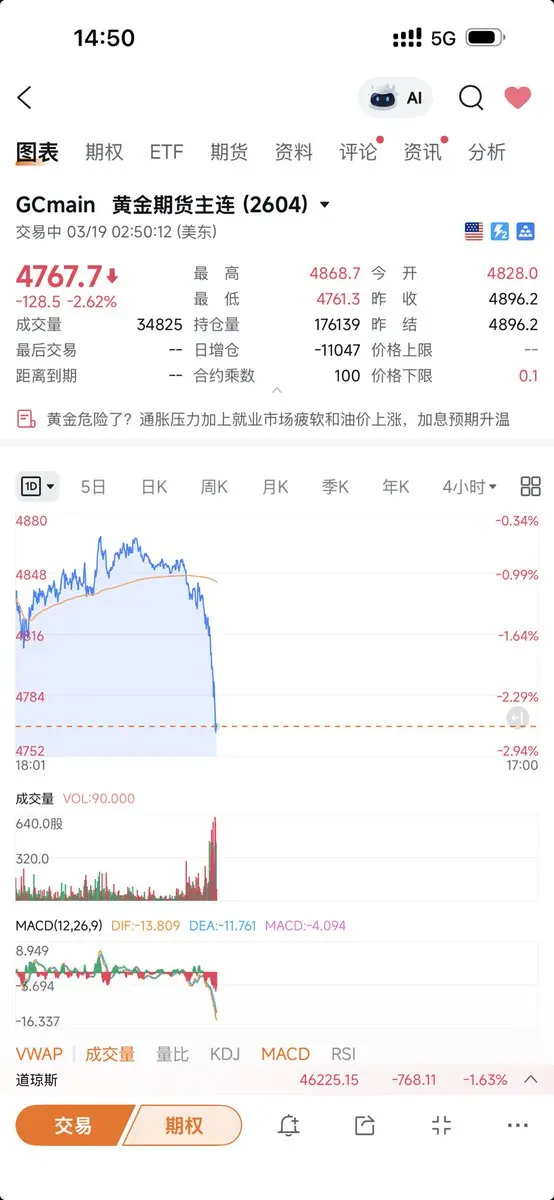
Gold #GOLD is diving again~
View Original
post-image
  • Reward
  • Comment
  • Repost
  • Share
# Bank of Japan Pauses Rate Hikes Amid US-Iran Tensions
The Bank of Japan chose to pause rate hikes against the backdrop of US-Iran conflict. On one side, JGB yields are at elevated levels; on the other, the yen has fallen to historical lows. This combination has left policy "stuck" by the macroeconomic environment~
By normal logic, a weaker exchange rate should be tightening, but the reality is that energy shocks + economic pressure have left the central bank reluctant to act rashly. This state of "wanting to tighten but unable to," is essentially when liquidity begins to become unstable.
Fro
BTC-3,02%
View Original
  • Reward
  • Comment
  • Repost
  • Share
Recent macro economic data is showing what looks like a "textbook-level stagflation warning" ~
On one hand, economic data is starting to weaken, with growth momentum cooling down; on the other hand, oil prices remain elevated, with no relief on the cost side.
Declining growth + persistent inflation = the most typical early signs of stagflation.
When the macro environment begins to deteriorate, trends often enter a phase of "back-and-forth pulling"; and in this kind of structure, the most uncomfortable scenario isn't a sharp crash, but rather choppy consolidation where prices can't rally decisi
View Original
  • Reward
  • Comment
  • Repost
  • Share
Recently this Middle East situation, in a nutshell: it's evolved from a short drama into a series~
Many people are still trying to understand it at the pace of "easing within days," but from the current intensity of the game, it's clearly entered a phase of prolonged cycles. Once the conflict loses restraint, emotions and actions will escalate, and the market won't follow short-term logic anymore~
What does this mean for trading? Simple: uncertainty is becoming the norm. Oil prices won't fall easily, inflation won't drop easily, interest rates won't ease easily, and the entire macro environmen
View Original
  • Reward
  • Comment
  • Repost
  • Share
These past couple of days, the oil price narrative has honestly become a bit "magical realism"~
Middle Eastern spot crude shot to $200, while the US is still hovering around $100. At first glance, they look like two parallel worlds. But from a trading perspective, this isn't about "who priced it wrong," but rather the same risk being priced at different speeds across different markets. One is an immediate reaction to wartime sentiment, the other is inventory, transportation, and policy helping to "buy time."
The issue is that such price gaps are hard to sustain long-term. Either Middle East ri
BTC-3,02%
View Original
  • Reward
  • Comment
  • Repost
  • Share
# Current Middle East Spot Oil Prices Approach $200, While US Remains Around $100 - This Extreme Divergence Reflects Liquidity and Geopolitical Risk Fragmentation
The extreme divergence between Middle East crude and US crude isn't fundamentally about "which is cheaper" - it's about the fragmentation of liquidity, geopolitical risk premiums, and pricing systems.
On one side: "wartime pricing" with genuinely disrupted supply. On the other: "delayed pricing" still cushioned by inventory buffers, transportation logistics, and policy support.
From historical experience, such price spreads cannot pe
View Original
  • Reward
  • Comment
  • Repost
  • Share
The U.S. Producer Price Index (PPI) and Core Producer Price Index (PPI) have just been released, and it's absolutely a nightmare for the Federal Reserve.
The U.S. Producer Price Index PPI came in at 3.4%, higher than the expected 2.9%, marking the highest level since February 2025.
The U.S. Core Producer Price Index PPI came in at 3.9%, higher than the expected 3.7%, marking the highest level since January 2025.
This means core inflation has started to heat up, and here's why that's bad:
Recent oil price volatility's impact on inflation is only just beginning to show.
Unemployment has already
View Original
  • Reward
  • Comment
  • Repost
  • Share
This PPI data—Master Bao can finally avenge himself and clear his name~
View Original
post-image
  • Reward
  • Comment
  • Repost
  • Share
On the news front, Iran's state television reports that parts of the South Pars gas field have been attacked, as well as the Assaluyeh oil industry facilities.
View Original
  • Reward
  • Comment
  • Repost
  • Share
If disruptions in the Strait of Hormuz persist, agricultural commodities could indeed be on the verge of a significant rally~
Many people are focused on oil, but oil is merely the trigger. Once energy prices spike, fertilizer, transportation, and storage costs all rise across the board, lifting agricultural costs as a whole. This is a textbook example of "cost-push bull market." The 2022 cycle was essentially driven by the dual resonance of energy and geopolitical factors~
From a cyclical perspective, agricultural commodities typically lag behind energy rallies, but once the trend is confirmed
View Original
  • Reward
  • Comment
  • Repost
  • Share
As of now, an average of 635 people are being laid off daily in 2026.
To date, over 45,000 American tech company workers have been laid off.
• Amazon: 16,000
• BLOCK: 4,000
• WiseTech: 2,000
• Atlassian: 1,600
• Meta: 1,500
• Autodesk: 1,000
• eBay: 800
• Pinterest: 675
View Original
  • Reward
  • Comment
  • Repost
  • Share
Over the past two weeks, U.S. gasoline prices have surged from approximately $3.00-$3.25 per gallon to $3.854, accumulating gains of nearly 20%. Just in the past week alone, prices jumped another 6%+, pushing prices back to near 2024 highs, with some regions even approaching the extreme levels from 2022.
More critically, it's not the rise itself, but the fact that after rising, prices haven't fallen much.
From a technical structure perspective, this segment clearly represents news-driven accelerated gains, while current high-level consolidation essentially reflects a repricing between bulls an
View Original
  • Reward
  • Comment
  • Repost
  • Share
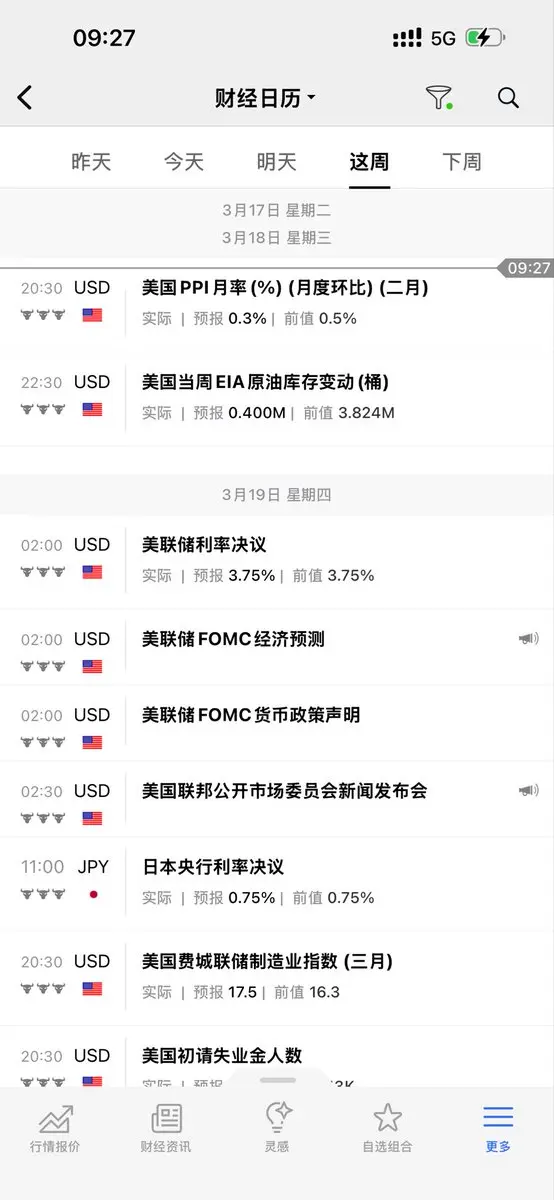
Tonight's matchup is kind of like a "central bank doubles game"~
On one side is the Federal Reserve, on the other is the Bank of Japan, with their moves coming one after another. The market finds it hard not to be volatile~
The key isn't about "rate hikes or cuts," but about expectation gaps. If the Fed leans hawkish while the BoJ wavers between inflation and the yen, then forex, stocks, and even Bitcoin #Bitcoin will get pulled back and forth. Especially when there are marginal shifts in liquidity—once divergences appear, it becomes a classic "volatility amplifier."
From a technical structure
BTC-3,02%
View Original
post-image
  • Reward
  • Comment
  • Repost
  • Share
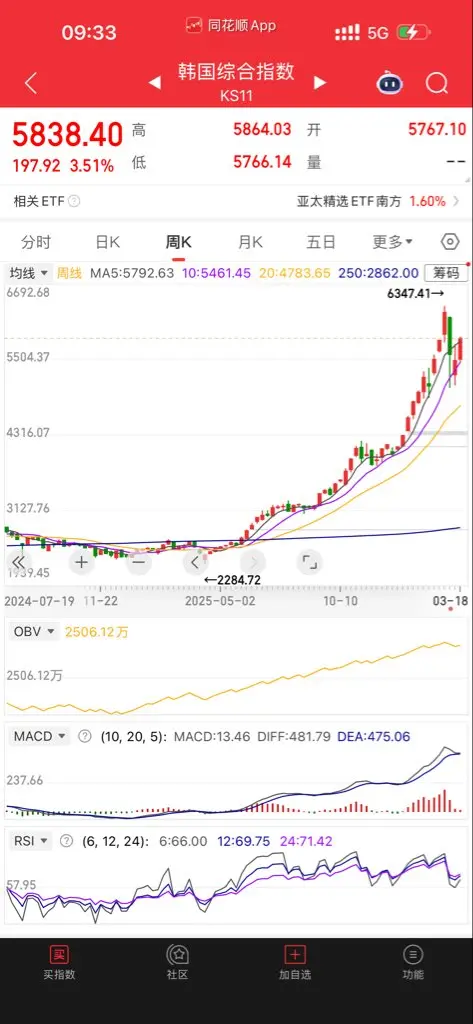
Take a look at the Korean #KS11 index on the weekly timeframe—it's got a bit of that "walking a tightrope at heights" vibe to it~
From a structural perspective, the earlier rally looks more like an emotion-driven acceleration phase rather than a solid impulsive wave. According to wave theory, after this kind of upthrust, the market typically faces a "sentiment payback" round. The gap left around 4300 is like an unpaid bill on the ledger—the market will likely come back to reconcile it~
Dow Theory also spells it out pretty bluntly: when a trend enters its final stage, prices start showing diver
View Original
post-image
  • Reward
  • Comment
  • Repost
  • Share
According to reports, Trump plans to control the Strait of Hormuz with "military force." The war may last much longer~
Once this news broke, the market's first reaction boiled down to basically two words: extended risk~
If the situation truly evolves toward "military intervention," then the uncertainty in the Strait of Hormuz will be hard to dissipate in the short term. What does this mean for the market? It's simple: risk premium won't fall quickly.
From a macro transmission perspective, once the strait faces prolonged tension, higher oil prices → sticky inflation → difficult rate cuts. This
View Original
  • Reward
  • Comment
  • Repost
  • Share
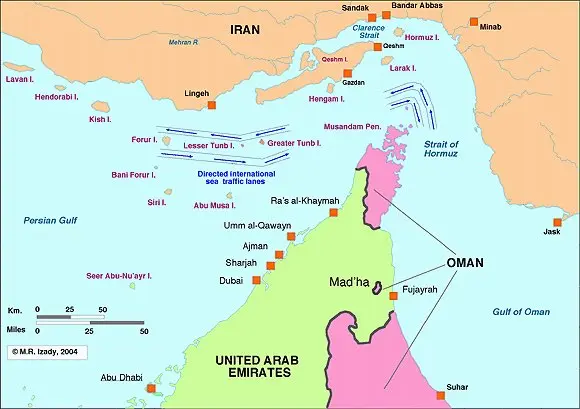
# Strait of Hormuz Navigation Chart
The core shipping lane is located within the territorial waters north of the Musandam Peninsula of Oman. It consists of two single-direction shipping lanes, each 3.2 kilometers wide, and a 3.2-kilometer-wide neutral buffer zone.
View Original
post-image
  • Reward
  • Comment
  • Repost
  • Share
The market's focus right now is actually very clear——everything points to the Strait of Hormuz ~
This isn't just a geopolitical issue; it's the "valve" of global energy. Once any disruption occurs, oil prices, inflation expectations, and interest rate paths will all be affected, subsequently impacting the overall rhythm of stocks and crypto markets.
From a trading perspective, short-term K-lines are actually less important; the key is whether this transmission chain continues.
As long as uncertainty over the Strait remains, the market will struggle to truly settle down ~
View Original
  • Reward
  • Comment
  • Repost
  • Share
This Middle East situation, if it really evolves into "sustained disruptions on the energy side," the impact on semiconductors and the Nasdaq is actually beyond just sentiment levels now~
Many people are fixated on K-lines, but they're actually ignoring the deeper transmission mechanism. Once crude oil maintains elevated levels, it essentially adds an "invisible tax" to global manufacturing. For high-energy-intensive production like TSMC and Samsung, electricity costs, gas, and transportation expenses all rise simultaneously, gradually eroding profit margins. These changes won't reflect immedi
View Original
  • Reward
  • Comment
  • Repost
  • Share
  • Pin