






User_any

vip
No content yet
Growth Points Lucky Draw
Invite friends to join and win great prizes!
https://www.gate.com/activities/pointprize/?now_period=17&refUid=11796723
post-image
  • Reward
  • 18
  • Repost
  • Share
Crypto_Buzz_with_Alexvip:
your content is amazing this is rare to see such kind of clarity amazing
View More
  • Reward
  • 17
  • Repost
  • Share
Crypto_Buzz_with_Alexvip:
your content is amazing this is rare to see such kind of clarity amazing
View More
The Gate Convert & Auto-Invest Rewards Season is now live. Enjoy full refunds on Auto-Invest trading fees. https://www.gate.com/campaigns/4318?ref=BVVEVQ9c&ref_type=132
post-image
  • Reward
  • 17
  • Repost
  • Share
Crypto_Buzz_with_Alexvip:
your content is amazing this is rare to see such kind of clarity amazing
View More
Bitmine Immersion Technologies Inc., led by Chairman Tom Lee, announced on March 23, 2026, that it now holds 4,660,903 ETH. This brings its total crypto, cash, and "moonshot" investments to $11 billion. This is the latest milestone in the company's aggressive strategy of adopting Ethereum as its primary treasury asset, making it the largest institutional ETH holder in the market.
Bitmine (BMNR) Ethereum Treasury Reaches 4.66 Million Tokens: Total Assets Exceed $11 Billion!
Bitmine Immersion Technologies, one of Ethereum's largest institutional backers, purchased an additional 65,341 ETH last w
ETH-1,94%
post-image
post-image
post-image
  • Reward
  • 19
  • 1
  • Share
Crypto_Buzz_with_Alexvip:
your content is amazing this is rare to see such kind of clarity amazing
View More
Strategy, one of Bitcoin's largest institutional backers, continues its relentless buying under the leadership of Michael Saylor. In the first two weeks of March (March 2-15), the company spent approximately $2.85 billion purchasing a total of 40,331 BTC. This figure has been reported and confirmed in several news outlets as "40,000 BTC" and "$3 billion."
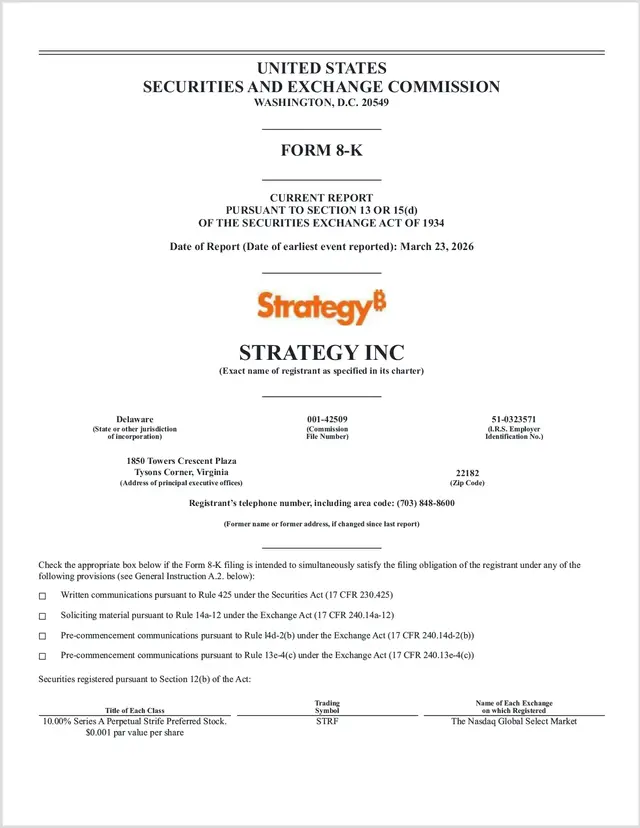
Details from official SEC Form 8-K filings are as follows:
- March 2-8: 17,994 BTC, $1.277 billion (average $70,946/BTC)
- March 9-15: 22,337 BTC, $1.568 billion (average $70,194/BTC)
The total cost during this two-week period was $2.845 bill
BTC-2,12%
post-image
post-image
User_anyvip
#SaylorReleasesBitcoinTrackerUpdate
Global crypto markets are being shaped in the first quarter of 2026 not only by price movements but also by a new narrative driven by institutional strategies. At the heart of this narrative is Michael J. Saylor. Saylor's latest Bitcoin Tracker update represents much more than just a technical data release: it's a signaling mechanism that monitors the pulse of the market, and often even determines its direction.
These updated "tracker" data shared by Saylor reveal that Strategy Inc.'s Bitcoin accumulation strategy continues unabated. As of March 2026, the company's reserves have exceeded 761,000 BTC, reaching a value of approximately $52 billion. This magnitude is not just a company balance sheet; it also signifies a significant portion of the Bitcoin supply being concentrated in institutional hands.
However, the real significance of this update lies not in the numbers themselves, but in its timing. Because an examination of Saylor's past communication patterns shows that such tracker releases often signal new purchases. Indeed, recent statements and data releases indicate that a new wave of buying is imminent.
The scale of this strategy has reached remarkable proportions. Since the beginning of 2026, the company has deployed billions of dollars in capital for purchases of tens of thousands of BTC, pursuing an aggressive accumulation policy overall. Unlike the classic "buy the dip" strategy, this approach is based on continuous accumulation regardless of price levels. In Saylor's own words, this is an approach of "buying the asset, not the time."
However, this aggressive strategy also brings significant risks. The company's average cost remains above current market prices, creating billions of dollars in unrealized loss pressure on the balance sheet. This effectively transforms Strategy into a leveraged investment vehicle against the Bitcoin price. While this structure generates large gains when the market rises, it also raises discussions about systemic risks in downturn scenarios.
On the other hand, Saylor's long-term vision extends far beyond short-term fluctuations. Among the company's goals is a plan to reach 1 million BTC by the end of 2026. This goal is not only an institutional investment strategy but also presents an ambitious thesis on Bitcoin's role in the global financial system.
From a market perspective, these tracker updates are no longer just data points. Each update serves as a potential "preliminary signal" for investors. Therefore, every step Saylor takes has a direct or indirect impact on the Bitcoin price. The concentration of institutional demand on this scale has become a critical element reshaping the market's supply-demand balance.
In conclusion, Saylor's Bitcoin Tracker update is not just a portfolio report; it's a manifesto of the institutional crypto era. This development shows that Bitcoin has transformed into a new financial instrument, shaped not only by individual investors but also by corporate balance sheets and strategic reserve policies.
And perhaps the real question is: Is the future of Bitcoin now determined by the market, or by a few large players taking positions on this scale?
repost-content-media
  • Reward
  • 21
  • 1
  • Share
Crypto_Buzz_with_Alexvip:
your content is amazing this is rare to see such kind of clarity amazing
View More
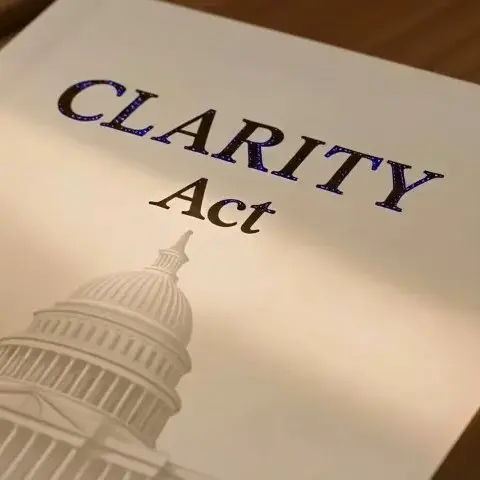
Historic Agreement on Capitol Hill
Crypto and banking sectors in the US are meeting on Capitol Hill this week. An “agreement in principle” reached last week between Senators Thom Tillis and Angela Alsobrooks and the White House has removed the biggest obstacle to the Digital Asset Market Clarity Act (CLARITY Act).
Passive yield is prohibited, while activity-based rewards (for payments, transfers, or usage) are allowed. This formula both alleviates banks' concerns about deposit flight and protects crypto innovation.
The CLARITY Act passed the House of Representatives by a large margin in 2025.
post-image
  • Reward
  • 22
  • Repost
  • Share
Crypto_Buzz_with_Alexvip:
your content is amazing this is rare to see such kind of clarity amazing
View More
As tensions escalate in the Middle East, Pakistan has stepped in with a critical diplomatic move. The Islamabad government is reportedly ready to assume a mediating role in negotiations to end the war by holding direct talks with Iranian leaders. According to diplomatic sources, Pakistan is pursuing a strategy of "quiet diplomacy" to prevent the conflict in the region from escalating into a wider geopolitical crisis. This includes increased contact with both regional actors and international powers.
post-image
User_anyvip
March 2026 marks one of the most dangerous thresholds of global geopolitics. Increasing rhetoric between Washington and Tehran and military mobility in the field are no longer just a regional crisis; It has turned into a multi-layered conflict that directly affects the global economy and security balances. Iran's latest statements clearly reveal how narrowly the possibility of a diplomatic solution is to this crisis. The Tehran administration declared that the conflicts would not end without the US lifting all sanctions and paying compensation for the damages caused by the war. While these conditions point to a de facto "preconditioned peace" model, they also show how fragile the ground of negotiation between the parties is. As a matter of fact, although the US side states that diplomatic contacts continue from time to time, Iran rejects these allegations and maintains its position harshly. Military developments in the field are progressing much faster than diplomatic discourses. While the US military fortifications for the region have increased dramatically, it is reported that approximately 3,000 Marines (US Marines) are planned to be deployed to the Middle East. This shipment is not just a defensive measure; It is also considered as a preparation for a possible operational expansion. Especially considering the increasing tension around the Strait of Hormuz, this military build-up indicates that the crisis may pass into a new phase. The epicenter of the crisis is indisputably the Strait of Hormuz. This narrow waterway, where approximately one-fifth of the world's oil supply passes, has become one of the most sensitive nerve endings of the global economy today. Evaluations that Iran has placed at least 12 sea mines in the strait, according to US officials, show that this line has now turned into not only a political but direct military risk area. Statements from the Iranian front, on the other hand, magnify this threat even more. Tehran openly declared that in case of any attack, it could completely stop the maritime traffic by mining not only the Strait of Hormuz, but also the entire Gulf. This scenario means a “energy shock” for the modern world economy. As a matter of fact, the International Energy Agency warns that the effects of the current crisis reached a level that could even overcome the oil crises of the 1970s. The reflection of these developments on the markets was not delayed. While there was a sharp rise in oil prices, global inflation expectations started to escalate again. As the pressure on supply chains increases, cost shocks become inevitable in energy-dependent sectors. However, this crisis is not only economic; It also creates a psychological break. Because investors and states are no longer trying to protect themselves from uncontrollable risks, but from uncontrollable scenarios. At the point reached today, the picture is clear: diplomacy and military preparation are progressing at the same time, but the positions of the parties are getting harder. The fact that Iran does not take a step back in sanctions and compensation claims, and that the US increases its military presence, shows that it is very difficult to solve this crisis in the short term. As a result, the events are not just a regional conflict; A stress test that reveals the fragility of the global order. And perhaps the real question is: Will this crisis remain as a controlled power struggle, or will it be a harbinger of a bigger break that will deeply shake the world economy, starting from the Strait of Hormuz?
#TrumpIssues48HourUltimatumToIran
#MiddleEastTensionsTriggerMarketSelloff
repost-content-media
  • Reward
  • 22
  • Repost
  • Share
Crypto_Buzz_with_Alexvip:
your content is amazing this is rare to see such kind of clarity amazing
View More
The silver market experienced one of its sharpest movements in 2026. Prices, which peaked at $121.64 on January 29th, have fallen to around $65 today. This represents a drop of approximately 46% in just 53 days. 🤔
#GoldSeesLargestWeeklyDropIn43Years
User_anyvip
Another chapter has been added to the ironic pages of global financial history: In an era where safe havens are shaken and uncertainty has caused a loss of sense of direction, gold has collapsed, seemingly denying its own role. March 2026 marks a turning point not only for geopolitical tensions but also for market psychology, as gold experienced its sharpest decline since 1983, with a weekly drop of approximately 10-11%.
The most striking aspect of this collapse is its timing. Gold, normally expected to rise during periods of war, crisis, and uncertainty, instead lost value in the shadow of escalating conflicts in the Middle East. The sharp rise in oil prices and turmoil in energy markets overturned classic safe-haven behavior. Brent crude rising above $110 and the resurgence of global inflation fears were among the main dynamics driving investors away from gold.
In reality, this decline reflects a much deeper economic truth than the geopolitical chaos visible on the surface. Gold, by its nature, is a non-interest-bearing asset. Therefore, gold is rapidly losing its appeal in an environment where global central banks are signaling "higher interest rates for longer." The US Federal Reserve's postponement of interest rate cut expectations and rising bond yields have effectively pushed gold out of the system.
Markets faced multiple shockwaves simultaneously. On one hand, energy inflation caused by the war, and on the other, sales driven by liquidity needs… The shift of large funds and investors towards cash in the face of increased volatility created additional pressure on gold. Some analysts even describe this process as a "liquidity crisis reflex": Investors are selling their most liquid assets, namely gold, to cover their losses.
Even more striking is this "reversed world" in market behavior. The rise of risky assets like Bitcoin and the fall of gold during the same period show that financial balances are being rewritten. This reveals that investors are no longer acting according to classic assumptions; even the definition of a safe haven is changing.
However, this dramatic decline is not the end of the long-term story. On the contrary, many analysts see this sharp pullback as a "correction." The rapid decline of gold prices from the $5,500 level to the $4,400 range is interpreted as the release of excessively inflated expectations. Record levels of global debt, the sticky nature of inflation, and the persistence of geopolitical risks suggest that gold could regain strength in the long term.
In conclusion, the hashtag "#GoldSeesLargestWeeklyDropIn43Years" describes not just a price movement, but a paradigm shift. This decline symbolizes a period where investors' trust, risk, and value perception are being questioned, not gold itself. And perhaps the real question is: Did gold truly lose value, or is the world simply no longer functioning as it used to?
#GoldSeesLargestWeeklyDropIn43Years
$PAXG $XAUT
repost-content-media
  • Reward
  • 22
  • Repost
  • Share
Crypto_Buzz_with_Alexvip:
your content is amazing this is rare to see such kind of clarity amazing
View More
Tokenization is no longer the future, it's today's infrastructure
For many years, the real estate sector was an investment area defined by high barriers to entry, low liquidity, and complex transaction processes. However, by the mid-2020s, this structure began to change radically. At the heart of this transformation is RedSwan's tokenization of over $5 billion worth of commercial real estate on the Hedera network.
This development is not only a company success; it is also considered a critical threshold where the Real World Assets (RWA) narrative materializes.
1. What Does the Data Itself Say?
HBAR-0,36%
XLM1,17%
post-image
  • Reward
  • 22
  • Repost
  • Share
Crypto_Buzz_with_Alexvip:
your content is amazing this is rare to see such kind of clarity amazing
View More
March 2026 marks one of the most dangerous thresholds of global geopolitics. Increasing rhetoric between Washington and Tehran and military mobility in the field are no longer just a regional crisis; It has turned into a multi-layered conflict that directly affects the global economy and security balances. Iran's latest statements clearly reveal how narrowly the possibility of a diplomatic solution is to this crisis. The Tehran administration declared that the conflicts would not end without the US lifting all sanctions and paying compensation for the damages caused by the war. While these con
post-image
post-image
post-image
  • Reward
  • 18
  • 2
  • Share
Crypto_Buzz_with_Alexvip:
your content is amazing this is rare to see such kind of clarity amazing
View More
#SaylorReleasesBitcoinTrackerUpdate
Global crypto markets are being shaped in the first quarter of 2026 not only by price movements but also by a new narrative driven by institutional strategies. At the heart of this narrative is Michael J. Saylor. Saylor's latest Bitcoin Tracker update represents much more than just a technical data release: it's a signaling mechanism that monitors the pulse of the market, and often even determines its direction.
These updated "tracker" data shared by Saylor reveal that Strategy Inc.'s Bitcoin accumulation strategy continues unabated. As of March 2026, the c
BTC-2,12%
post-image
post-image
post-image
  • Reward
  • 19
  • 1
  • Share
Crypto_Buzz_with_Alexvip:
your content is amazing this is rare to see such kind of clarity amazing
View More
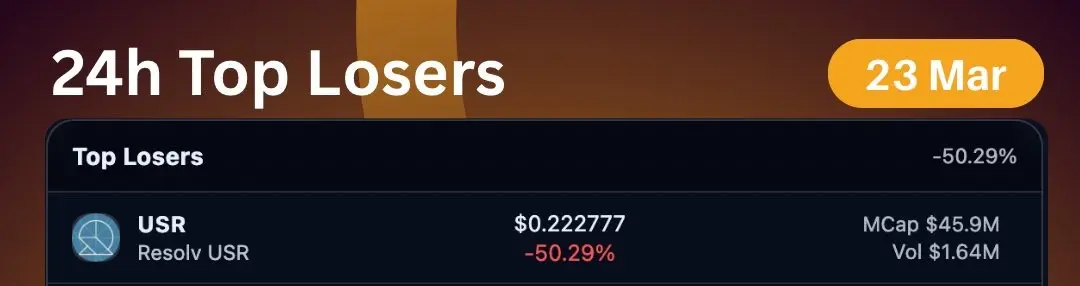
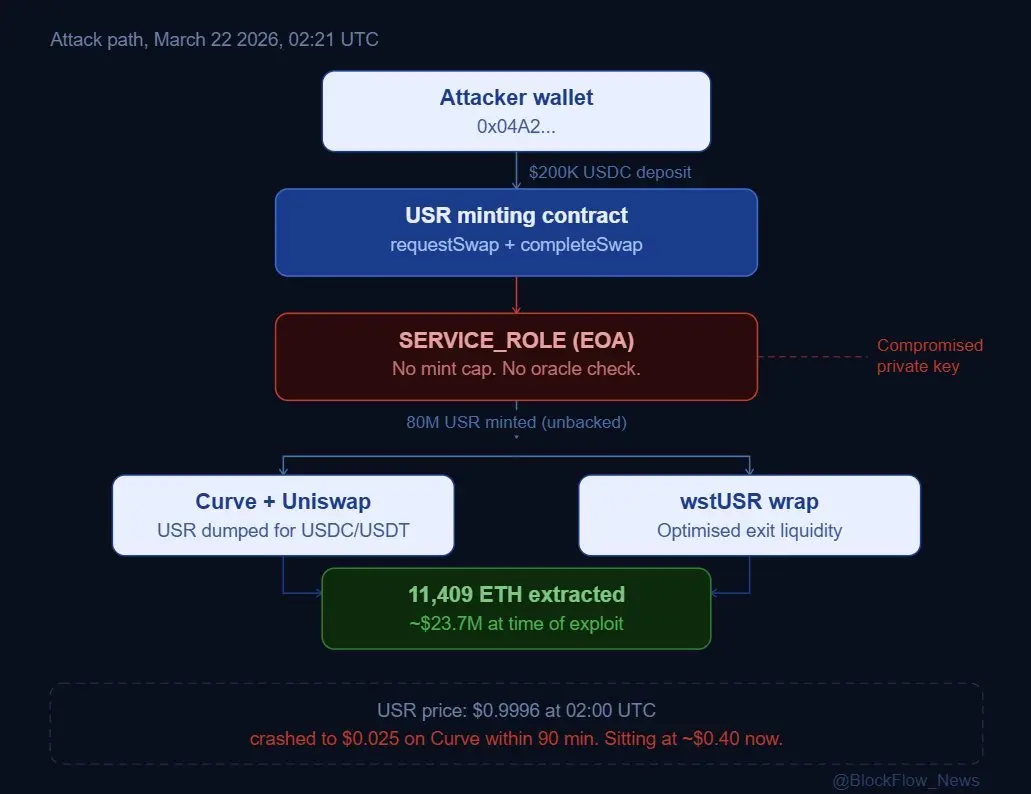
#ResolvLabsHitByExploitAttack
March 2026 marks a turning point for the decentralized finance (DeFi) ecosystem, where not only volatility but also the architecture of trust will be tested. The recent Resolv Labs attack represents much more than a technical security flaw: it has become a striking case study highlighting just how fragile the claim of "decentralization" can be in the crypto world.
At the heart of the attack was USR, a stablecoin developed by Resolv Labs and intended to be pegged to the US dollar. Normally operating on a 1:1 collateral basis, the system completely spiraled out of
ETH-1,94%
post-image
post-image
post-image
  • Reward
  • 22
  • Repost
  • Share
Vortex_Kingvip:
To The Moon 🌕
View More
The global crypto ecosystem is being shaken in the first quarter of 2026 not only by price volatility but also by signs of infrastructural transformation. The hashtag #BitcoinMiningDifficultyDrops7.76%, while seemingly referring to a technical adjustment, carries strong signals of a shift in the direction of the digital economy.
The mining difficulty level, one of the fundamental balancing mechanisms of the Bitcoin network, fell by 7.76% in the last adjustment in March, dropping to 133.79 trillion. This marks the second largest drop of the year and also reveals a significant weakening of the s
BTC-2,12%
post-image
post-image
  • Reward
  • 19
  • Repost
  • Share
Tuan13vip:
LFG 🔥
View More
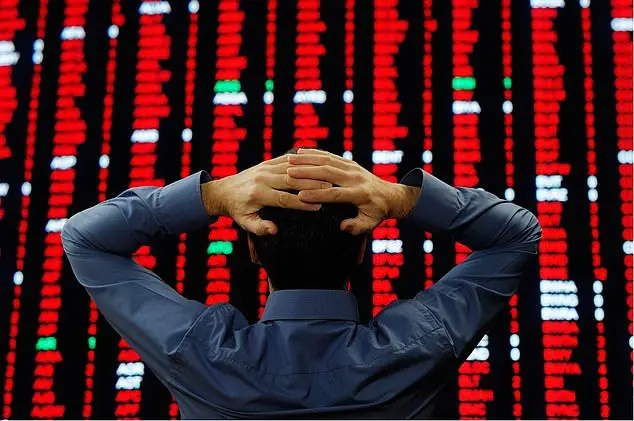
The fragile balances of the global financial system are being tested once again in March 2026 by a geopolitical shockwave emanating from the Middle East. The hashtag
#MiddleEastTensionsTriggerMarketSelloff
describes not only sudden price movements but also a multi-layered crisis architecture where energy, security, and economic expectations are intertwined.
Today's sell-off is far more than a classic market correction. This time, the trigger is a geopolitical rupture originating outside the financial system: an energy crisis centered on the Strait of Hormuz. Following conflicts beginning in
post-image
post-image
post-image
  • Reward
  • 17
  • Repost
  • Share
ShainingMoonvip:
To The Moon 🌕
View More
Another chapter has been added to the ironic pages of global financial history: In an era where safe havens are shaken and uncertainty has caused a loss of sense of direction, gold has collapsed, seemingly denying its own role. March 2026 marks a turning point not only for geopolitical tensions but also for market psychology, as gold experienced its sharpest decline since 1983, with a weekly drop of approximately 10-11%.
The most striking aspect of this collapse is its timing. Gold, normally expected to rise during periods of war, crisis, and uncertainty, instead lost value in the shadow of es
PAXG-0,5%
XAUT-0,31%
post-image
  • Reward
  • 15
  • 1
  • Share
ShainingMoonvip:
To The Moon 🌕
View More
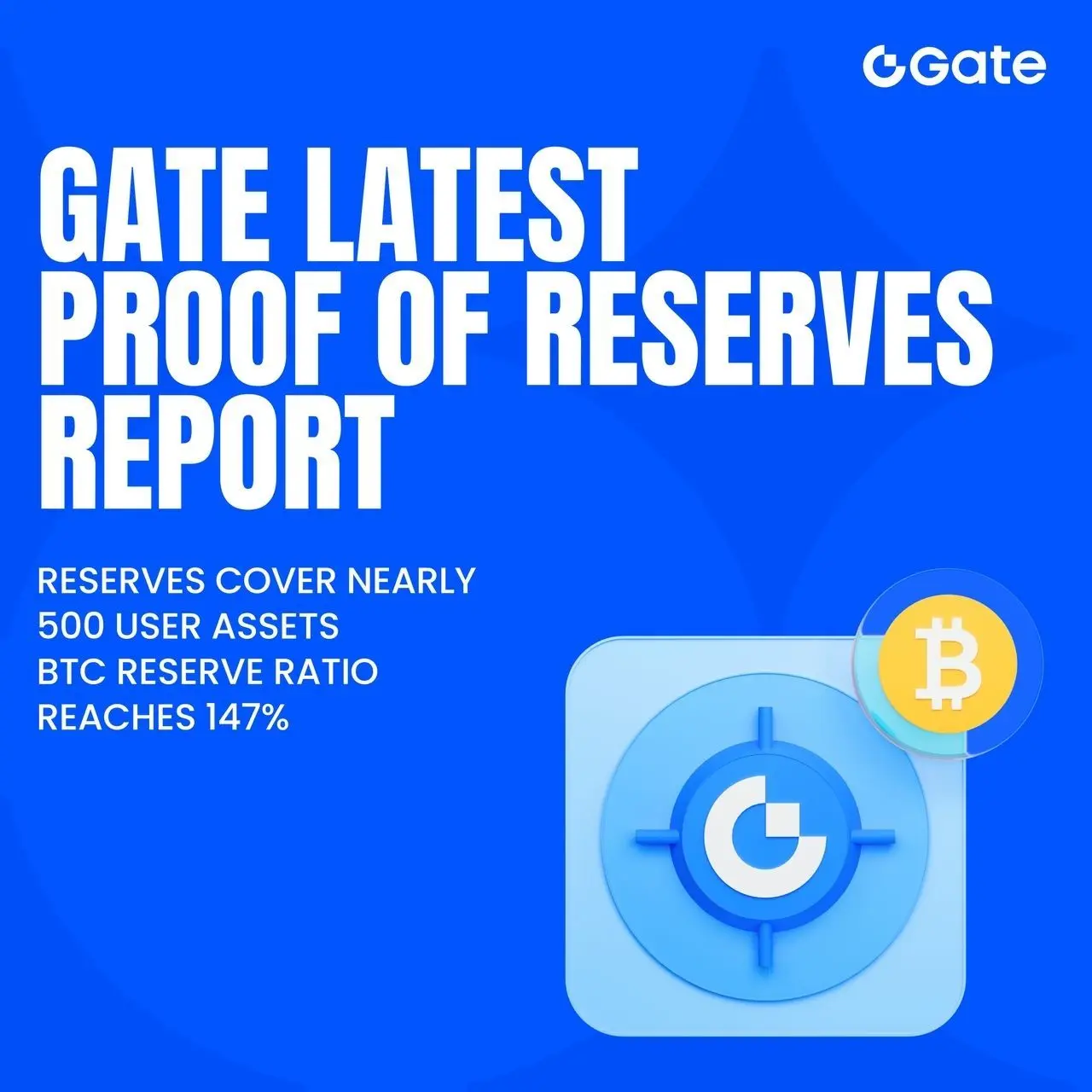
Gate Achieves New Transparency Record: Total Reserve Ratio Reaches 122%, 147% Excess Reserve Guarantee in BTC!
Gate.io, one of the leading exchanges in the crypto sector, has once again proven the security of its users' assets. With its latest Proof of Reserves (PoR) report published today, the platform has once again demonstrated that transparency is not just a slogan, but the foundation of risk management with concrete figures.
According to the report, as of March 16, 2026, Gate.io's total reserve value stands at $7,884,494,831. The net user balance is $6,428,489,257, while the excess reserv
BTC-2,12%
ETH-1,94%
post-image
post-image
post-image
User_anyvip
  • Reward
  • 19
  • 1
  • Share
ShainingMoonvip:
To The Moon 🌕
View More
  • Reward
  • 20
  • Repost
  • Share
ShainingMoonvip:
To The Moon 🌕
View More
  • Reward
  • 17
  • 1
  • Share
ShainingMoonvip:
To The Moon 🌕
View More
  • Pin