

Trade
Basic
Futures
Futures
Hundreds of contracts settled in USDT or BTC
TradFi
Gold
Trade global traditional assets with USDT in one place
Options
Hot
Trade European-style vanilla options
Unified Account
Maximize your capital efficiency
Demo Trading
Futures Kickoff
Get prepared for your futures trading
Futures Events
Participate in events to win generous rewards
Demo Trading
Use virtual funds to experience risk-free trading
Earn
Launch
CandyDrop
Collect candies to earn airdrops
Launchpool
Quick staking, earn potential new tokens
HODLer Airdrop
Hold GT and get massive airdrops for free
Launchpad
Be early to the next big token project
Alpha Points
Trade on-chain assets and enjoy airdrop rewards!
Futures Points
Earn futures points and claim airdrop rewards
Investment
Simple Earn
Earn interests with idle tokens
Auto-Invest
Auto-invest on a regular basis
Dual Investment
Buy low and sell high to take profits from price fluctuations
Soft Staking
Earn rewards with flexible staking
Crypto Loan
0 Fees
Pledge one crypto to borrow another
Lending Center
One-stop lending hub
VIP Wealth Hub
Customized wealth management empowers your assets growth
Private Wealth Management
Customized asset management to grow your digital assets
Quant Fund
Top asset management team helps you profit without hassle
Staking
Stake cryptos to earn in PoS products
Smart Leverage
New
No forced liquidation before maturity, worry-free leveraged gains
GUSD Minting
Use USDT/USDC to mint GUSD for treasury-level yields

More





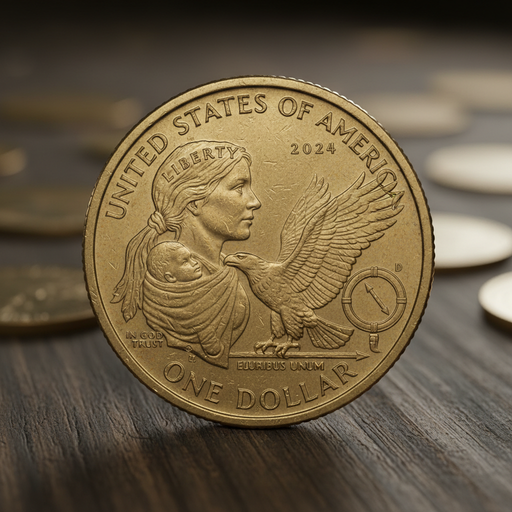

Dollar Rebounds After Government Shutdown Ends, Reshaping Global Markets
Following the resolution of the US government shutdown after President Trump signed a funding deal late Tuesday, financial markets are recalibrating positions across currencies and commodities. The government shutdown conclusion has injected policy clarity into the markets, providing initial support for the US dollar even as mixed economic signals temper broader bullish sentiment.
Policy Clarity Supports Dollar After Government Shutdown Resolution
The dollar index (DXY) gained +0.09% as sentiment shifted following the end of the government shutdown. The removal of fiscal uncertainty, at least temporarily, restored confidence in dollar-denominated assets. Beyond the government shutdown relief, the dollar benefited from weakness in equities that spurred defensive demand for the greenback. Additionally, a softer yen—which touched a 1.5-week low—provided relative support for dollar strength.
The central bank’s nomination of Keven Warsh as the next Federal Reserve Chair has provided carryover support for dollar appreciation. Mr. Warsh, viewed as more hawkish than competing candidates, is expected to take a firmer stance on inflation management compared to his peers. During his tenure as a Fed Governor from 2006-2011, Mr. Warsh consistently emphasized inflation risks, signaling potential resistance to aggressive rate cuts. This hawkish orientation contrasts sharply with market expectations for rate reductions, supporting the currency.
However, underlying headwinds persist. The dollar sank to a 4-year low last Tuesday when President Trump expressed comfort with recent dollar weakness, signaling potential policy tolerance for currency depreciation. Capital flight from the US continues, driven by structural concerns: growing budget deficits, fiscal excess, and widening political divisions discourage foreign portfolio inflows. The market is pricing only a 10% probability of a -25 basis point rate cut at the March 17-18 policy meeting, reflecting expectations that the government shutdown resolution may delay aggressive easing.
Mixed Economic Signals Limit Dollar Gains Despite Stronger Services Data
January employment data disappointed markets, showing only +22,000 new jobs added versus expectations of +45,000, a dovish signal that could influence Federal Reserve deliberations. Contrasting this weakness, the ISM services index surprised to the upside, holding steady at 53.8 when analysts anticipated a decline to 53.5. The prices paid sub-index within the services report climbed +1.5 points to 66.6, exceeding the consensus forecast of 65.0, suggesting persistent pricing pressures in the services sector.
The divergence between labor market softness and service sector resilience creates ambiguity for monetary policy trajectory. While employment weakness might argue for accommodation, the stronger pricing data within services could concern inflation-focused policymakers. This conflicting backdrop restrains the dollar’s upside momentum despite initial support from the government shutdown resolution.
Yen Weakness Amplifies Dollar Strength as Eurozone Data Disappoint
The yen extended losses this week, sliding to a 1.5-week low, as higher US Treasury yields and upcoming political developments weighed on Japanese assets. Prime Minister Takaichi’s Liberal Democratic Party is expected to secure victory in Sunday’s election, potentially emboldening budget stimulus initiatives and raising risks of larger fiscal deficits. This political calculation undermines the yen’s appeal as markets anticipate expansionary policies.
The January S&P services PMI for Japan rose to 53.7 from an initially reported 53.4, marking the fastest expansion pace in 11 months, yet this data proved insufficient to reverse yen weakness. The markets are discounting zero probability of a rate hike from the Bank of Japan at the March 19 meeting, reinforcing expectations of extended monetary accommodation in Tokyo.
EUR/USD edged down -0.01% as Eurozone economic data arrived softer than initially reported. The January core consumer price index was revised lower by -0.1 percentage points to 2.2% year-over-year, the slowest pace in four years and a dovish signal for the European Central Bank. The S&P composite PMI for the Eurozone was similarly revised downward by -0.2 points to 51.3. December producer prices in the Eurozone fell -2.1% year-over-year, the steepest annual decline in 14 months, reinforcing disinflationary pressures.
These revisions suggest the ECB faces mounting pressure for rate reductions, with swap markets pricing only a 1% chance of a -25 basis point rate hike at Thursday’s policy meeting. Short covering and position squaring ahead of that event have limited euro losses, but the fundamental backdrop points toward ECB easing in coming quarters.
Safe-Haven Demand Surges for Precious Metals Amid Geopolitical Risks
Gold and silver prices surged sharply for a second consecutive session following turbulent declines over the preceding week. April COMEX gold rallied +74.90 points (+1.52%), while March COMEX silver jumped +6.264 points (+8.19%). This recovery reflects a confluence of supportive factors, prominently including escalating geopolitical tensions.
On Tuesday, the US Navy shot down an Iranian drone that had aggressively approached a US aircraft carrier in the Arabian Sea, heightening Middle East volatility. This incident, combined with ongoing uncertainty over tariff implementation and geopolitical flashpoints in Iran, Ukraine, the Middle East, and Venezuela, has amplified safe-haven inflows into precious metals. Investors are reassessing portfolio allocations amid these risks, directing capital toward traditional hedges.
Additionally, the perceived US dollar debasement trade has gathered momentum. When President Trump stated his comfort with recent dollar weakness, it sparked demand for hard assets as inflation protection. Political uncertainty at home, persistent large federal deficits, and unpredictability surrounding government policy priorities are prompting investors to trim dollar-denominated holdings in favor of precious metals as stores of value. Recent liquidity injections—the Federal Reserve announced a $40 billion-per-month liquidity program in early December—have further boosted demand for metals as alternative value reservoirs.
Central Bank Gold Accumulation Underpins Higher Precious Metal Prices
Central banks are reinforcing the positive backdrop for precious metals through sustained purchases. China’s People’s Bank expanded its gold reserves by +30,000 ounces to 74.15 million troy ounces in December, marking the fourteenth consecutive month of reserve increases. This steady purchasing pattern signals ongoing official support for gold prices.
Global central bank behavior mirrors this pattern. The World Gold Council recently reported that central banks worldwide purchased 220 metric tons of gold during Q3, representing a +28% increase from Q2 purchases. This acceleration in official demand suggests central banks view the current environment as opportune for diversifying reserves away from weaker major currencies.
Exchange-traded fund demand for precious metals reached extremes, with gold ETF long positions climbing to a 3.5-year high last Wednesday. Silver ETF holdings similarly surged to a 3.5-year peak on December 23, though subsequent liquidation knocked those positions back to a 2.5-month low by Monday. The volatility in fund flows reflects positioning swings as traders balance safe-haven hedges against competing tactical opportunities.
The government shutdown resolution, while initially clarifying near-term fiscal uncertainty, has paradoxically strengthened the precious metals case by forcing investors to reconsider longer-term structural challenges facing US assets and currency stability.