

Trade
Basic
Futures
Futures
Hundreds of contracts settled in USDT or BTC
Options
HOT
Trade European-style vanilla options
Unified Account
Maximize your capital efficiency
Demo Trading
Futures Kickoff
Get prepared for your futures trading
Futures Events
Participate in events to win generous rewards
Demo Trading
Use virtual funds to experience risk-free trading
Earn
Launch
CandyDrop
Collect candies to earn airdrops
Launchpool
Quick staking, earn potential new tokens
HODLer Airdrop
Hold GT and get massive airdrops for free
Launchpad
Be early to the next big token project
Alpha Points
NEW
Trade on-chain assets and enjoy airdrop rewards!
Futures Points
NEW
Earn futures points and claim airdrop rewards
Investment
Simple Earn
Earn interests with idle tokens
Auto-Invest
Auto-invest on a regular basis
Dual Investment
Buy low and sell high to take profits from price fluctuations
Soft Staking
Earn rewards with flexible staking
Crypto Loan
0 Fees
Pledge one crypto to borrow another
Lending Center
One-stop lending hub
VIP Wealth Hub
Customized wealth management empowers your assets growth
Private Wealth Management
Customized asset management to grow your digital assets
Quant Fund
Top asset management team helps you profit without hassle
Staking
Stake cryptos to earn in PoS products
Smart Leverage
NEW
No forced liquidation before maturity, worry-free leveraged gains
GUSD Minting
Use USDT/USDC to mint GUSD for treasury-level yields

More


Trending Topics
View More37.49K Popularity
20.11K Popularity
7.42K Popularity
57.4K Popularity
343.5K Popularity



Pin
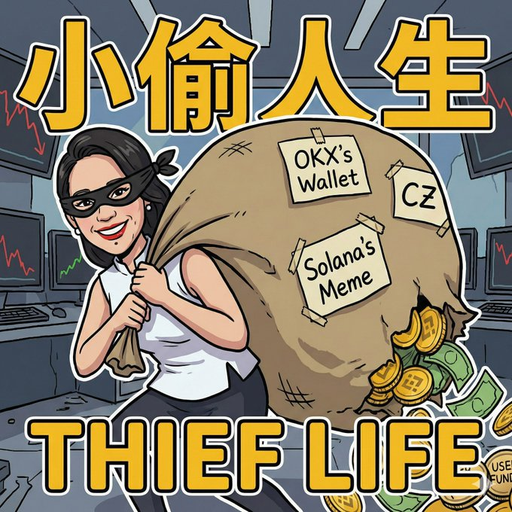
A major legal battle around Pump.fun: when 15,000 messages reveal a "conspiracy network"
The legal case against the Pump.fun platform has transformed from a private lawsuit by angry investors into a comprehensive investigation of the entire ecosystem. It all started innocently — a few traders who lost money on meme tokens accused the platform of selling unregistered securities. But over the months, the case’s scope relentlessly expanded: the list of defendants grew to include Solana Labs, Jito Labs, and their executives; the allegations escalated from simple fraud to organized criminal activity; and the evidence ranged from hypotheses to thousands of internal messages allegedly revealing a deep conspiracy.
How it all began: losses of a few hundred dollars
The story started unexpectedly simple. In January 2025, during an unprecedented boom in meme coins fueled by TRUMP-coin, investor Kendall Carnahan filed the first lawsuit in the Southern District of New York. His claim was straightforward: he bought tokens $PNUT on Pump.fun, lost money, and accused the platform of issuing unregistered securities illegally.
Carnahan believed that all meme tokens on the platform were actually investment contracts subject to securities regulations under the U.S. Securities Act of 1933. However, he drew little attention — his losses amounted to only $231. But this minor lawsuit became a catalyst for something bigger.
Just two weeks later, on January 30, a second investor, Diego Aguilar, filed a similar but broader lawsuit. Aguilar had purchased numerous meme tokens on the platform — $FRED, $FWOG, $GRIFFAIN , and others — and his lawsuit aimed to represent the interests of all affected traders. The two independent lawsuits quickly drew the court’s attention.
Consolidation of lawsuits: when a player with million-dollar losses appears
Judge Colleen McMahon recognized in June 2025 that handling two separate cases was inefficient. Both accused the same defendants — the operating company Baton Corporation Ltd and three founders of Pump.fun, including COO Alon Cohen, CTO Dylan Kerler, and CEO Noah Tweedale — of identical violations.
The judge firmly rejected the lawyers’ proposal to consider the cases separately. She issued a final ruling on June 26 to officially consolidate them. Simultaneously, under the Private Securities Litigation Reform Act (PSLRA), the court appointed Michael Okafor as the lead plaintiff, whose losses totaled about $242,000 — a huge sum compared to the rest. Okafor became the face of the class action.
This turn was decisive. Now, the plaintiffs acted as a united front with a monolithic strategy.
Turning point in the case: accusations expand to Solana and Jito
In July, the plaintiffs filed an expanded complaint that forever changed the nature of the case. Besides Pump.fun, Solana Labs, Solana Foundation, and their executives, as well as Jito Labs and its top management, were now defendants.
The plaintiffs proposed a revolutionary version of events: Pump.fun did not operate independently but was part of a criminal network along with Solana and Jito. Solana provided the blockchain infrastructure, Jito supplied MEV technology for transaction order manipulation, and Pump.fun served as a façade of a “fair” launch platform.
According to the plaintiffs’ documents, Jito’s MEV technology allowed insiders to pay additional “tips” ( for priority execution of their orders. This meant a simple mechanism: insiders learned about tokens first, used Jito bundles for front-running ), and then immediately sold for profit. Meanwhile, the platform earned a 1% fee, like a casino on every bet.
The plaintiffs’ strategy was clear: they aimed to prove that the decentralized structure was an illusion, and in reality, there was a coordinated system diverting money from retail investors.
RICO charges: from fraud to organized crime
The following month, the plaintiffs filed another expansion — an official RICO (Racketeer Influenced and Corrupt Organizations Act) charge. They now claimed that Pump.fun, Solana, and Jito together formed a “racketeering organization” that motivated a system of manipulation under the guise of decentralization.
The main accusations included:
Unregistered securities sales: all meme tokens on Pump.fun are investment contracts requiring SEC registration. The platform sold them via a bonding curve mechanism without disclosing risks.
Unlicensed casino: buying tokens with SOL is essentially a “bet” with a luck-dependent outcome, and the platform acts as a dealer earning a commission.
Fraud via electronic means: Pump.fun guaranteed a “fair launch” without pre-sales but secretly integrated MEV for insider priority transactions.
Money laundering: plaintiffs claimed that North Korean hacker group Lazarus Group even issued a meme token “QinShihuang” on the platform to launder stolen funds with legitimate money.
Lack of basic protections: no KYC procedures, no AML checks, no age verification.
Evidence that changed the entire case
The real turning point came after September 2025. A confidential informant provided the plaintiffs’ attorneys with the first batch of internal chats — about 5,000 messages, allegedly from internal communication channels of Pump.fun, Solana Labs, and Jito Labs.
These documents contained records of technical coordination, discussions of “optimization” of trading processes (, which plaintiffs considered euphemisms for manipulation ), and talk of insider trading advantages.
A month later, on October 21, the informant delivered a second, even larger batch — over 10,000 chats and supporting materials. They reportedly detailed:
The plaintiffs’ lawyers stated in court documents that these 15,000 chats constitute “direct evidence of a meticulously planned fraudulent network,” revealing much deeper relationships among the three parties than mere “technical partnership.”
Current moment: awaiting the new bombshell
In December 2025, the court allowed the plaintiffs to file a “Second Amended Complaint” with new evidence. The plaintiffs’ attorneys needed time to analyze over 15,000 chats, sort, translate, and conduct legal review. They requested an extension, which the court granted.
The new deadline is January 7, 2026. On that date, the plaintiffs will submit an expanded complaint with all the new chat evidence.
Meanwhile, the defendants remain silent. Pump.fun COO Alon Cohen has not appeared on social media for over a month. The leaders of Solana and Jito also do not comment publicly on the case.
Market impact and the PUMP token
Despite the scale of the legal proceedings, the crypto market does not seem to panic. Solana continues to trade without sharp fluctuations precisely because of this case. However, the PUMP token has plummeted: its current price is $0.00, representing a 60.21% decline over the year. Although traders often attribute this more to the collapse of the overall meme coin narrative than to the lawsuit.
The weekly trading volume on the platform dropped from a peak of $3.3 billion in January to the current $481 million — a decrease of over 80%. Interestingly, the Pump.fun team continues daily buybacks of tokens, totaling $216 million, or about 15.16% of the circulating supply.
What remains a mystery
As the case develops, more questions remain unanswered:
A lawsuit that started with losses of $231 for one person has gradually turned into a fight over the very nature of decentralization in the crypto industry. In 2026, when the court receives the new amended complaint and the case continues to progress, we may get answers to these questions — or even more unexpected twists.