Author: JiaYi
What level is 23,500 BTC?
As a long-term investor who is optimistic about BTC and related tracks, I have invested in several projects in the BTC track, such as Babylon, Bouncebit, Yala, Lorenzo, and Solv. Especially, Solv has recently released a major update, introducing SAL (Staking Abstraction Layer), which has shown a strong rise in both operational stability and community demand.
Currently, there are 23,500 BTC staked on Solv, second only to MicroStrategy (252,220 BTC) and TSL (252,220 BTC), higher than Marathon, Hut 8, and other mining companies, excluding Block.one and the long-closed Mt.Gox.

What is the main battlefield of BTCFi? Or, what problem does BTCFi actually solve? This is also a must-answer question for the BTC ecosystem. Today, I will briefly explain my understanding of the BTCFi track from an investor’s perspective.
BTC is following the path of Decentralized Finance Summer
Experienced old-chain Degen who went through the first wave of Decentralized Finance Summer must be familiar with yearn.fi, the “on-chain yield aggregator”.
In my opinion, for the BTC ecosystem, projects like Solv play the role of this ‘Smart Pool’, which everyone can feel. Whether it’s traditional wrapped BTC assets like BTCB and WBTC, or new types of BTC assets like FBTC and M-BTC, they have indeed brought BTC liquidity into the on-chain scene. However, every coin has two sides, and it has also led to the increasingly serious problem of fragmented BTC liquidity.
Especially for users with decision-making difficulties, they may want to earn stable and higher returns, and even need a bunch of xxBTC in their wallets, so Solv’s multi-chain, multi-asset strategy for overall chain returns and Liquidityprotocol is actually equivalent to a “yield aggregator” for BTC assets:
No matter what BTCB, FBTC, MBTC, xx BTC…different on-chain BTC assets, they can all be minted into SolvBTC to simplify everyone’s asset management experience.
Of course, this also means integrating Liquidity opportunities for different BTC assets, a SolvBTC traverses the chain, forming a unified asset pool, bringing more diversified income opportunities for holders.
BTCFi will give birth to a huge asset package ecosystem
BTC was actually quite ‘lonely’ in the early years.
In the past few encryption market highs, whether it was the ICO boom in 2017, the “midsummer” of Decentralized Finance in 2020, or the subsequent Non-fungible Token narrative, the BTC ecosystem seems to have been marginalized, and BTC is regarded as a “non-interest-bearing asset”.
However, since last year, more and more projects have been trying to provide stable on-chain income for BTC, gradually turning it into an interest-bearing asset. This trend not only awakens the dormant BTC, but also opens the door for BTC to enter the on-chain income market, marking a redefinition and release of the value of the entire ecosystem to BTC.
I have never invested in any ETH stake projects because I believe BTC is a more suitable asset for users to stake. Users who hold BTC also have the strongest ability to withstand short-term fluctuations. From the perspective of comprehensive stake returns, BTC’s interest-bearing properties are more conducive to the steady rise of personal assets.
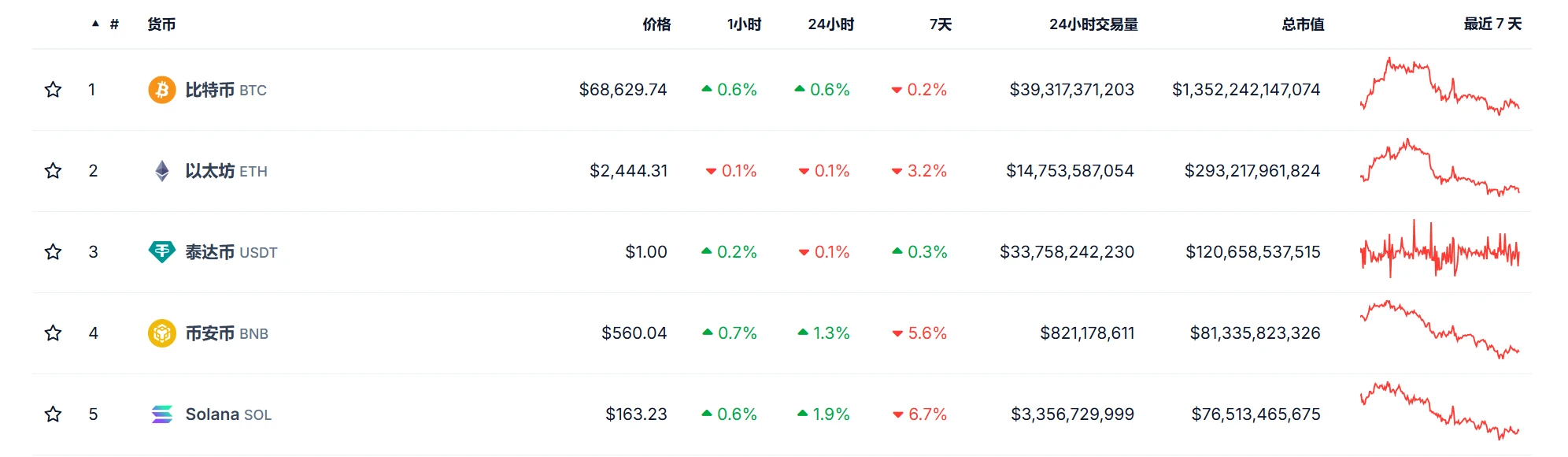
For new Web3 users, or “new suckers”, the mainstream encryption asset held in the first station is still BTC - as high as $1.35 trillion, the largest in scale, and the strongest in risk resistance encryption native asset, as long as the income opportunities are diverse enough, most Holders are bound to be itching for this opportunity.
And Solv’s imagination is not limited to stake income, but also includes income from re-stake, transaction strategy income, etc. Of course, this also brings complex interactive scenarios, although it greatly expands the applicability and value of BTC assets, the risks are also increasing synchronously.
So Solv recently launched the Solv stake Abstract Layer (SAL), which is essentially a universal standardized BTC stake industry security standard and framework, trapping a series of BTC income and asset management scenarios in a risk-isolated cage, using Smart Contract technology and BTC Mainnet technology to seamlessly collaborate between stakers, LST issuers, stake protocols, and other stake service providers, while simplifying user interaction with the BTC stake protocol.
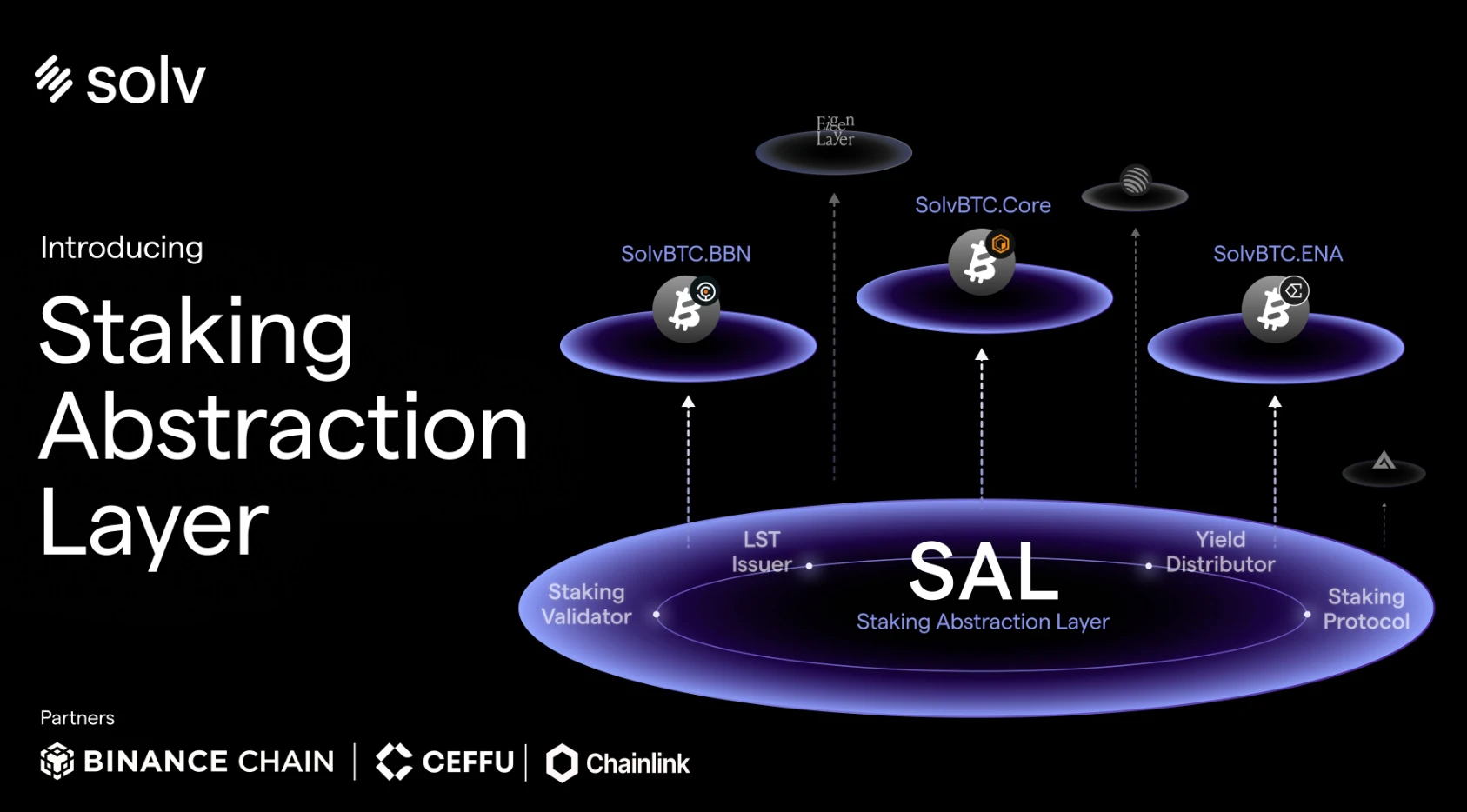
In order for the BTCstake ecosystem to grow larger, it needs a universal security layer. Solv, with the largest scale, taking the lead in this matter, is also one of the most suitable choices.
Bet on the entire Chaoyang track with action
BTC with a market capitalization of over trillions of dollars, previously, the release of its liquidity was mainly in the form of wrapped tokens (such as WBTC), enabling cross-chain interaction to the Ethereum network, participating in on-chain scenarios such as Decentralized Finance through coupling with the EVM ecosystem, but only about tens of billions of dollars can truly be released.
Investment is the easiest field to create “myths”, but the underlying logic is actually very realistic. Regarding Masayoshi Son’s investment in Alibaba back then, there was a so-called story in the market that the investment was completed in “six minutes”.
The fact is that Jack Ma’s team is not Masayoshi Son’s first choice and the only partner. On that day, in the same office, including Jack Ma, nearly 10 internet companies gathered together, waiting to meet with Masayoshi Son and his team.
The immaturity behind is an opportunity, betting on the entire Chaoyang track with action.
I very much agree with the point made by Franklin Bi, a partner at Pantera, - if Decentralized Finance reaches the same proportion on BTC as it does on ETH, it means that the total value of Decentralized Finance applications on BTC will reach 340 billion USD (25% of BTC Market Cap), and over time, its scale may fluctuate between 108 billion USD and 680 billion USD (8% and 50%).
Actually, I also dumb buying Solv twice in a row, for myself:
- The first investment was because the founder Ryan is one of the few founders I have seen with great potential. Humble, sunny, direct, although young, but every time I see him, I can see his cognitive upgrade. In the two years of contact, I basically saw a person’s rapid iteration. This is undoubtedly a tonic for investors;
- The second investment is because of Solv’s performance now. Especially leading Solv to achieve profitability early in the crypto market cycle, and as the market changes, Solv has undergone business iterations or transformations, but as long as it is done, it is the first, and the logic behind it is a profound insight and firm belief in Decentralized Finance and strong execution power;
However, the Staking/Restaking track is facing common pressure in the Secondary Market - As more and more projects enter the Listing stage to enhance the pre-listing FDV, it has brought heavy selling pressure to the market, so although many projects have a good TVL and income structure, the coin price performance has been continuously low, which has also led to questioning the operation mode of some early projects and even dragged down the performance of related stake assets.
If you want to break the curse of the track, it is not an easy task to balance the performance of the secondary market’s coin price, so that investors can see the greater potential of the BTCstake ecosystem.


