Author: Hedy Bi
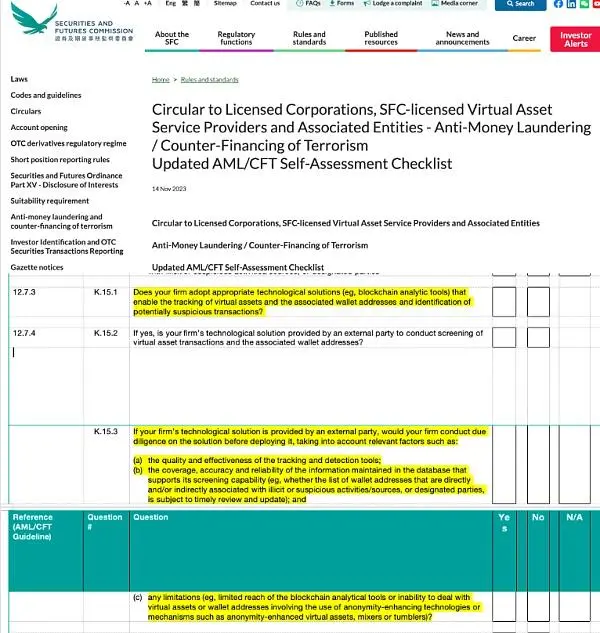
Recently, the Hong Kong Securities and Futures Commission (SFC) published the “Circular to Licensed Corporations, SFC-licensed Virtual Asset Service Providers and Associated Entities - Anti-Money Laundering/Counter-Terrorist Financing (AML/CFT)'s updated Anti-Money Laundering/Counter-Terrorist Financing Self-Assessment Checklist”, which includes a blockchain analysis tool in the updated AML/CFT Self-Assessment Checklist. Specifically, the SFC emphasises the importance of blockchain analytics tools in the section on “Ongoing Monitoring in relation to Virtual Asset Trading and Activities”.
The SFC issued the letter to “establish a systematic and comprehensive framework for self-assessment of compliance with the key AML/CFT requirements”. Compared to the version used in 2022, a new section on virtual assets has been added.
Source:
Blockchain analysis tool “Successful Examination”
This is not the first time that the SFC has proposed a technology solution for blockchain analytics tools.
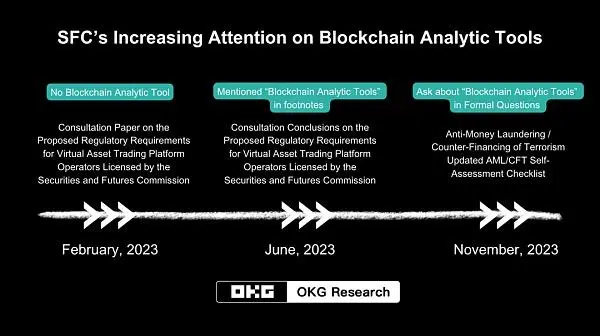
**Blockchain analytics tools have been a must-have compliance tool for virtual asset service providers internationally. **Hong Kong regulators are also becoming more aware of their importance: since the beginning of this year, the SFC’s “Consultation on Proposed Regulatory Requirements for Virtual Asset Trading Platform Operators Licensed by the Securities and Futures Practices Commission” has been queried by the public, and the version does not mention blockchain analysis tools. In its proposal, the Onchain AML technology solution was used as an example to deeply analyze the on-chain world including on-chain transfers and interactions, and put forward the suggestion that “financial institutions should adopt appropriate technological solutions (such as blockchain analysis tools) to track virtual assets and related wallet addresses and identify potentially suspicious transactions”.
In June this year, the SFC updated the Consultation Conclusions on Proposed Regulatory Requirements Applicable to Virtual Asset Trading Platform Operators Licensed by the Securities and Futures Practices Commission to add Chapter 12 of Appendix B – Virtual Assets, with a special emphasis on blockchain data analytics tools in 134 new footnotes to 12.7.3. On November 14, the China Securities Regulatory Commission (CSRC) updated the “Anti-Money Laundering/Terrorist Financing Self-Assessment Checklist”, which shows that the CSRC prefers virtual asset service providers to adopt technological solutions such as blockchain data analysis tools to avoid money laundering risks in advance. **
On-chain trading, the focus of Hong Kong SFC
Virtual assets and on-chain transactions are innovative and highly complex, with significant differences in technical characteristics from traditional financial products. This makes it difficult for traditional regulatory methods to be directly applied to the regulation of on-chain transactions, so the Hong Kong Securities and Futures Commission proposed a comprehensive regulatory framework in June this year, and paid special attention to “on-chain trading”, which is different from traditional financial products. Why is the SFC concerned about on-chain trading?
- Large Transfers Prefer On-Chain Transactions
**Large transactions often involve higher risks, including money laundering, fraud, and market manipulation, and are a regulatory focus not only in traditional finance but also in the virtual asset market. Most large-value transfer transactions are not actually carried out on centralized exchanges, but between wallets, and on-chain transfers and transactions are often anonymous and censorship-resistant, which can make it difficult to supervise.
According to the data analysis on the on-chain explorer of Ouke Cloud Chain, in addition to the flow of funds in exchange accounts and the flow of funds between Market Maker Service and exchanges, large-value transactions of individual accounts are mostly carried out through on-chain rather than centralized exchanges.
- Money laundering crime is escalating and evolving
Compared with traditional money laundering crimes, money laundering crimes using crypto assets are more concealed and difficult to trace. And because of its technical characteristics, it can play different roles in the three stages of money laundering crime——— placement, cultivation and integration. In addition, there are also bad actors who steal the accounts of legitimate users and use them to launder money.
According to the FATF report “Money Laundering Using New Payment Methods”, online payment methods are often used to launder the illegal proceeds of fraud crimes based on identity theft, or the illegal proceeds of crimes of stealing funds from bank accounts, credit cards or debit cards through computer hacking, phishing, etc.; And use the anonymity of cryptocurrencies to move these ill-gotten funds to untraceable places. This is due to the fact that most cryptocurrency transactions do not require face-to-face contact, which provides an opportunity for perpetrators to abuse their legitimate accounts for money laundering.
On-chain anonymity vs on-chain transparency
On-chain anonymity doesn’t mean it’s hard to regulate. Although blockchain technology brings anonymity and other characteristics, at the same time, the immutability and transparency of blockchain technology allow every transaction on the chain to be verified and traced on the blockchain. Transaction records are permanently recorded in a distributed blockchain network and are difficult to tamper with or delete. This allows regulators to more accurately track the movement of funds and look for suspicious transactions and money laundering.
Therefore, blockchain analysis tools have become the best choice for the industry to efficiently interpret on-chain data. By analysing transaction patterns, address associations, and money flows, these tools can uncover anomalous patterns and risk indicators, providing clues and decision support to regulators and virtual asset service providers.
Hong Kong Securities and Futures Commission Chief Executive Officer Leung Fung-yee talked about the Hong Kong Securities and Futures Commission’s regulation of virtual assets for investor protection, and mentioned about the tool, “The use of new technology must have new risks, so we must try to minimize the risks, and have new tools that can deal with new risks, so as to enjoy the benefits of new technologies to financial services.” ”
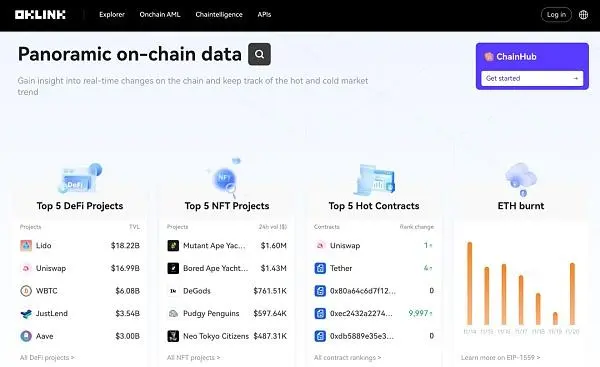
As regulators and virtual asset service providers gain acceptance and demand for blockchain analytics tools, there will be more investment and innovation in this area. For enterprises, entrepreneurs and even investors including retail investors in other tracks, as the industry actively explores and applies blockchain data analysis tools, it can also better understand and manage the risks of virtual asset trading. For example, OKLink can provide a variety of tools for investors to understand transaction data and on-chain activities through simple operations, so that retail investors can better assess the reliability and risk level of the project, so as to invest more prudently. **
** **
**
Blockchain analytics tools have become a must-have for new tools to deal with new risks. **Only with Hong Kong’s speed and the idea of ex-ante risk management can we effectively achieve investor protection and promote the healthy development of Web3.
Disclaimer: The information on this page may come from third parties and does not represent the views or opinions of Gate. The content displayed on this page is for reference only and does not constitute any financial, investment, or legal advice. Gate does not guarantee the accuracy or completeness of the information and shall not be liable for any losses arising from the use of this information. Virtual asset investments carry high risks and are subject to significant price volatility. You may lose all of your invested principal. Please fully understand the relevant risks and make prudent decisions based on your own financial situation and risk tolerance. For details, please refer to
Disclaimer.


