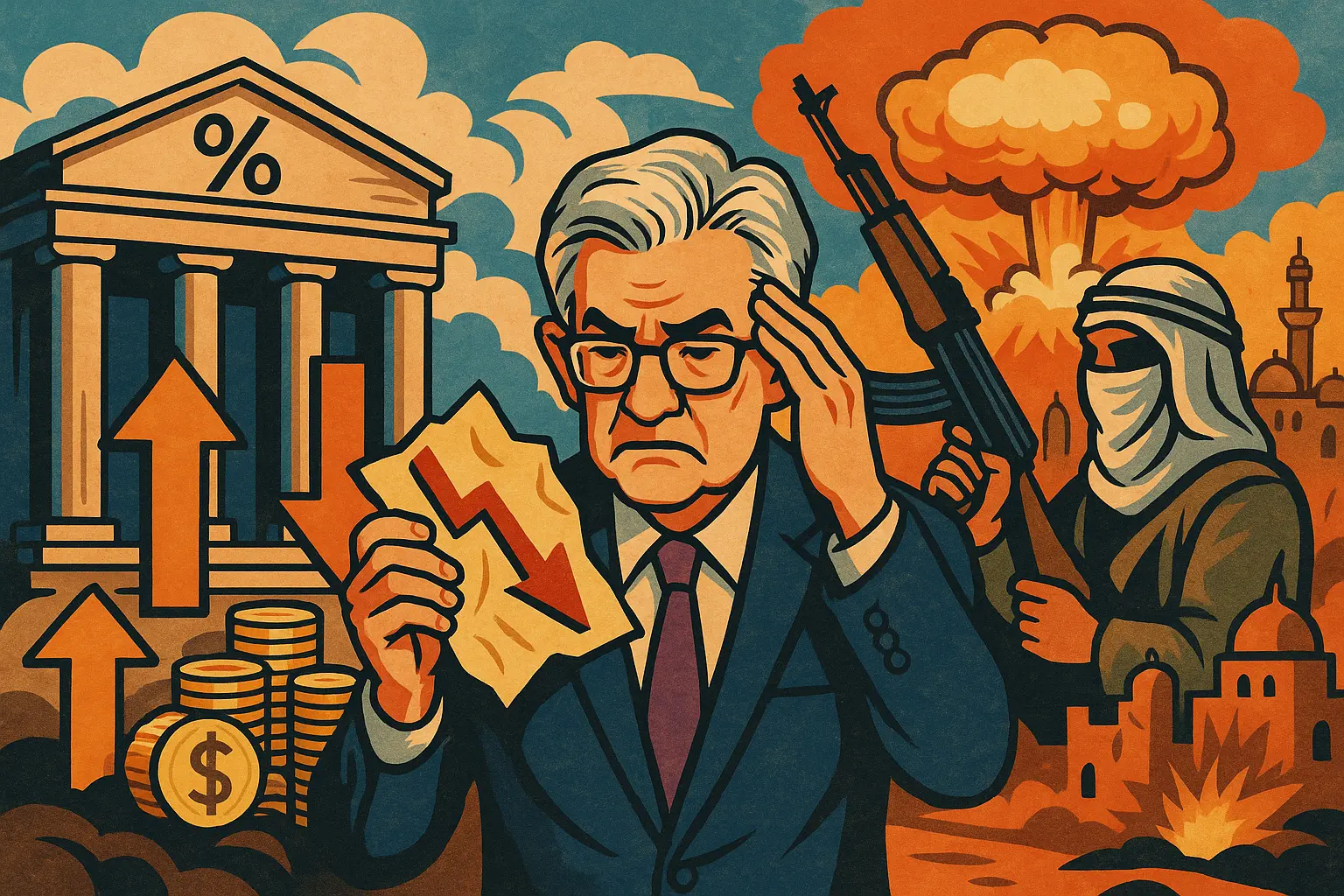
The U.S. non-farm payroll report for March will be released on April 3, with the market expecting an increase of about 48,000 jobs, following a weak reading in February that recorded an unexpected contraction of 92,000 jobs. At the same time, the U.S. Secretary of State stated that military conflicts with Iran will continue for another 2 to 4 weeks, with ongoing tensions in the Middle East pushing oil prices and inflation expectations higher, forcing the market to shift the Federal Reserve’s policy path from rate cuts to rate hikes, currently factoring in an increase of about 18 basis points.
Last Week’s Market Background: Iran Situation “Fighting While Talking” Affects Global Assets
In the past week, the Iranian conflict entered a high-pressure game stage. The U.S. and Israel continued to intensively strike Iranian military facilities, while Trump repeatedly postponed the strike on energy facilities to allow room for diplomatic negotiations; Iran rejected the U.S. ceasefire proposal, and the Houthi armed group continued to exert pressure with missiles, demonstrating a hardline stance of “fighting to negotiate.”
Economic data also released warning signals. The final value of the U.S. Consumer Confidence Index for March dropped to 53.3, down from 56.6 in February; the final value of one-year inflation expectations rose to 3.80%, significantly up from the prior value of 3.40%, indicating that consumer concerns about the inflation outlook continue to accumulate.
This Week’s Key Schedule: Non-Farm Employment Dominates Global Pricing Logic
Several key indicators will be released this week, forming the most influential macro data window in recent times:
March 31: China’s official Manufacturing PMI for March (09:30)
April 1: U.S. ADP Employment Change for March (20:15); U.S. ISM Manufacturing PMI for March (22:00)
April 2: U.S. Initial Jobless Claims for the week ending March 28 (20:30)
April 3: U.S. Non-Farm Payrolls for March, March Unemployment Rate (20:30) — this week’s market focus
The market currently expects about 48,000 new non-farm jobs in March, with the unemployment rate possibly rising slightly from 4.4% to 4.5%. Due to the unexpected contraction in February’s non-farm data, the core focus of this report is not only on the numbers themselves but also on whether the previous values will be revised down. If the employment data exceeds expectations, the consensus of “higher rates for longer” will be further solidified; if it remains weak, the complexity of market interpretation will significantly increase.
Policy Path Reversal: Fed Rate Hike Expectations Forming, Pressure Varies in Europe and Japan
The transmission chain of “oil prices — inflation — interest rates” has become the core pricing logic in the current global market. The shift in expectations for the Fed is particularly crucial: the market currently factors in an increase of about 18 basis points, meaning that if subsequent data continues to validate inflation stickiness, a consensus for a 25 basis point hike will quickly form, marking a fundamental reversal from the mainstream expectation of rate cuts just months ago.
Europe faces more direct pressure. The Eurozone’s heavy reliance on Middle Eastern energy imports makes the impact of rising oil prices on inflation more pronounced. Currently, the market expects the European Central Bank (ECB) and the Bank of England (BOE) to raise rates at least twice this year, with the probability of a 25 basis point hike by the ECB in April estimated at about two-thirds; if March inflation data continues to exceed expectations, the euro is likely to gain some support.
Japan’s situation is more complicated. Approximately 90% of Japan’s crude oil is imported, making it highly sensitive to risks in the Strait of Hormuz, but rising energy costs simultaneously suppress corporate profits and consumer spending, constraining the policy space of the Bank of Japan (BOJ). Currently, the market only factors in two rate hikes for the BOJ this year, and the trend of March inflation data in the Tokyo region will be a key indicator for assessing whether the yen can gain further support.
Frequently Asked Questions
Why is non-farm employment data the most important indicator this week?
The non-farm payroll report is a core indicator for the Federal Reserve to assess the health of the labor market, directly impacting its interest rate policy direction. The March report is particularly critical, as February recorded a non-farm contraction of 92,000 jobs, and the market needs to use this data to determine whether the employment market is experiencing structural deterioration to recalibrate expectations for the Fed’s policy path.
How does the Middle East conflict lead the market to shift from rate cut expectations to rate hike expectations?
The Iranian conflict has driven up oil prices, and rising energy costs have increased inflation expectations, compressing the room for major central banks to cut rates. The final value of U.S. inflation expectations for March has risen to 3.80%, prompting the market to shift the Fed’s policy expectations from rate cuts to factoring in an increase of about 18 basis points, with the probability of a rate hike by the European Central Bank also significantly rising, creating synchronized pressure for a shift in policy direction among major global central banks.
If the non-farm data on April 3 is stronger than expected, what impact will it have on the crypto market?
Strong non-farm data will reinforce the market consensus of “higher rates for longer,” compressing the valuation space for risk assets. Historical patterns show that rising interest rate expectations typically exert short-term pressure on high-risk assets like Bitcoin; however, if the market has already fully priced in the rate hike expectations, a rebound of “sell the expectation, buy the fact” may also be possible after the actual data is released.
Disclaimer: The information on this page may come from third parties and does not represent the views or opinions of Gate. The content displayed on this page is for reference only and does not constitute any financial, investment, or legal advice. Gate does not guarantee the accuracy or completeness of the information and shall not be liable for any losses arising from the use of this information. Virtual asset investments carry high risks and are subject to significant price volatility. You may lose all of your invested principal. Please fully understand the relevant risks and make prudent decisions based on your own financial situation and risk tolerance. For details, please refer to
Disclaimer.


