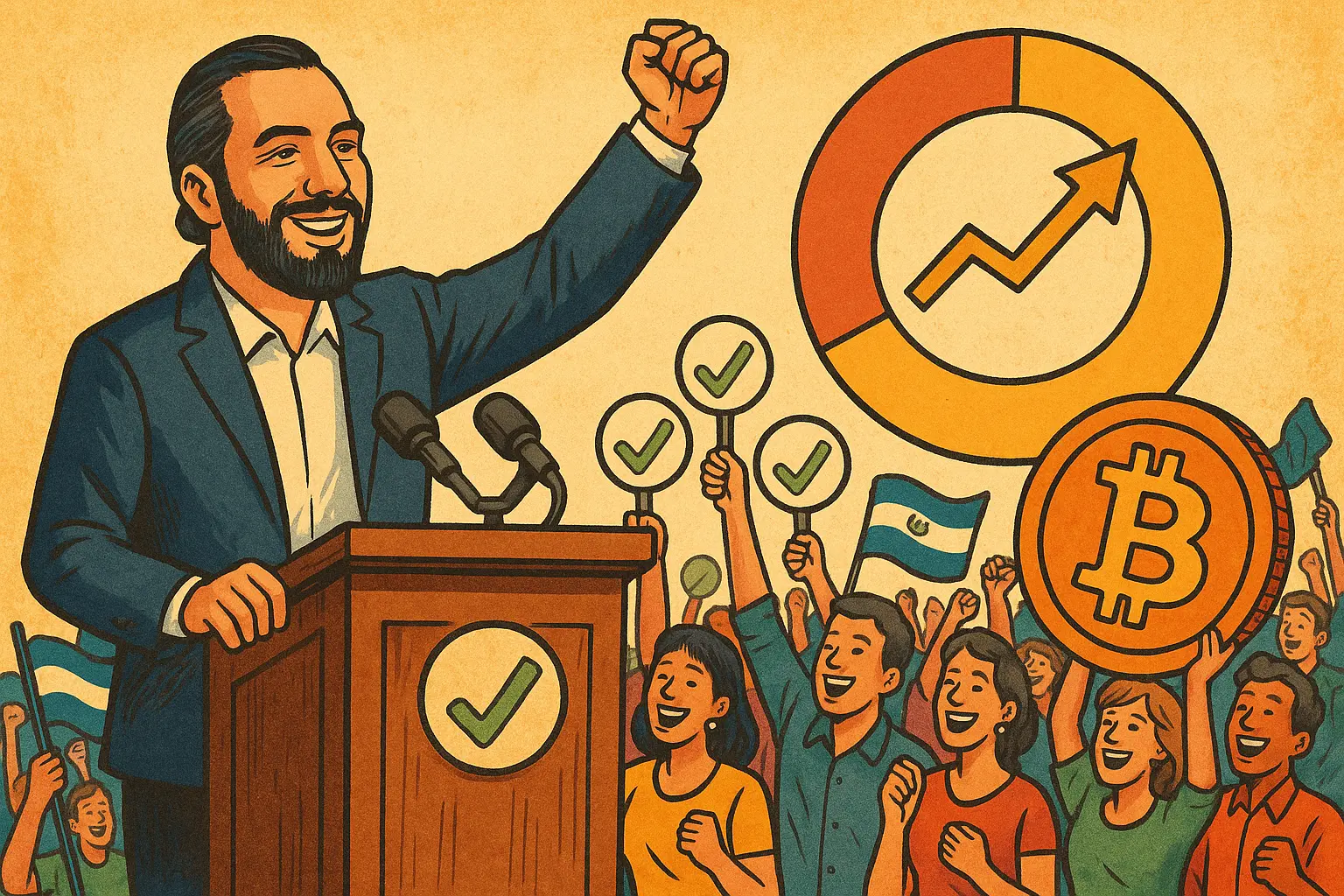
El Salvador President Bukele’s approval rating hits a record high of 91.9%, with 62.8% strongly supporting him. The main reason for this surge is improved public safety rather than Bitcoin. Only 2.2% of respondents consider BTC a failure, and it was rarely mentioned in the survey. The country adopted Bitcoin in 2021, but daily usage remains limited, with only one coin purchased per day. El Salvador has received $1.4 billion in IMF loans, and the government’s flagship Chivo wallet faces potential closure.
The true reason behind the 91.9% approval rating is security, not Bitcoin
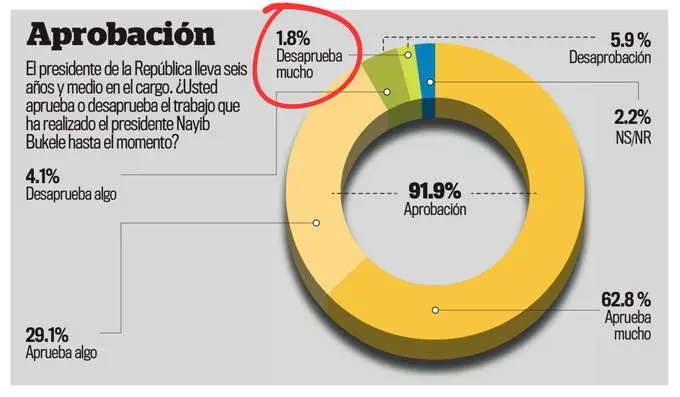
(Source: Bukele)
A recent survey published by El Salvador’s newspaper La Prensa Gráfica shows that 91.9% of respondents approve of Bukele’s governance. Among the 1,200 people surveyed, 62.8% expressed strong support for the president, while only 1.8% expressed strong opposition. Bukele responded sarcastically to these figures on X (formerly Twitter), writing: “So now their support rate is 1.8%?” This humorous reply demonstrates Bukele’s confidence in his popularity.
The survey results indicate that the government’s high approval is primarily driven by domestic policy successes rather than cryptocurrency initiatives. The main reason cited for public support is the improvement in security. Since taking office in 2019, Bukele has launched a vigorous crackdown on gangs and established the Countering Violent Extremism Center (CECOT), a large detention facility designed to hold suspected gang members. Compared to previous years, homicide rates have dropped sharply, and this transformation is widely regarded as the government’s greatest achievement.
El Salvador was once one of the countries with the highest murder rates in the world, with gang violence severely disrupting daily life. Bukele’s tough policies, though criticized by human rights groups, enjoy overwhelming local support. Citizens prefer sacrificing some freedoms in exchange for safety, a rational choice given the extreme insecurity. The direct benefits of improved security include safer streets, less extortion of businesses, and a tourism revival that boosts the economy.
In contrast, the president’s Bitcoin plan appears to lack broad public backing. Only 2.2% of respondents see Bitcoin as Bukele’s biggest failure during his six-year term, and beyond that, Bitcoin was almost never mentioned in the survey. This indifference reflects a broader trend: despite making history in 2021 by adopting Bitcoin as legal tender and requiring businesses to accept it whenever possible, daily use remains limited.
Key Data on Bukele’s Approval Rate
- Overall support: 91.9%, a record high
- Strong support: 62.8%, indicating a solid core base
- Strong opposition: only 1.8%, very weak dissent
- Bitcoin mention rate: only 2.2% see it as a failure, largely ignored by the public
This distribution reveals a crucial fact: for ordinary Salvadorans, Bitcoin policy is far less important than issues like security, employment, and prices. While the global crypto community views El Salvador as a benchmark for Bitcoin adoption, locals are more concerned about whether they can walk safely on the streets, not whether Bitcoin’s value rises.
The harsh reality of low Bitcoin adoption
This indifference reflects a broader trend: although the country made history in 2021 by adopting Bitcoin as legal tender and requiring businesses to accept it whenever possible, daily use remains limited. Bukele himself acknowledged this gap in a 2024 interview with Time magazine, stating that the project has not achieved the widespread adoption initially expected by authorities.
The reasons for low Bitcoin adoption are multifaceted. First, technical barriers: for people with lower education levels and digital literacy, understanding and using crypto wallets is very difficult. Second, Bitcoin’s volatility: its sharp price swings make it unsuitable for daily transactions. Third, infrastructure issues: despite laws requiring merchants to accept Bitcoin, most small businesses lack the necessary payment devices and technical support.
The government’s official Bitcoin wallet, Chivo, was intended to be a key tool for promoting adoption. However, since its launch, it has faced numerous complaints about scams, identity theft, and technical glitches. In December last year, the IMF stated that ongoing negotiations with El Salvador regarding Bitcoin policy focus on increasing transparency, protecting public funds, and reducing financial risks. As part of these discussions, authorities are negotiating the sale or closure of the government-operated Chivo wallet.
Previously, officials indicated that the app might gradually be phased out, while private crypto wallets continue to operate in the country. The failure of Chivo is one of the biggest lessons from El Salvador’s Bitcoin experiment: mere legal mandates and government tools are insufficient to drive real adoption; user experience and actual needs are the key factors.
This policy also drew criticism from international lenders, especially the IMF, which repeatedly warned of fiscal and financial stability risks. IMF concerns include: Bitcoin’s volatility potentially damaging the country’s finances, insufficient regulation of crypto assets that could be used for money laundering, and the risk of significant losses on public investments in Bitcoin.
Balancing daily Bitcoin purchases with IMF loans
Despite these concerns, El Salvador has not stopped accumulating Bitcoin. Officials say that since 2022, the country has been consistently buying one Bitcoin per day, and President Bukele has publicly committed to continuing this strategy. Data from the Bitcoin Office shows that the country’s Bitcoin reserves continue to grow. Recently, El Salvador reached a financing agreement with the IMF, which included reductions in some crypto-related plans, but the government has stated it will continue purchasing cryptocurrencies for national reserves.
The strategy of buying one Bitcoin daily is highly symbolic. At the current price of around $70,000, this amounts to about $25.55 million annually. For a country with a GDP of only about $30 billion, this is a significant fiscal commitment. Nonetheless, Bukele remains committed to this approach, demonstrating strong confidence in Bitcoin’s long-term value.
Following tensions caused by Bitcoin adoption, El Salvador received a $1.4 billion loan from the IMF in 2024. The latest IMF assessment reports that El Salvador’s economy has performed better than expected, with an estimated real GDP growth of about 4% this year and a positive outlook for the next. This economic growth has partly alleviated IMF concerns about Bitcoin policies, allowing both sides to reach a compromise.
Bukele’s steadfastness on Bitcoin, combined with concessions to IMF demands—such as on issues like the Chivo wallet and mandatory acceptance—demonstrates a pragmatic political strategy. He maintains his core stance of continuing Bitcoin purchases as reserves but is willing to compromise on peripheral issues. This balance allows him to preserve his image as a Bitcoin pioneer while securing IMF financial support.
El Salvador’s experience offers complex lessons for global Bitcoin adoption. While national-level adoption is feasible, it does not mean the population will enthusiastically embrace it. Governments can hold Bitcoin as reserves, but forcing daily use may be counterproductive. True widespread Bitcoin adoption requires demand from the bottom up, not top-down policy enforcement.
Disclaimer: The information on this page may come from third parties and does not represent the views or opinions of Gate. The content displayed on this page is for reference only and does not constitute any financial, investment, or legal advice. Gate does not guarantee the accuracy or completeness of the information and shall not be liable for any losses arising from the use of this information. Virtual asset investments carry high risks and are subject to significant price volatility. You may lose all of your invested principal. Please fully understand the relevant risks and make prudent decisions based on your own financial situation and risk tolerance. For details, please refer to
Disclaimer.


