


Futures
Access hundreds of perpetual contracts
TradFi
Gold
One platform for global traditional assets
Options
Hot
Trade European-style vanilla options
Unified Account
Maximize your capital efficiency
Demo Trading
Introduction to Futures Trading
Learn the basics of futures trading
Futures Events
Join events to earn rewards
Demo Trading
Use virtual funds to practice risk-free trading
Launch
CandyDrop
Collect candies to earn airdrops
Launchpool
Quick staking, earn potential new tokens
HODLer Airdrop
Hold GT and get massive airdrops for free
Launchpad
Be early to the next big token project
Alpha Points
Trade on-chain assets and earn airdrops
Futures Points
Earn futures points and claim airdrop rewards


More



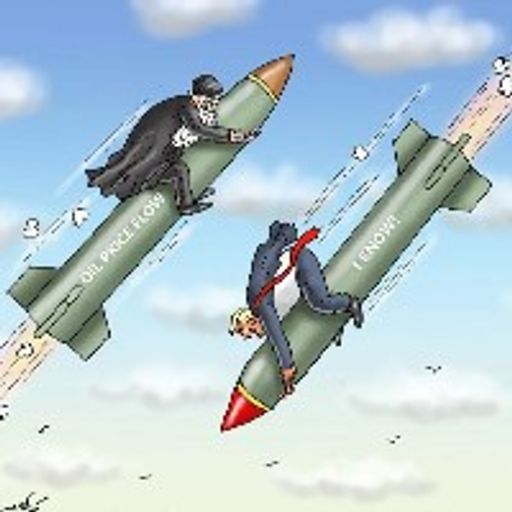


The largest scale in history! IEA announces the release of 400 million barrels of emergency oil reserves to the market
To address supply disruptions caused by the Iran war, the International Energy Agency (IEA) agreed on Wednesday to release 400 million barrels of oil reserves, the largest coordinated release in the agency’s history.
Following the announcement, U.S. and Brent crude prices initially fell but quickly rebounded. Analysts believe that, given the near-closure of the Strait of Hormuz due to the Iran conflict, this measure will have limited impact on oil prices.
The IEA did not specify when these reserves will enter the market. The organization stated that its 32 member countries will gradually release stocks at appropriate times based on their individual circumstances.
The IEA is mainly composed of developed economies from Europe, North America, and Northeast Asia. Its mission is to maintain global energy security. Founded in 1974, the IEA was established in response to the 1973 Arab oil embargo during the Arab-Israeli war, which was triggered by Arab oil-producing countries’ support for Israel and U.S. backing of Israel.
IEA Executive Director Fatih Birol said, “The Middle East conflict is having a significant impact on global oil and natural gas markets, with far-reaching effects on energy security, affordability, and the global economy.”
Birol added, “I can now announce that IEA member countries have unanimously agreed to initiate the largest emergency oil reserve release in our history.”
This release aims to mitigate the short-term impact of current supply disruptions. However, he emphasized that restoring stable global oil and gas supplies depends on resuming tanker shipments through the Strait of Hormuz.
Before the IEA announced the release, energy analysts warned that even with the agency’s maximum release capacity, it might be difficult to fully offset the nearly 20 million barrels of daily oil transported through the Strait of Hormuz.
The Strait of Hormuz, located off the coast of Iran, is a narrow maritime passage connecting the Persian Gulf and the Oman Gulf. About 20% of the world’s oil and natural gas trade typically passes through this waterway.
Following the joint U.S.-Israel strike on Iran, energy officials hurriedly devised this reserve release plan. However, reports indicate that Iran has begun laying mines in the strait, suggesting that even if fighting stops, oil tanker transportation could remain disrupted for some time.
Since the outbreak of the Iran conflict on February 28, oil prices have been highly volatile. Brent crude, the global benchmark, surged close to $120 per barrel earlier this week but later fell below $90.
Earlier that day, Japanese Prime Minister Fumio Kishida announced Japan plans to start releasing national oil reserves as early as next week. He pointed out that Japan’s dependence on Middle Eastern energy is “unusually high.”
Kishida stated, “Before the IEA’s official coordinated release of international reserves, Japan has decided to take the lead. We plan to begin releasing national oil stocks as early as the 16th of this month to ease supply and demand tensions in the international energy market.”
Currently, IEA member countries hold over 1.2 billion barrels of emergency public oil reserves, plus about 600 million barrels of industry reserves held by companies at government request.
Previously, after the Russia-Ukraine conflict erupted in 2022, the IEA coordinated the release of approximately 182 million barrels of oil to stabilize the energy market.
Economists warn that continued rising oil prices could not only cause pain for drivers but also trigger inflation and lead to stock market corrections.
Neil Atkinson, former head of the IEA’s Oil Market Division and now a visiting scholar at the U.S. National Energy Analysis Center, said that since Monday, the impression that ships could quickly resume navigation has vanished. More ships have been attacked, and U.S. naval escort seems not to have been implemented. “The consensus is very clear: this war will not end soon, and the damage to the global economy and its functioning could be significant.”