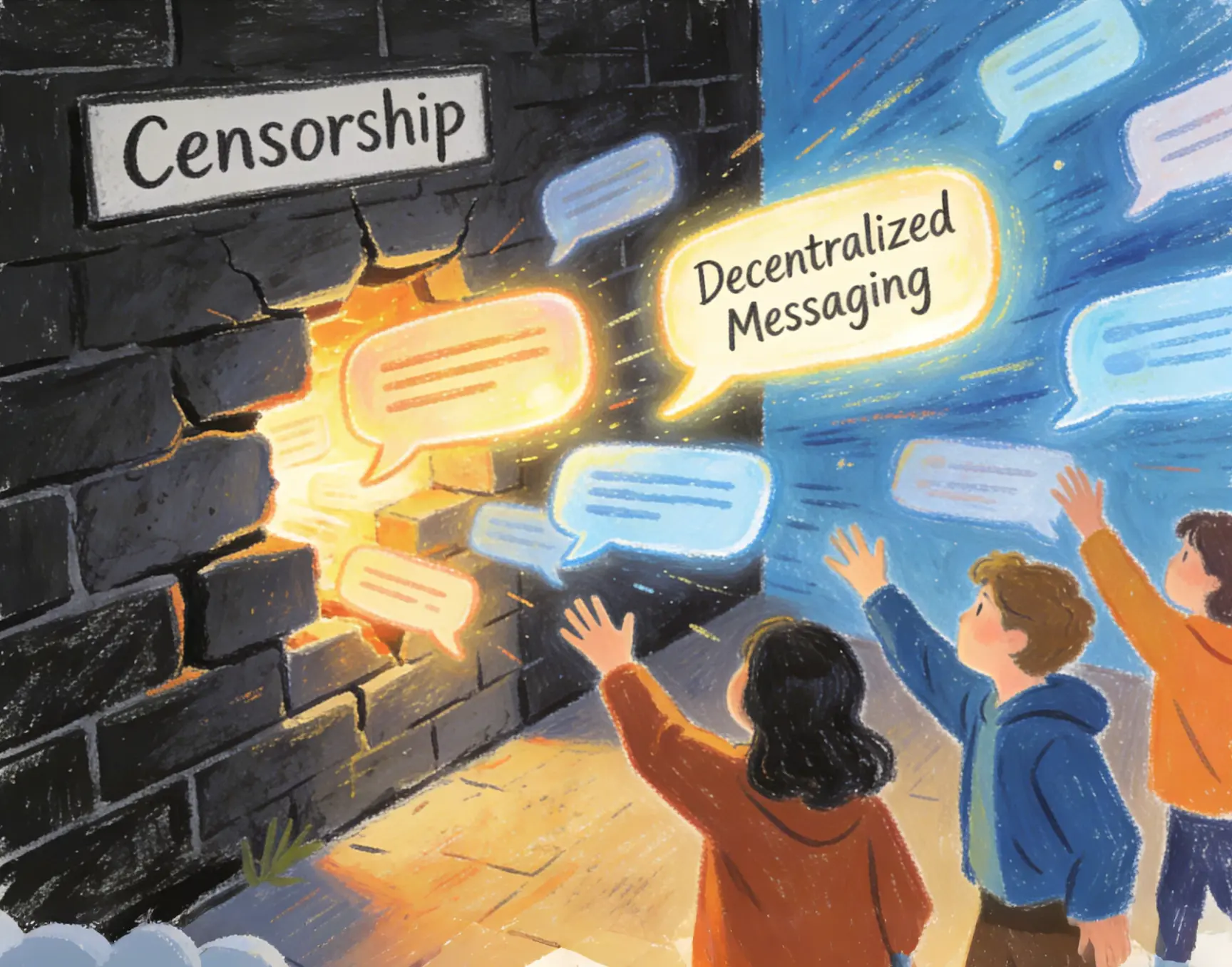
 Decentralized, blockchain-based messaging and social media apps have seen a surge in adoption over the past year amid civil unrest and communication blackouts across the Middle East, Asia, and Africa, with peer-to-peer messaging service Bitchat recording notable download spikes during protests in Madagascar, Nepal, Indonesia, and Iran.
Search interest in decentralized social media has grown 145% over the past five years, according to market research, as users increasingly seek alternatives to centralized platforms that can be blocked or shut down by governments. Industry observers attribute the shift to growing distrust of closed corporate platforms and the recognition that decentralized networks, hosted across multiple countries with no single point of failure, offer greater resilience during periods of instability.
Adoption Surge Amid Global Unrest
Bitchat Download Patterns
Decentralized messaging service Bitchat experienced significant spikes in downloads during recent protest movements across multiple countries. The app saw increased adoption in Madagascar, Uganda, Nepal, Indonesia, and Iran as users sought communication tools that could withstand government-imposed blackouts and censorship attempts.
Search Interest Growth
Data from Exploding Topics shows search interest in decentralized social media has increased 145% over the past five years, reflecting a broader trend of users exploring alternatives to centralized platforms. The growth coincides with heightened awareness of privacy issues and the vulnerability of single-point-of-failure communication infrastructure.
XMTP Labs: Building Decentralized Communication Infrastructure
CEO Perspective
Shane Mac, CEO of XMTP Labs, a startup focused on building decentralized communication technology, told Cointelegraph that unrest around the world is driving exploration of decentralized messaging options. “I think people are starting to trust open protocols more than they trust closed companies,” Mac said.
He contextualized the shift within broader technology cycles: “The last 15 years have been centralized, and the next 15 are going to decentralize. When you see an entire country shut down single apps, it tells you that there has to be a new foundation that we need to go build on.”
Open-Source Momentum
Mac noted that open-source technologies are gaining broader acceptance across multiple domains: “Open-source is having a moment. Open protocols, open financial systems, open communication protocols, open identity standards. It’s going to be a really cool next era of the internet as decentralization and open standards come back.”
Technical Resilience: No Single Point of Failure
Architectural Differences
Decentralized platforms are typically hosted across networks spanning multiple countries, with servers managed by participants rather than a single entity. This distributed architecture contrasts with centralized options that run on a single collection of servers controlled by one company, which can be blocked and taken offline more easily.
Real-World Adaptation
Mac described an example of how decentralized technology enabled continued communication despite local restrictions: “Someone took the open source BitChat client and put the XMTP network inside of it, because they were getting their app shut down in their country. The connection of mesh networks and decentralized networks meant the app is no longer the single point of failure.”
Centralized Platform Vulnerabilities
WhatsApp Block in Russia
In February 2026, Meta-owned messaging app WhatsApp faced a block in Russia, making it inaccessible without a virtual private network (VPN) or similar workaround. Such actions highlight the vulnerability of centralized communication platforms to government intervention, reinforcing the case for decentralized alternatives.
Privacy and Security Drivers
Market researcher 360 Research Reports projected in a March 2, 2026, report that the blockchain messaging market will grow significantly over the coming years, with main drivers including global demand for enhanced privacy and security in communication.
Coexistence with Centralized Platforms
Multiple Platform Usage
Despite rising interest in decentralized options, centralized platforms are likely to remain popular. Exploding Topics found that social media users now spread their time across an average of 6.75 social media platforms per month, suggesting a multi-platform environment where decentralized tools complement rather than replace existing services.
Sustaining Momentum
Mac noted that developers will need to continue innovating to maintain momentum. Regarding whether decentralized messengers will replace centralized alternatives, he stated: “I don’t think it will end up killing things; you built a new platform. SMS and email didn’t die to build encrypted messaging; I don’t know if they go away.”
Frequently Asked Questions
Why are decentralized messengers gaining popularity during global unrest?
Decentralized messengers offer greater resilience during periods of civil unrest and government censorship because they lack a single point of failure. Hosted across distributed networks spanning multiple countries, they are harder for governments to block or shut down compared to centralized platforms controlled by single companies. Recent download spikes for Bitchat during protests in Madagascar, Nepal, Indonesia, and Iran illustrate this trend.
How do decentralized messaging platforms differ from traditional messaging apps?
Traditional messaging apps like WhatsApp run on a single collection of servers controlled by one entity, making them vulnerable to government blocks and shutdowns. Decentralized platforms operate across networks managed by participants, with no central authority. This distributed architecture makes them more resistant to censorship and provides users greater control over their data and communications.
Will decentralized messengers replace WhatsApp and other centralized apps?
Industry observers expect decentralized and centralized platforms to coexist rather than one replacing the other. Social media users already spread their time across an average of 6.75 platforms per month. While decentralized options may capture users seeking enhanced privacy and censorship resistance, centralized platforms will likely remain popular for everyday use.
Disclaimer: The information on this page may come from third parties and does not represent the views or opinions of Gate. The content displayed on this page is for reference only and does not constitute any financial, investment, or legal advice. Gate does not guarantee the accuracy or completeness of the information and shall not be liable for any losses arising from the use of this information. Virtual asset investments carry high risks and are subject to significant price volatility. You may lose all of your invested principal. Please fully understand the relevant risks and make prudent decisions based on your own financial situation and risk tolerance. For details, please refer to
Disclaimer.


