Four weeks ago, all safe havens failed, and now JPMorgan says Bitcoin is showing safe-haven demand, while gold faces its longest consecutive decline in a century against the backdrop of Bitcoin’s rise.
(Background: JPMorgan: Gold liquidity has fallen below that of Bitcoin, BTC stabilizes amidst geopolitical crises)
(Additional context: The “queen of stocks” is offloading! Ark Invest sold tens of millions of dollars in Meta and Nvidia stocks while simultaneously reducing its Bitcoin ETF holdings)
Table of Contents
Toggle
- The World in March
- Analysts say Bitcoin is digital gold
- An exam that isn’t finished yet
This week, JPMorgan released a research report indicating that as the Iran war enters its fourth week, Bitcoin is exhibiting “safe-haven-like demand,” with stable inflows and increased on-chain activity. During the same period, gold is experiencing its longest consecutive decline since 1920, and silver ETFs are facing large-scale redemptions.
This is a historic turning point. Not because of how much Bitcoin has risen, but because in the midst of a real war, Wall Street’s largest bank has for the first time put in writing: Bitcoin’s role during periods of economic and monetary instability and geopolitical tension.
The CEO of this bank is Jamie Dimon. He has spent the past decade telling the world that Bitcoin is a scam.
The World in March
In the first week of March 2026, the US-Iran war has just broken out. The US and Israel launched a joint airstrike on Iran called “Epic Fury,” and the Iranian Revolutionary Guard promptly closed the Strait of Hormuz, cutting off 20% of the world’s oil supply. Brent crude oil surged over 30% in a week.
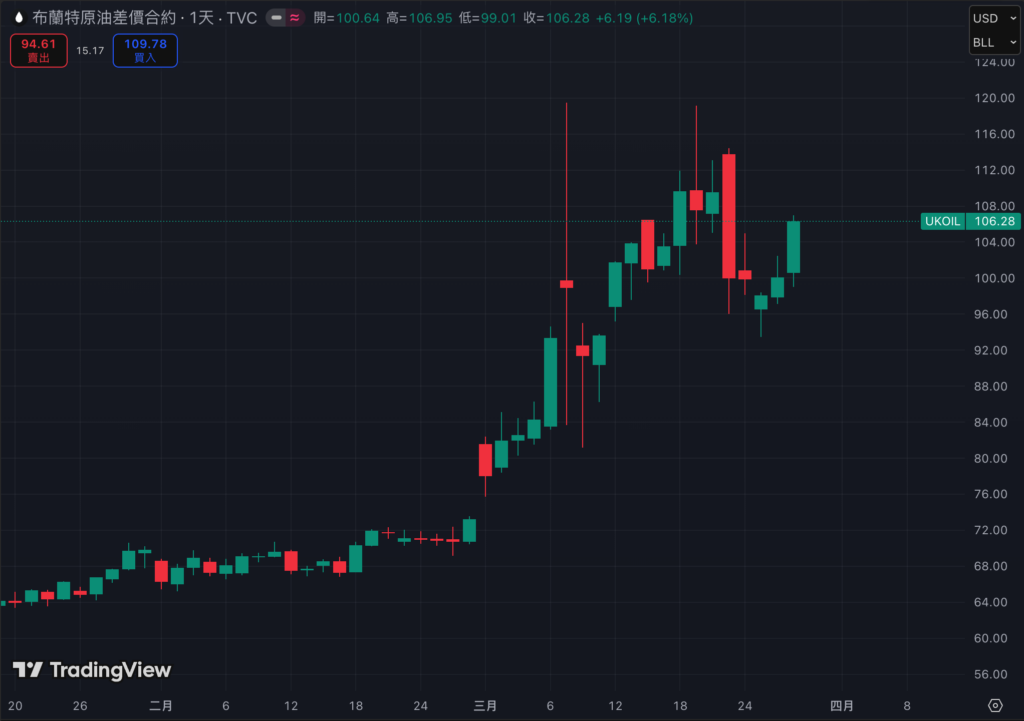
The market’s reaction is textbook: stock markets plummeted, oil prices soared, and panic spread. But the response of safe-haven assets is completely contrary to the textbook.
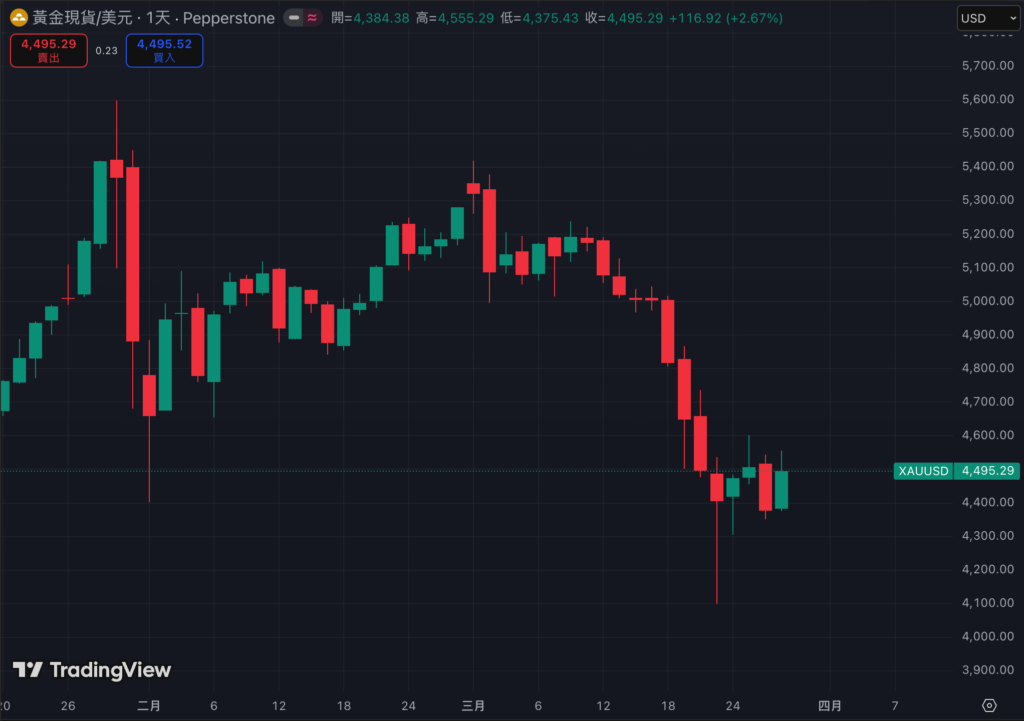
US Treasury yields rose instead of falling, as inflation expectations triggered by soaring oil prices turned bonds from safe havens into victims, the Japanese yen remained steady, and the Swiss franc showed no premium. Gold surged past $5,300 on the first day of the war but quickly retreated, currently down over 17% from its March peak.
What about Bitcoin? It fluctuated between $66,000 and $75,000 throughout March, remarkably demonstrating more resilience than gold.
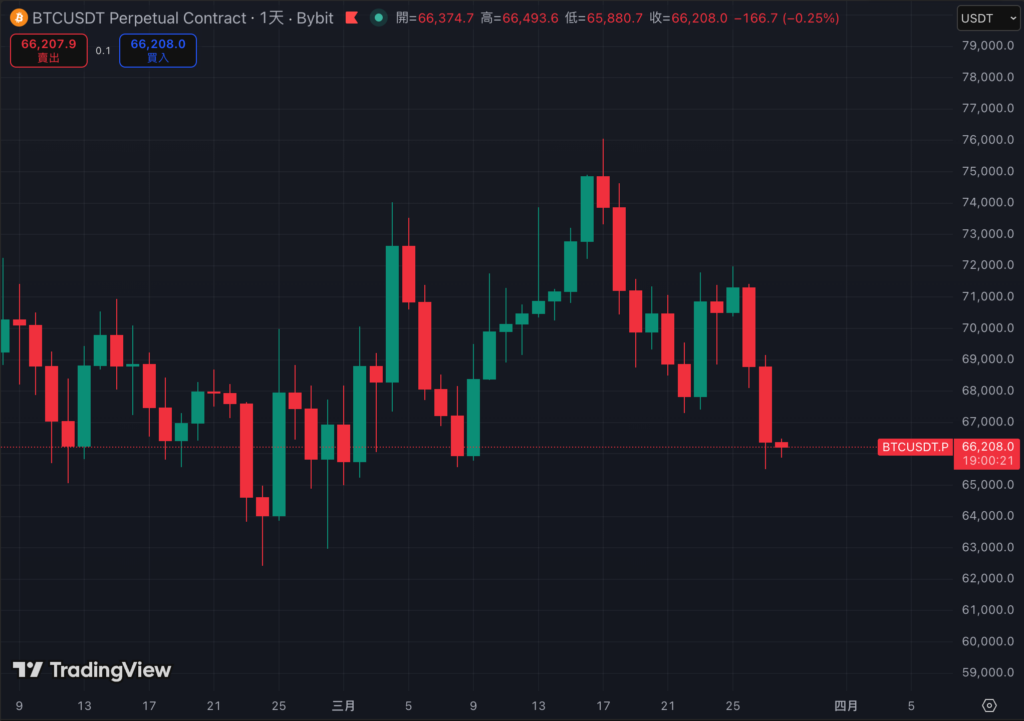
JPMorgan’s conclusion states: Amid institutional withdrawals and tightening liquidity impacting precious metals, Bitcoin seems to exhibit more stable capital flows and improving momentum.
Analysts Say Bitcoin is Digital Gold
JPMorgan Chase is one of the largest banks in the world by asset size, with a market capitalization exceeding $600 billion. Its CEO, Jamie Dimon, is known as one of Wall Street’s most prominent Bitcoin critics.
In September 2017, Dimon publicly called Bitcoin “a scam” at an investor conference and threatened that if any JPMorgan trader dealt in Bitcoin, “I would immediately fire them for two reasons: first, they are violating company policy; second, they are stupid.”
In January 2018, he said at the Davos Forum that he regretted using the term scam, but quickly added: “Bitcoin itself has no value.”
In 2020, when Bitcoin surpassed $20,000, Dimon fell silent.
In 2021, when Bitcoin surged to $60,000, Dimon fired back. He stated at a banking conference: “Bitcoin is worthless.” He compared Bitcoin to the tulip bubble—only this time, the tulips are digital.
In 2023, during a Senate Banking Committee hearing, Dimon was asked for his views on cryptocurrencies. He replied: “If I were the government, I would shut it down.”
However, at the same time that Dimon continued to denounce Bitcoin, his analysts were doing something else.
In 2021, JPMorgan’s quantitative strategy team was the first to use the term “digital gold” in a research report to describe Bitcoin, recommending a 1% allocation of Bitcoin in investment portfolios. After the Bitcoin spot ETF was approved in the US in 2024, JPMorgan became one of the first large banks to offer clients access to Bitcoin ETF trading. In 2025, JPMorgan’s blockchain platform Onyx processed over $900 billion in transactions.
Now, in March 2026, JPMorgan’s analysts have put in writing: in a real geopolitical crisis, Bitcoin has shown characteristics of safe-haven demand, while gold and silver have weakened.
While it seems this is a corporate version of cognitive dissonance. But if you look closely, this is standard operating procedure on Wall Street.
Dimon’s job is to manage risks and regulatory relationships. Publicly supporting Bitcoin offers no advantage to a globally systemically important bank subjected to triple regulation by the Federal Reserve, OCC, and FDIC; but the analysts’ job is to follow the data, and when the data shows Bitcoin’s performance in war outperforms gold, they won’t refrain from writing because the boss doesn’t like it.
In plain language, Dimon publicly says no, but JPMorgan’s balance sheet says the body is honest.
An Exam That Isn’t Finished Yet
Looking back, the Bitcoin story of March 2026 is an exam divided into two acts.
The first act is the first week of the war. All safe-haven assets failed simultaneously, and Bitcoin plummeted to $63,000. The conclusion of this act is: in extreme panic, Bitcoin is still a risk asset.
The second act is the third to fourth week of the war. Gold begins its longest consecutive decline in a century, silver ETFs are redeemed, but Bitcoin holds steady, with institutions buying the dip. The conclusion of this act is: under ongoing geopolitical pressure, Bitcoin shows resilience different from gold.
JPMorgan’s report is an endorsement of the second act.
But this exam is not over. The Iran war will enter its fifth week with no resolution in sight. Trump repeatedly postpones the deadline for strikes on Iranian energy facilities, and the fate of the Strait of Hormuz remains uncertain. If the war escalates further, with oil prices hitting $150 or even higher, the world could enter a true stagflation scenario—can Bitcoin hold up then?
No one knows right now… so let’s continue to watch.