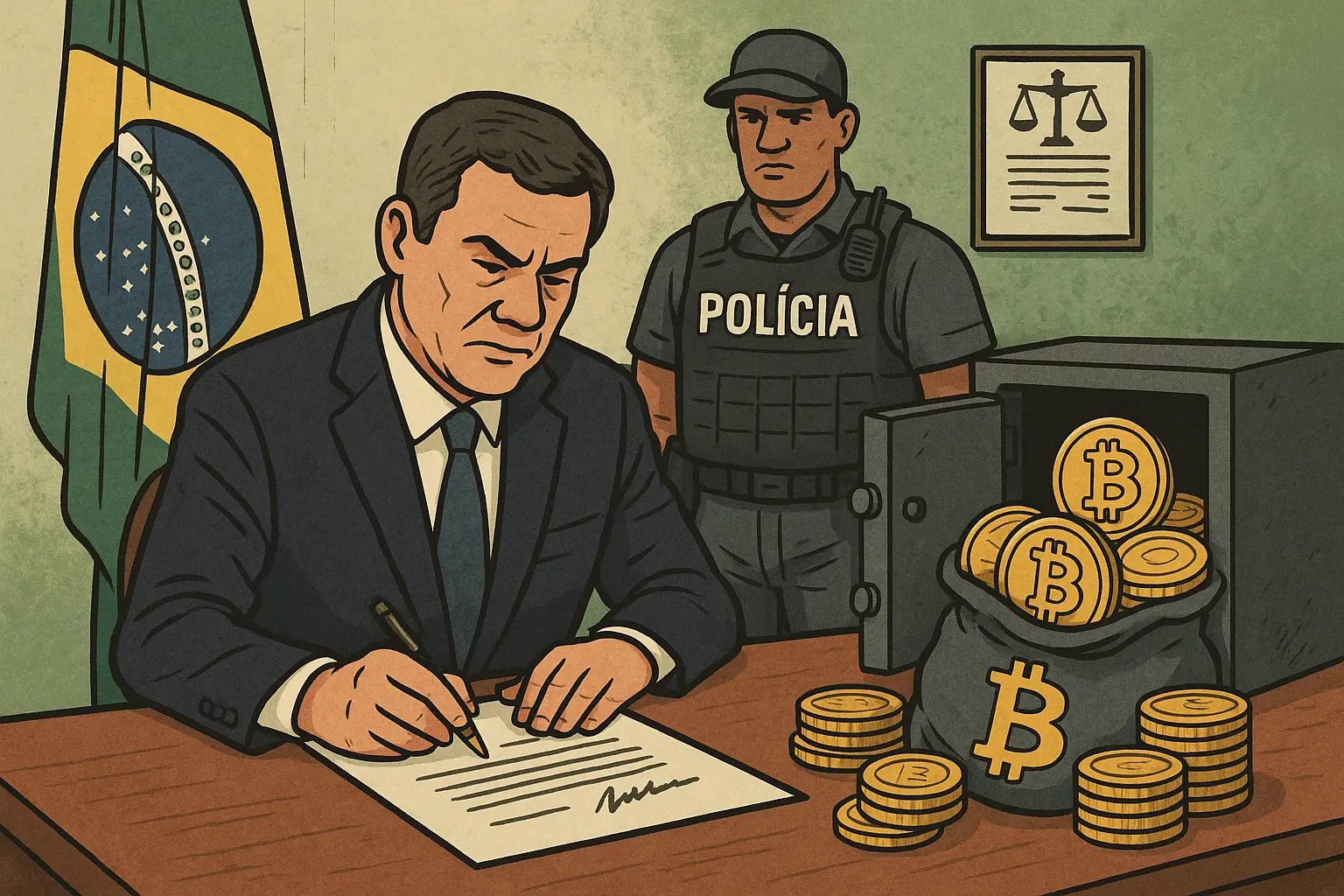
Brazilian President Luiz Inácio Lula da Silva officially signed the Anti-Gang Law on March 25, granting courts the authority to confiscate digital assets (including Bitcoin) held by criminals. The proceeds can be allocated to the Public Safety Fund to combat organized crime. Although the law does not specify particular cryptocurrencies, it explicitly includes “digital or virtual assets” within the scope of seizable, confiscatable, and frozen property.
Core Provisions of the Anti-Gang Law: What Enforcement Powers Do Courts Have?
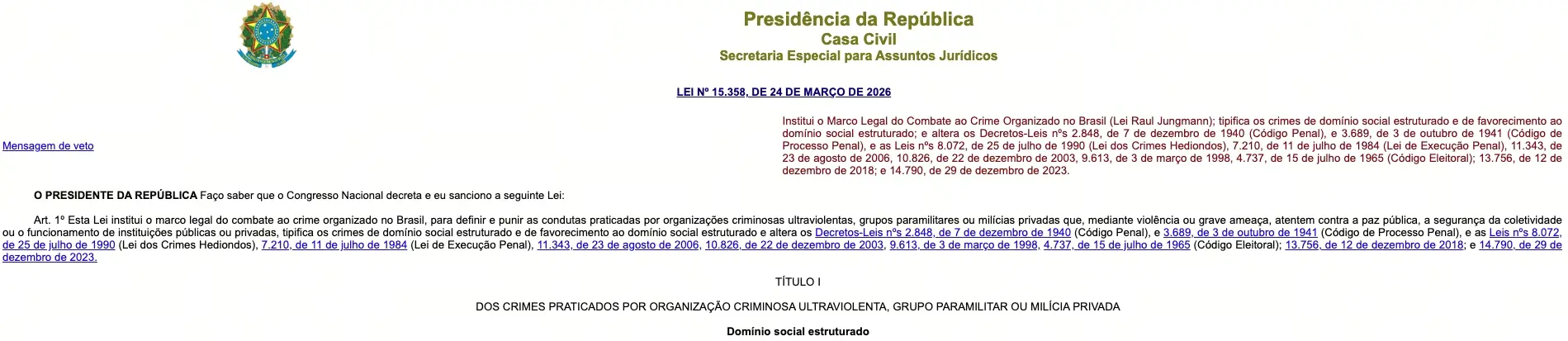 (Source: Planalto)
The core design of the Anti-Gang Law is to empower courts with broad authority to take preventive measures against assets in criminal cases. When judicial authorities find sufficient evidence pointing to serious organized crime, judges can initiate a series of asset disposal actions.
Four Main Enforcement Tools Granted to Judges
Seizure and Confiscation: Targeting the criminal’s movable and immovable property, as well as encrypted assets in digital wallets.
Blocking and Freezing: Preventing criminal groups from transferring or cashing out illegal proceeds.
Pre-emptive Sale Authorization: Before case closure, judges can authorize the early sale of seized assets, with proceeds directly allocated to the Public Safety Fund.
Public Agency Custody: Seized crypto assets are defaulted to be held by public authorities, though judges can authorize exceptions if deemed “technically insufficient.”
Brazil’s Minister of Justice and Public Security, Wellington Lima, stated: “This law represents progress in fighting organized crime, incorporating financial blocking mechanisms and strengthening the country’s ability to respond to increasingly complex criminal structures.”
Challenges in Crypto Asset Custody: A Global Warning from the South Korean Lost Coins Incident
The background of Brazil’s legislation also reflects painful lessons learned by law enforcement agencies worldwide regarding crypto custody. South Korean authorities once lost Bitcoin worth $1.4 million due to non-compliance with crypto custody standards. More seriously, the Korean National Tax Service later published a photo of a mnemonic phrase for a crypto wallet, which an unidentified individual used to extract $4.8 million worth of crypto tokens. Although eventually returned, the incident exposed gaps in law enforcement’s technical custody capabilities.
Brazil’s Anti-Gang Law leaves flexible provisions in its legal text, allowing judges to grant exceptions when public authorities lack sufficient technical capacity, demonstrating that lawmakers have referenced international precedents.
This legislation is not an isolated event. Brazil’s Central Bank and government have previously proposed measures to combat illegal use of Bitcoin and stablecoins, including shutting down an illegal Bitcoin mining operation in September 2025. The signing of the Anti-Gang Law marks a key milestone in Brazil’s systematic development of a crypto asset regulatory framework.
Frequently Asked Questions
Will Brazil’s Anti-Gang Law affect compliant cryptocurrency users?
The asset confiscation provisions are based on solid evidence of organized crime, targeting criminal proceeds rather than the digital assets of compliant users. The process requires judicial approval and must meet legal standards for serious crimes.
How are seized Bitcoins converted into public safety funds?
Judges can authorize the early sale of seized crypto assets before case closure, with proceeds directly allocated to Brazil’s Public Safety Fund to support law enforcement and security measures. The sale must be judicially authorized and is not decided unilaterally by administrative agencies.
How do enforcement agencies securely custody seized crypto assets?
Currently, standards for crypto custody vary across jurisdictions and involve technical challenges. Brazil’s law includes flexible provisions allowing exceptions when public authorities lack sufficient technical capacity, reducing the risk of incidents like South Korea’s lost coins.
Disclaimer: The information on this page may come from third parties and does not represent the views or opinions of Gate. The content displayed on this page is for reference only and does not constitute any financial, investment, or legal advice. Gate does not guarantee the accuracy or completeness of the information and shall not be liable for any losses arising from the use of this information. Virtual asset investments carry high risks and are subject to significant price volatility. You may lose all of your invested principal. Please fully understand the relevant risks and make prudent decisions based on your own financial situation and risk tolerance. For details, please refer to
Disclaimer.


