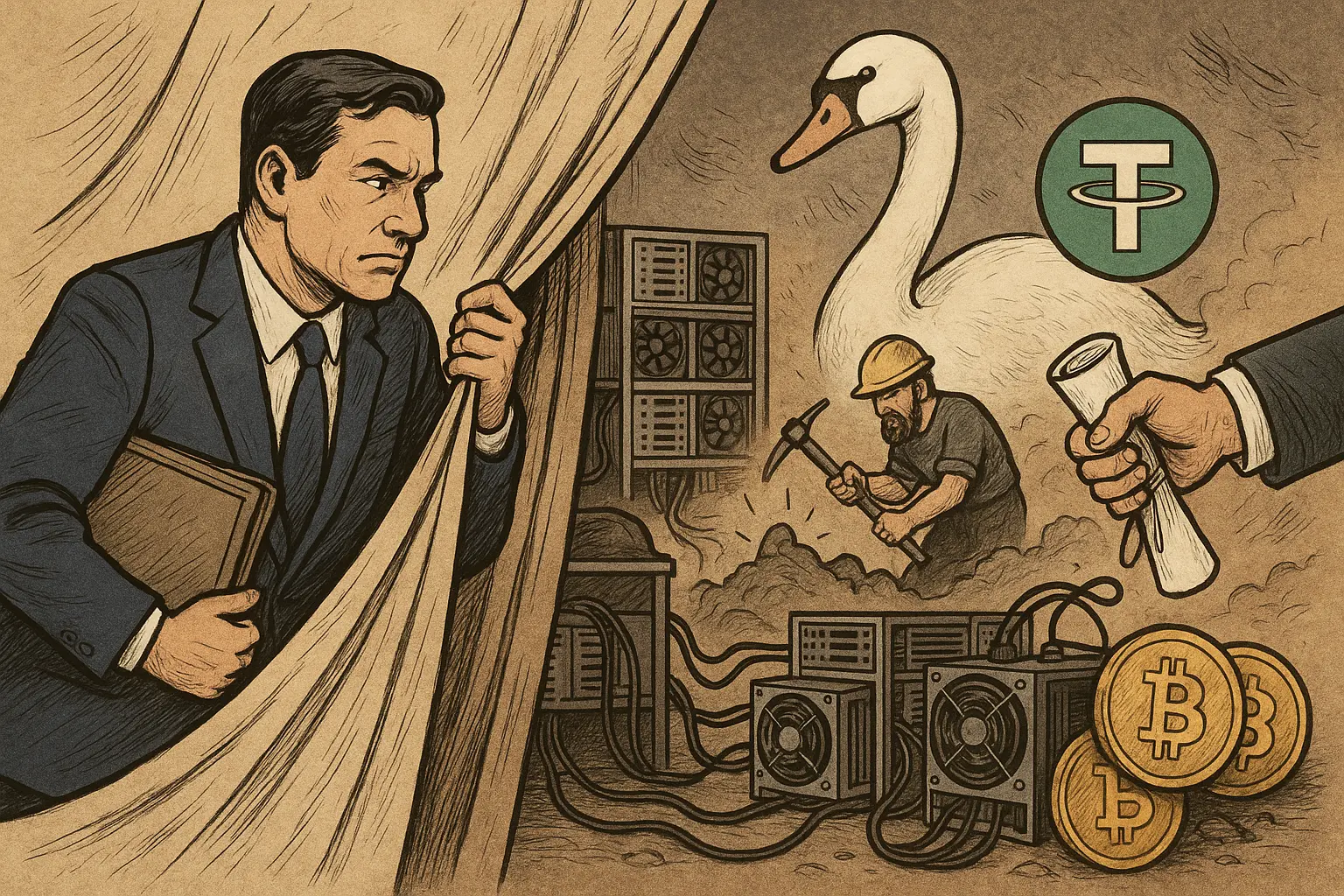
Swan Bitcoin filed a petition on March 26th under Title 28, Section 1782 of the U.S. Code in the Southern District of New York, requesting authorization to subpoena Cantor Fitzgerald and its former CEO, U.S. Commerce Secretary Howard Lutnick. The subpoena aims to support an offshore lawsuit against 2040 Energy, initiated by Tether-appointed directors.
Breakdown of the Breakup: Swan Accuses Tether of Orchestrating a Premeditated “Mining Coup”
Swan Bitcoin and Tether previously co-founded 2040 Energy, with clear roles: Tether provided funding, and Swan handled operations. However, according to documents Swan submitted to the court, this partnership dramatically unraveled in mid-2024.
Swan’s filings claim that on company servers, they discovered planning notes from then-CIO Raphael Zagury, detailing a large-scale coordinated resignation executed under legal cover provided by Tether. Zagury’s archived notes included a line stating, “It’s time to start raining and hell is coming.”
On August 8, 2024, 13 Swan employees resigned en masse within hours, and thousands of confidential files were downloaded simultaneously. Within days, Tether replaced Swan with Proton Management as the operator, whose staff were the same employees who resigned. By December 2024, Tether’s appointed directors approved a related-party transaction selling 2040 Energy’s mining assets to a Tether subsidiary at a price Swan considered significantly below market value.
Context of Lutnick and Cantor Fitzgerald’s Alleged Involvement
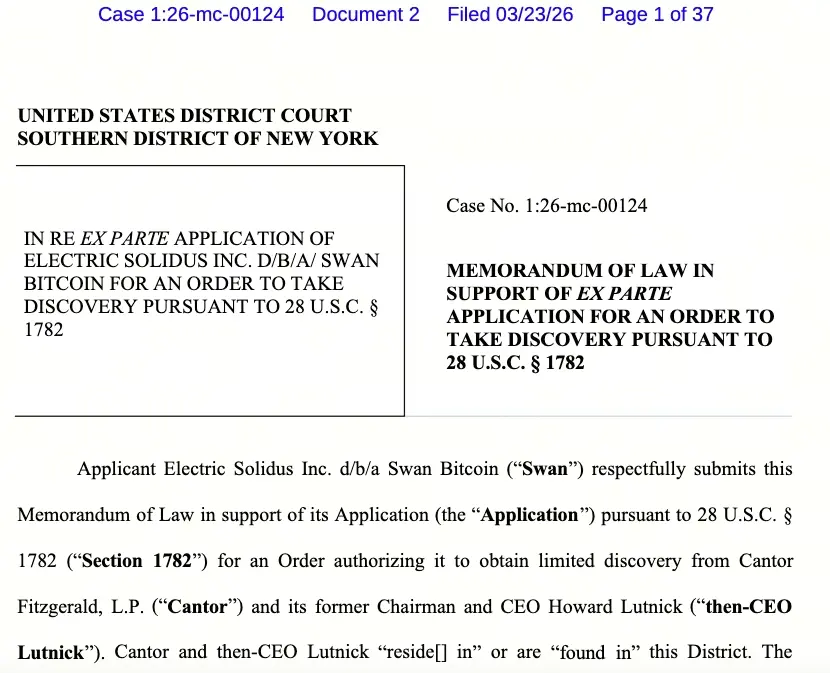 (Source: Scribd)
The allegations involving Cantor Fitzgerald and Lutnick, as presented in Swan’s documents, revolve around a coherent timeline:
Weeks before the mass resignation: Tether Chairman Devasini introduced Swan CEO Klippsten to Lutnick, then a private citizen, ostensibly to discuss Swan’s IPO plans.
Sharing confidential data: Swan subsequently provided Cantor Fitzgerald with confidential mining data and IPO information.
Post-resignation disconnection: After the mass resignation, Cantor ceased all contact with Swan without explanation.
Cantor immediately becomes Tether’s investment bank: including acting as a placement agent for Tether’s investment in Rumble, and providing SPAC tools for Twenty One Capital ($XXI), a Bitcoin treasury company now listed on the NYSE.
Zagury and Lyons appear simultaneously at Twenty One Capital: both now serve as directors appointed by Tether; Jack Mallers is CEO.
Swan’s documents also record conversations between Klippsten and Devasini, where Devasini allegedly told Klippsten that Lutnick claimed he had long worked to block all stablecoin legislation in Congress and was “essentially working full-time for Tether.” A publicly available UCC filing from October 2025 shows Tether as the secured party for Dynasty Trust A (Lutnick family trust, holding the majority stake in Cantor). Bloomberg reported that the trust borrowed an undisclosed amount from Tether to repurchase shares when Lutnick sold his holdings in accordance with federal ethics rules.
Frequently Asked Questions
On what legal basis is Swan Bitcoin requesting the subpoena?
Swan Bitcoin filed the application in the Southern District of New York under Title 28, Section 1782 of the U.S. Code. This provision allows parties to seek evidence for foreign proceedings through U.S. courts. Swan’s application pertains to evidence gathering for the offshore lawsuit against 2040 Energy.
What specific allegations does Lutnick face in this case?
The Swan filings allege three main points: that Devasini claimed Lutnick worked full-time for Tether and blocked stablecoin legislation; the timeline of interactions between Swan, Tether, and Cantor Fitzgerald before and after the resignations; and the relationship between Lutnick’s family trust and Tether via UCC security documents. Lutnick has not publicly responded to the subpoena request.
What could be the impact if the subpoena is approved?
If the court grants Swan’s request, Swan Bitcoin would gain access to communications between Cantor Fitzgerald, Tether, and related entities, potentially revealing new details about financial relationships behind the case and influencing the direction of Swan’s offshore lawsuit against Tether’s appointed directors.
Disclaimer: The information on this page may come from third parties and does not represent the views or opinions of Gate. The content displayed on this page is for reference only and does not constitute any financial, investment, or legal advice. Gate does not guarantee the accuracy or completeness of the information and shall not be liable for any losses arising from the use of this information. Virtual asset investments carry high risks and are subject to significant price volatility. You may lose all of your invested principal. Please fully understand the relevant risks and make prudent decisions based on your own financial situation and risk tolerance. For details, please refer to
Disclaimer.


