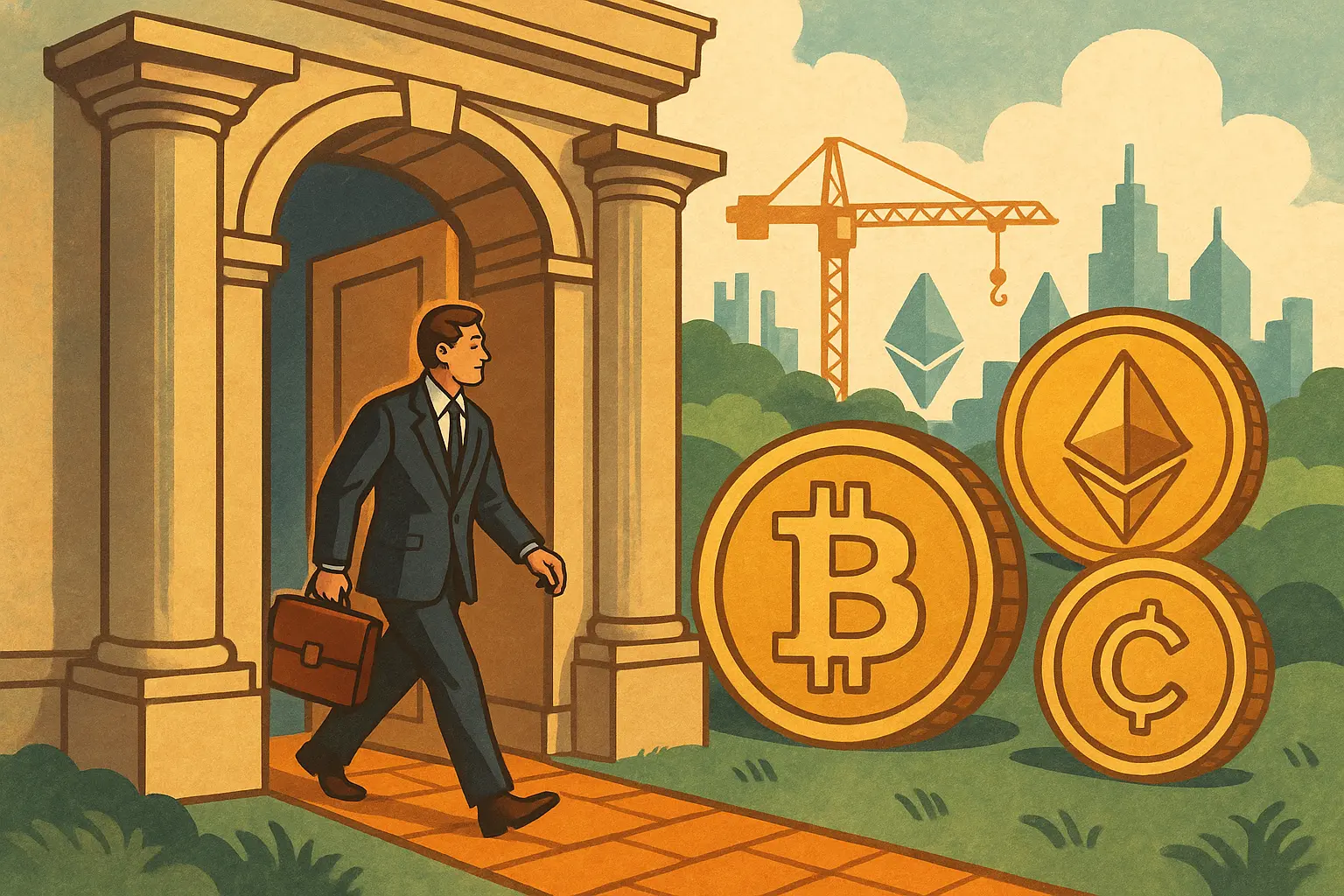
Morgan Stanley’s Digital Asset Strategy Head Amy Oldenburg directly refuted the common belief at the New York Digital Asset Summit on Tuesday that Wall Street’s entry into cryptocurrencies was driven by “FOMO” (Fear of Missing Out). She pointed out that large banks’ digital asset initiatives are a natural result of years of preparing for modernization of financial infrastructure, not a short-term trend driven by market hype.
Key Point: Wall Street’s Crypto Entry Is the Result of Long-Term Preparation
Oldenburg explicitly countered the claim that “TradFi joined crypto out of FOMO.” “That’s not accurate,” she said. “For years, we have been advancing the comprehensive modernization of financial infrastructure.” She emphasized that regulatory uncertainty and concerns over custody, compliance, and market structure had previously constrained banks from broad participation, rather than timing issues. As the regulatory environment becomes clearer, Morgan Stanley’s digital asset strategy has shifted from offering indirect products like Bitcoin funds for wealthy clients to a more comprehensive and proactive infrastructure approach.
Recent Major Digital Asset Moves by Morgan Stanley
E*Trade Spot Bitcoin ETF: Recently launched spot Bitcoin ETF trading on the E*Trade platform, expanding access for retail and wealth management clients.
Application for Own Bitcoin ETF: This month, Morgan Stanley officially submitted an application for its own branded spot Bitcoin ETF, highlighting the firm’s strategic focus on direct crypto asset products.
Tokenized Stock Trading Support: Planning to enable tokenized stock trading on an Alternative Trading System (ATS) in the second half of 2026. Currently, the ATS covers stocks, ETFs, and American Depositary Receipts (ADRs). Tokenized stocks will be a natural extension of existing products.
Oldenburg stated, “We plan to activate the cross-tracking feature in the second half of 2026 to support tokenized stock trading later.”
Technical Challenges, Stablecoin Trends, and Market Conditions
The complexity of system modernization far exceeds external expectations. “We have to relearn legacy infrastructure, pipelines, and system architecture,” Oldenburg said, emphasizing that upgrading decades-old financial frameworks to support faster settlement and continuous trading is a complex engineering challenge spanning multiple technical layers.
She also highlighted the gap in understanding between crypto startups and large banks—founders often underestimate the complexity of banking systems. Oldenburg stressed that banks cannot modernize in isolation: “This is an extremely complex, highly integrated global network. We cannot achieve modernization alone.” Cross-institutional coordination is essential for true interoperability.
In this context, stablecoins are gaining increasing attention from institutions due to their faster, lower-cost transfer capabilities compared to traditional systems. Despite recent weakness in the overall token market, Oldenburg noted that on-chain trading activity continues to grow. “This is still in the early stages,” she said, indicating that the deep integration of Wall Street and cryptocurrencies is a gradual but already underway historical process.
Frequently Asked Questions
Q: Why does Morgan Stanley deny that FOMO was the reason for its entry into cryptocurrencies?
Oldenburg believes Morgan Stanley’s crypto initiatives are the result of years of financial infrastructure modernization, not market hype. She pointed out that interpreting large banks’ digital asset moves as a short-term FOMO response overlooks the years of technical and regulatory groundwork behind these efforts.
Q: How does Morgan Stanley plan to support tokenized stock trading?
Morgan Stanley plans to enable tokenized stock trading on its ATS in the second half of 2026. Currently, the ATS covers stocks, ETFs, and ADRs, and tokenized stocks will be a natural extension of existing asset classes.
Q: What are the main obstacles to banking system modernization?
Key challenges include upgrading legacy financial frameworks that are decades old, coordinating across global institutions, and advancing technology deployment in an environment where regulatory frameworks are still being established. Oldenburg emphasized that modernization cannot be done in isolation; it requires collaboration across the entire financial system.
Disclaimer: The information on this page may come from third parties and does not represent the views or opinions of Gate. The content displayed on this page is for reference only and does not constitute any financial, investment, or legal advice. Gate does not guarantee the accuracy or completeness of the information and shall not be liable for any losses arising from the use of this information. Virtual asset investments carry high risks and are subject to significant price volatility. You may lose all of your invested principal. Please fully understand the relevant risks and make prudent decisions based on your own financial situation and risk tolerance. For details, please refer to
Disclaimer.


