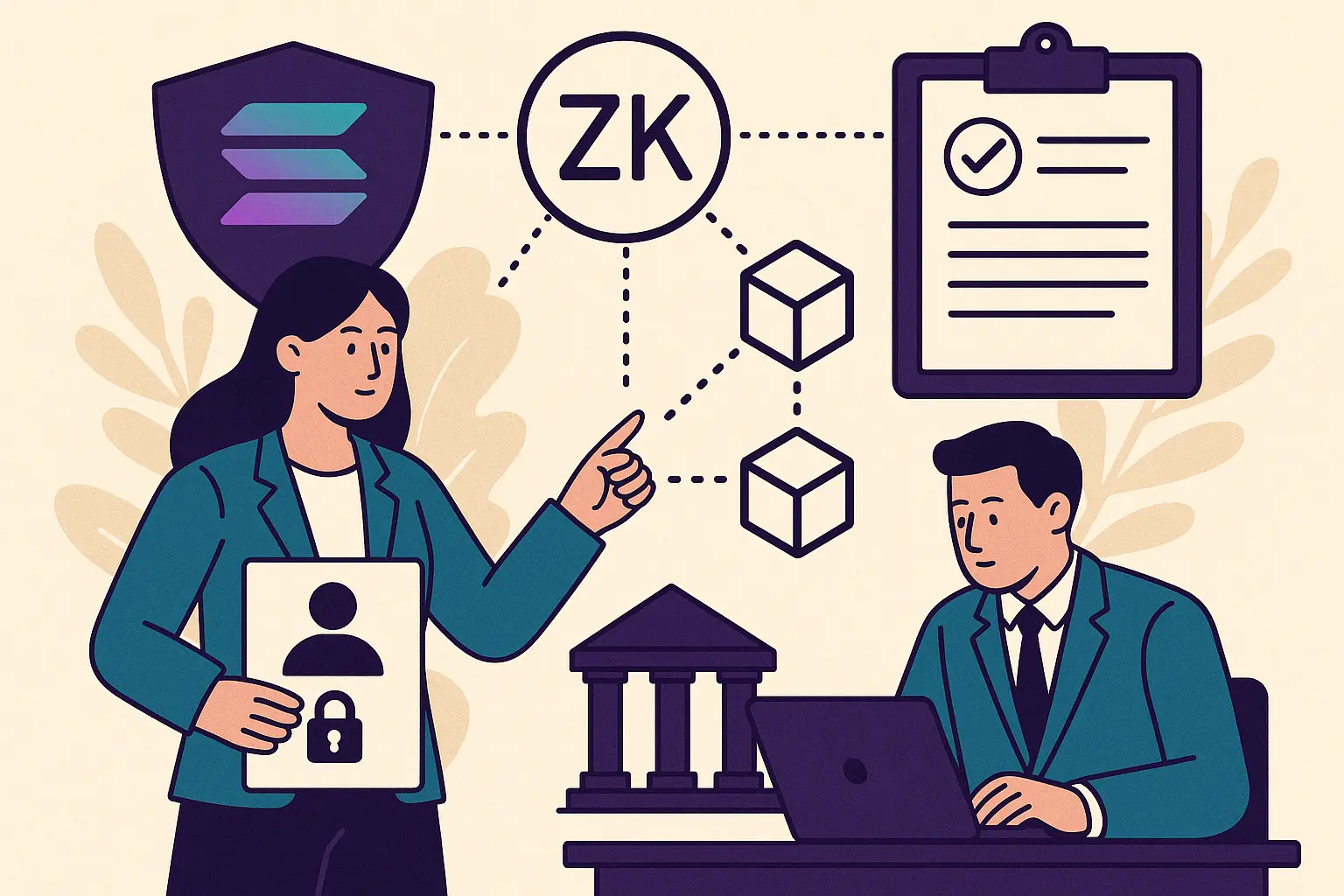
The Solana Foundation published a report on Monday proposing that the next phase of institutional adoption of cryptocurrencies will no longer rely solely on transparency but will depend more on whether enterprises can flexibly control disclosures and recipients. The report defines four privacy modes, ranging from pseudonymous to fully private systems, and emphasizes Solana’s high throughput and low latency, enabling advanced privacy technologies such as Zero-Knowledge Proofs (ZK Proof) to operate at near-internet speeds while remaining compliant with regulatory requirements.
Core Challenges of Institutional Adoption: Why Fully Transparent Blockchains Are Not Enough
Traditional public blockchains are designed around openness and transparency, with users identified only by wallet addresses, and transactions are visible and traceable. While this “pseudonymous” architecture forms the foundation of decentralized finance, it has clear limitations in real-world enterprise applications.
Financial institutions may need to prove transaction legitimacy to regulators without revealing counterpart identities; companies handling payroll must prevent employee salary data from being publicly exposed; organizations executing large trades do not want their positions to be disclosed prematurely in the market. The Solana Foundation explicitly states in the report: “For enterprises, privacy is a spectrum, not a switch.”
Four Privacy Modes: From Publicly Traceable to Fully Private
Pseudonymous Mode: Identity hidden behind wallet addresses, transaction data fully public — the basic state of existing public chains.
Confidential Mode: Participant identities are public, but sensitive data such as balances and transfer amounts are encrypted — suitable for scenarios where transaction legitimacy needs verification but amounts should remain private.
Anonymous Mode: Participant identities are hidden, transaction data remains visible — applicable where transaction verification is needed but identities must be protected.
Fully Private System: Both identities and transaction data are protected through Zero-Knowledge Proofs (ZK Proof) and Multi-Party Computation (MPC), ideal for organizations with the highest privacy requirements.
The Solana Foundation states that companies can flexibly combine different tools based on specific business needs, such as hiding transaction amounts, verifying information validity without revealing details, or precisely controlling access to certain data.
Balancing Privacy and Compliance: Audit Key Mechanism
A key point in the report is that privacy protection and regulatory compliance are not mutually exclusive.
The foundation highlights that “Audit Keys” allow regulators or designated third parties to decrypt specific transactions when necessary, while keeping others opaque. Wallets can also demonstrate compliance status to relevant parties without revealing personal identities, providing a feasible technical solution for AML and other financial regulations.
Solana’s speed advantage is central here: its high throughput enables the deployment of computationally intensive privacy technologies like ZK Proof and MPC at near-internet speeds, opening doors for institutional applications such as encrypted order books and private credit risk calculations that were previously difficult to implement.
The report concludes: “Privacy is a market demand. On Solana, you can choose your privacy level—from encrypted balances to zero-knowledge anonymity, to multi-party confidential computation. Each level corresponds to a compliance pathway and can be integrated with a broader ecosystem.”
Frequently Asked Questions
Q: What are the four privacy modes described in the Solana Foundation report?
The report defines four levels: Pseudonymous Mode (transactions visible, identities hidden behind wallet addresses), Confidential Mode (identities public, amounts encrypted), Anonymous Mode (identities hidden, transaction data visible), and Fully Private System (both identities and transaction data fully protected by ZK Proof and MPC). Enterprises can combine these levels flexibly based on their needs.
Q: How does the privacy framework ensure Solana remains compliant with AML and other regulations?
The report introduces the “Audit Key” mechanism, allowing regulators to decrypt specific transactions when necessary, while keeping others opaque. Additionally, wallets can prove compliance status without revealing personal identities, making Solana’s privacy features compatible with AML and other financial oversight frameworks rather than conflicting with them.
Q: Why is Solana’s speed critical for the implementation of privacy technologies in institutions?
Privacy technologies like ZK Proof and MPC are computationally intensive and difficult to deploy at scale on low-throughput chains. Solana’s high throughput and low latency enable these technologies to run at near-internet speeds, transforming theoretical privacy solutions into practical, deployable applications such as encrypted order books and private credit risk calculations.
Disclaimer: The information on this page may come from third parties and does not represent the views or opinions of Gate. The content displayed on this page is for reference only and does not constitute any financial, investment, or legal advice. Gate does not guarantee the accuracy or completeness of the information and shall not be liable for any losses arising from the use of this information. Virtual asset investments carry high risks and are subject to significant price volatility. You may lose all of your invested principal. Please fully understand the relevant risks and make prudent decisions based on your own financial situation and risk tolerance. For details, please refer to
Disclaimer.


