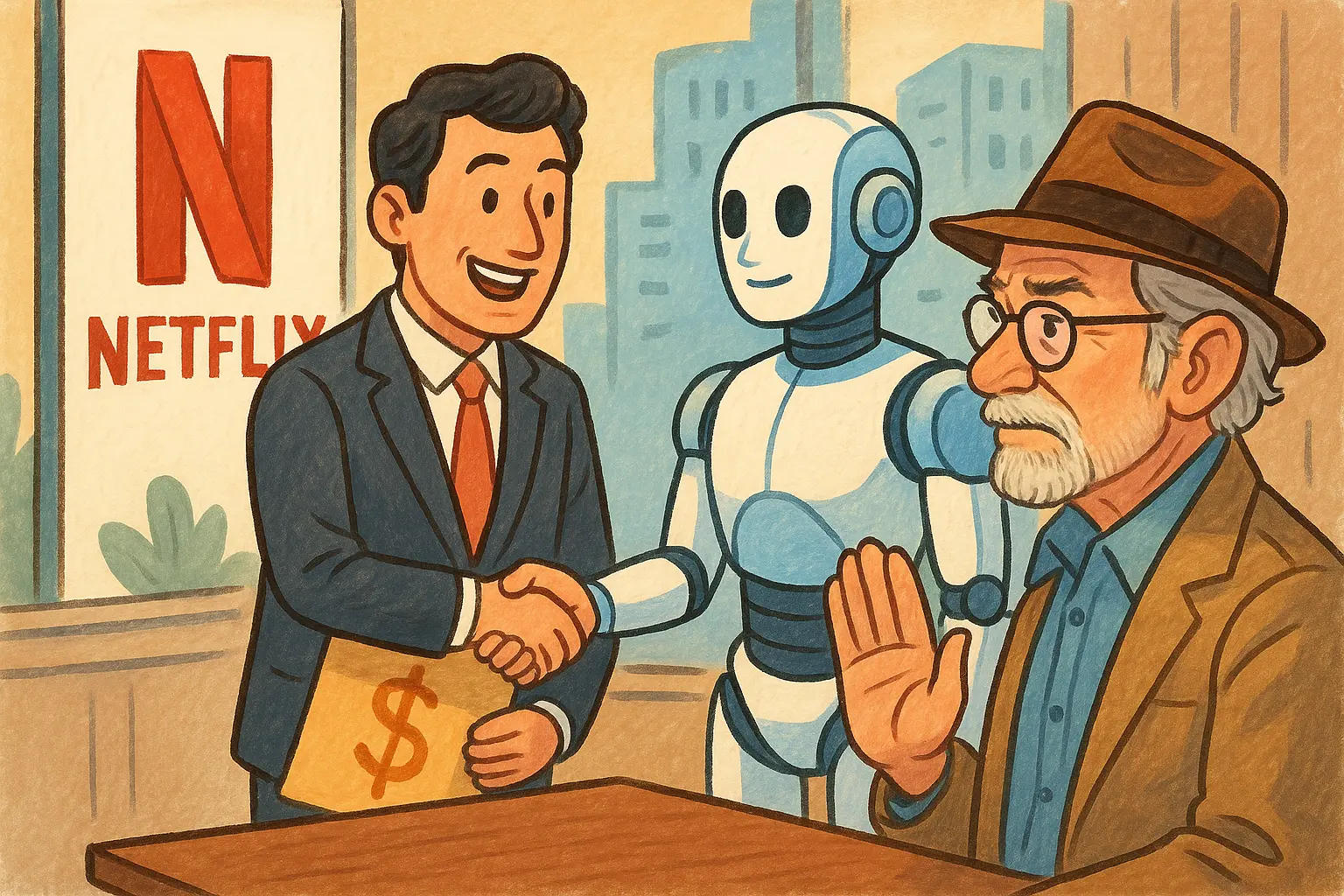
The streaming giant Netflix recently acquired AI startup InterPositive for approximately $600 million. Founded by actor Ben Affleck, the company focuses on modifying and recreating existing visual content using AI technology. At the same time, legendary director Steven Spielberg publicly stated at SXSW 2026 that he has never used AI in any of his film productions.
Netflix’s AI Investment: A $600 Million Strategic Move
Netflix views this acquisition as a significant strategic investment in generative AI. InterPositive’s core technology enables AI to repair, modify, and recreate existing footage, with broad potential applications in visual effects (VFX), post-production, and personalized content creation.
Netflix states that when used “transparently and responsibly,” generative AI can become an important tool for creators. In fact, the company had already experimented with AI-generated visual effects the previous year, aiming to reduce production costs and shorten timelines. Amid fierce competition in streaming platforms, AI is seen as a key productivity tool to maintain content supply at scale.
Spielberg’s Firm Stance: Creativity Is a Human Experience
Spielberg’s remarks at SXSW 2026 have been widely quoted, centered around three main points:
-
Clear boundaries for AI application: He does not oppose AI in other industries but explicitly opposes AI replacing human creators in the creative field.
-
Creativity as an extension of human experience: Replacing creators with AI would weaken the emotional depth and authenticity of works, stripping them of their humanistic essence.
-
Concrete stance on work practices: “All seats in my writers’ room are occupied,” a direct and strong rejection of AI entering the core of creative work.
It’s worth noting that Spielberg has previously explored AI and future technology in works like A.I. Artificial Intelligence and The Key Report, but in his own creative practice, he remains highly cautious about AI’s direct involvement.
Hollywood’s Structural Divide: Copyright Lawsuits, Theatrical Rejections, and Creator Alliances
Spielberg’s stance echoes a broader trend in Hollywood against AI-driven creation. In December last year, Oscar-winning figures like Natalie Portman, Cate Blanchett, and Guillermo del Toro supported the “Creators Coalition on AI,” calling for legally binding standards on AI usage.
Meanwhile, AMC Theatres recently refused to screen an AI-generated short film, indicating that theaters are also cautious about AI-created content. On the corporate level, many film and TV companies are investing heavily in AI but simultaneously filing copyright infringement lawsuits against companies training AI with unauthorized content, highlighting an industry in a period of exploration and conflict.
Most entertainment companies currently see AI as a “support tool” rather than a core creator, but as technology matures, the integration of AI into screenwriting, editing, and visual generation could accelerate significantly.
Frequently Asked Questions
What is InterPositive, the company acquired by Netflix, and what is its core technology?
InterPositive, founded by actor Ben Affleck, specializes in modifying, repairing, and recreating existing visual content using AI. Its applications include visual effects post-production, image restoration, and personalized content generation. Netflix acquired it for $600 million to enhance its AI-driven content creation capabilities.
Why does Spielberg oppose AI involvement in filmmaking?
Spielberg stated at SXSW 2026 that creation is an extension of human experience. Replacing creators with AI would weaken the emotional depth of works. His position is specifically against AI replacing human creators, not a blanket rejection of AI in other fields.
How is Hollywood currently responding to the rise of AI in creation?
Hollywood shows clear divisions: platforms like Netflix are investing heavily in AI; creators are calling for legal protections; AMC Theatres recently rejected AI-generated short films; multiple studios are filing copyright lawsuits over AI training data issues.
Disclaimer: The information on this page may come from third parties and does not represent the views or opinions of Gate. The content displayed on this page is for reference only and does not constitute any financial, investment, or legal advice. Gate does not guarantee the accuracy or completeness of the information and shall not be liable for any losses arising from the use of this information. Virtual asset investments carry high risks and are subject to significant price volatility. You may lose all of your invested principal. Please fully understand the relevant risks and make prudent decisions based on your own financial situation and risk tolerance. For details, please refer to
Disclaimer.


