As Web3 applications expand, on-chain data infrastructure must deliver efficient data indexing while implementing sustainable resource allocation. In decentralized networks, data processing, resource provisioning, and ecosystem collaboration require robust incentive systems to maintain efficiency and stability as platforms scale.
Sentio is a real-time on-chain data infrastructure platform that leverages the ST token to link resource usage and ecosystem incentives. ST serves not only as a tool for value transfer within the platform, but also drives Developer engagement, optimizes resource allocation, and strengthens ecosystem collaboration.
What Is the ST Token?
ST is the core functional token of the Sentio ecosystem, with a total supply of 1 billion. It primarily supports platform resource scheduling and ecosystem incentives. Designed as the value medium for the real-time on-chain data network, ST unifies data service usage, network resource allocation, and ecosystem participation into a cohesive economic cycle.
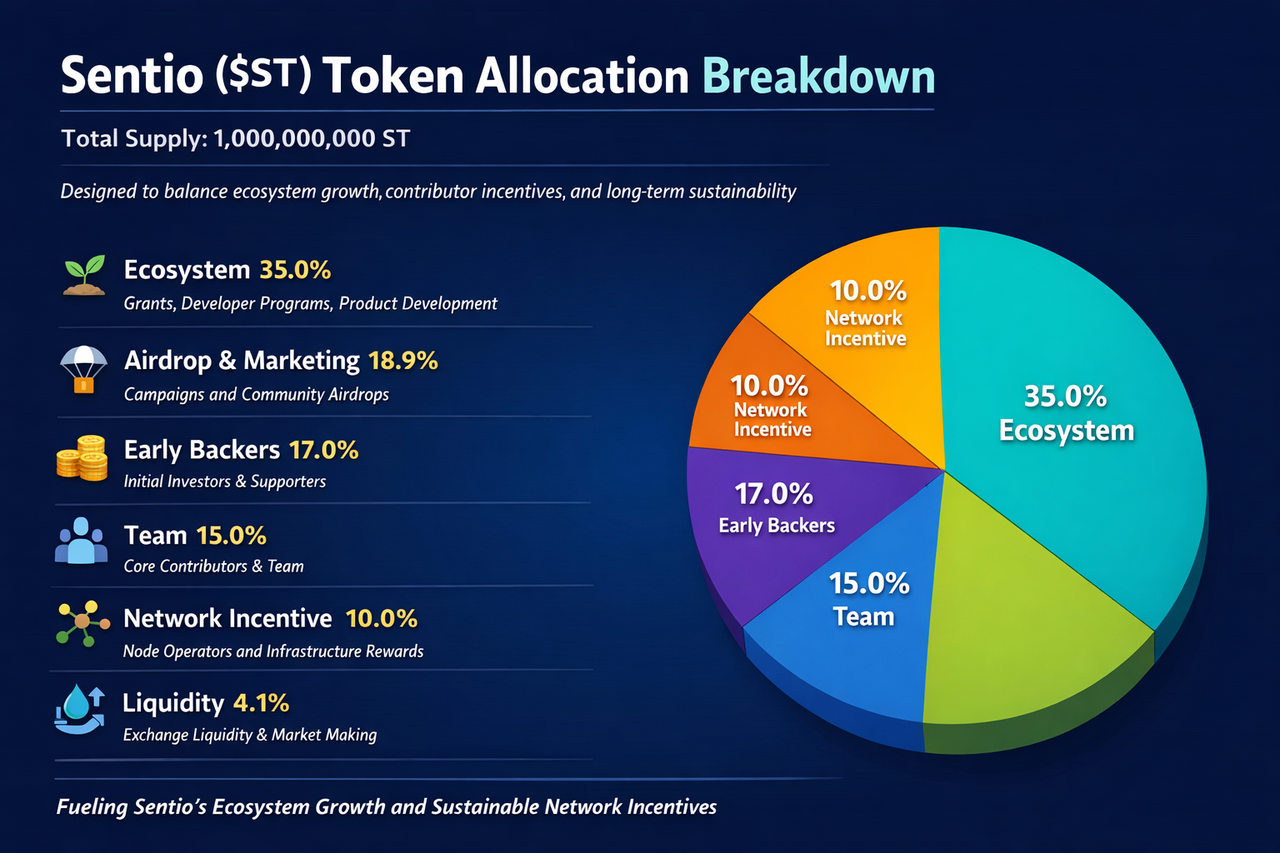
Sentio’s real-time data indexing and visualization services require coordination between data processing resources, Developer demand, and network participants. Fundamentally, ST is more than just a payment method—it is a key component for incentivizing resources within the Sentio data infrastructure network.
What Are the Core Uses of ST in the Sentio Network?
ST’s primary function is to connect platform service demand with network resource supply. Its main use cases include payment, staking, and governance:
- Payment Method: Access data services via Sentio Units (SU) and pay using $ST
- Stake: Nodes stake $ST as required to join the network; improper actions may result in slashing
- Governance: Token holders can vote on protocol parameters
Within the Sentio ecosystem, Developers consume network resources when utilizing real-time data indexing, visualization, and alert services, with ST serving as the metric for resource value. This mechanism decentralizes resource allocation, linking usage and value distribution through tokens. Developers generate demand by using services, while ecosystem participants earn incentives for providing resources, creating a cyclical system.
ST is essential for establishing a sustainable value transfer mechanism for real-time data services in the Sentio network.
How Does ST Support Ecosystem Incentives?
The ecosystem incentive mechanism aims to foster a positive cycle among participants who contribute resources or use services. Sentio utilizes ST to create this incentive structure, linking Developer demand and network resource supply.
As Developers use platform data services, network resource consumption rises. Resource providers and ecosystem participants are rewarded with ST, encouraging broader participation and enhancing the platform’s data processing capacity.
Token incentives improve resource allocation efficiency and boost network scalability, enabling real-time data services to operate sustainably at greater scale.
How Does ST Optimize Resource Allocation?
On-chain data processing demands significant computing and storage resources. Without an effective allocation mechanism, platforms may face congestion and declining efficiency as user numbers grow.
ST ties resource demand directly to its token mechanism, allowing for flexible resource allocation. Increased Developer usage drives up demand for ST, while resource contributors are incentivized for their support. This approach clarifies supply and demand dynamics and improves resource utilization.
For real-time data platforms like Sentio, efficient resource scheduling is critical to service performance, making ST’s coordination role foundational to platform operations.
What Is the Value of ST in Sentio Ecosystem Expansion?
As Sentio integrates more on-chain protocols and development scenarios, the platform requires enhanced ecosystem collaboration to support expansion. ST connects ecosystem participants, facilitating this growth.
Developer engagement with platform services increases data demand, and the token incentive mechanism attracts more resource providers. As participation grows, the platform’s data service capabilities expand, drawing in additional Developers.
This virtuous cycle positions ST as a key tool for network expansion, supporting existing services and maintaining balanced resource supply and incentives as the ecosystem grows.
Why Is the ST Incentive Mechanism Important?
Technical capability alone is not enough for Web3 data infrastructure to achieve sustained operation; economic mechanisms are essential for network vitality. Incentive mechanisms are crucial for attracting Developers and resource participants over the long term.
ST enables Sentio’s data service network to operate on a “use equals incentive” model. Developers drive demand by using services, while network participants earn returns for contributing resources, promoting platform sustainability.
As demand for real-time on-chain data increases, incentive mechanisms will become a core competitive advantage for data infrastructure. ST is Sentio’s critical tool for building this competitiveness.
Summary
ST is the core functional token of the Sentio ecosystem, connecting data service usage and network resource incentives to establish a sustainable value transfer mechanism for real-time on-chain data infrastructure. Through resource allocation and ecosystem incentives, ST empowers Sentio to scale its network while delivering real-time data indexing services.
With Web3’s growing demand for real-time data, data infrastructure platforms must combine technical capability with robust incentive systems. ST’s design embodies this trend, supporting Sentio’s network operations and driving long-term ecosystem expansion.
FAQs
What Are the Main Uses of the ST Token?
ST primarily supports resource usage and ecosystem incentives in the Sentio network, connecting Developer demand with data infrastructure resource supply.
What Is ST’s Role in Sentio?
ST serves as the value medium within Sentio’s data service network, optimizing resource allocation and driving ecosystem collaboration.
Why Does Sentio Need a Token Incentive Mechanism?
Real-time on-chain data services require ongoing resource support, and the token mechanism enables sustainable resource supply and incentive cycles.
How Does ST Support Sentio Ecosystem Expansion?
By linking Developer demand and resource supply, ST encourages ecosystem participation and enhances the platform’s overall service capacity.







