As the crypto market continues to evolve, leveraged trading tools are becoming more accessible to everyday users. While traditional derivatives trading offers flexible leverage options, its complexity and liquidation risks often push users to look for simpler alternatives. As a result, margin-free leveraged products have gained increasing attention.
Among these solutions, ETF leveraged tokens and Smart Leverage stand out as two representative approaches. The former emphasizes standardization and fixed leverage, while the latter introduces a dynamic mechanism for more flexible risk management. These two product types differ significantly in both design philosophy and practical use, making it essential to understand their distinctions before choosing between them.
Overview of Smart Leverage and ETF Leveraged Tokens
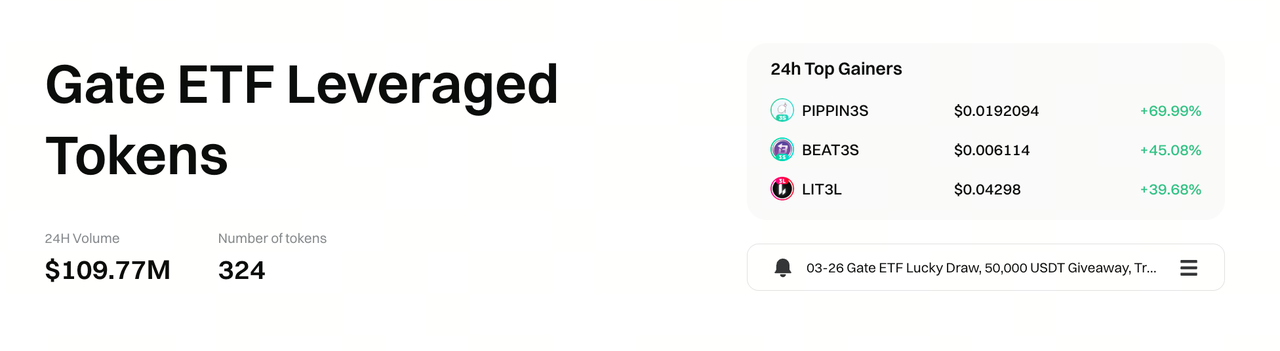
ETF leveraged tokens are derivatives that amplify the price movements of an underlying asset using fixed leverage multiples, such as 2x or 3x. Their core mechanism relies on periodic rebalancing to maintain the target leverage ratio. This structure is straightforward, and the return profile is easy to understand, which makes it relatively stable in trending markets.
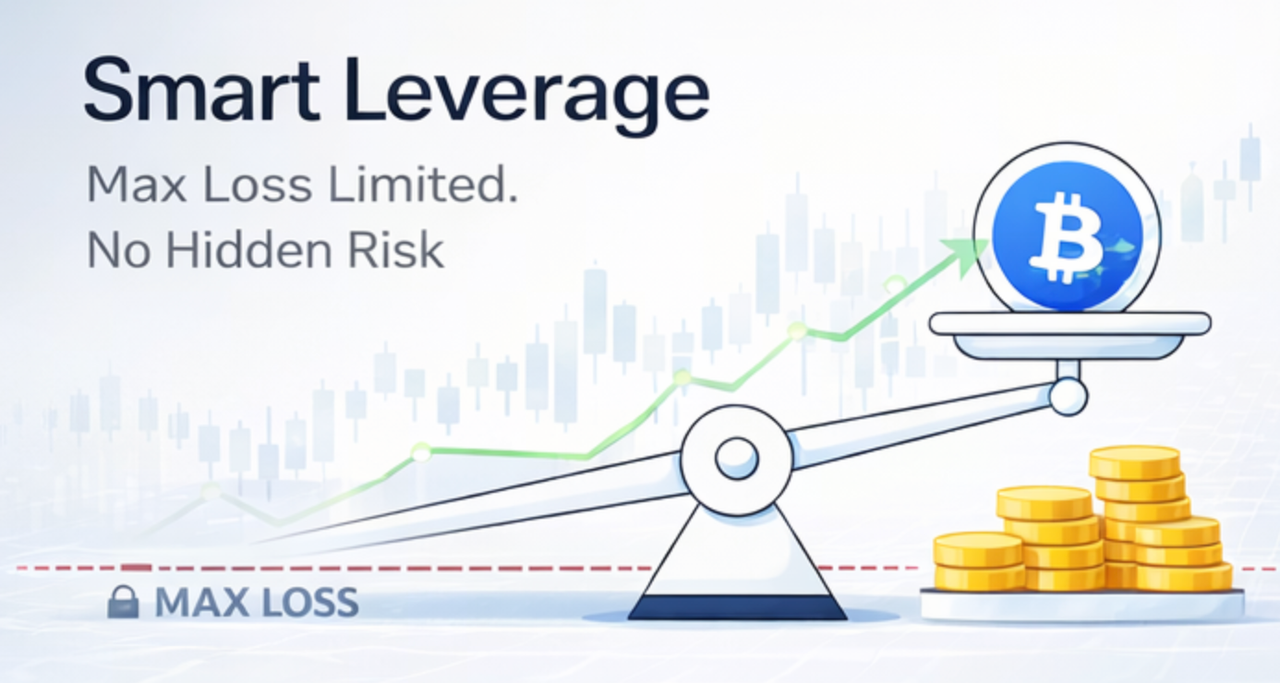
In contrast, Smart Leverage is an intelligent trading tool based on dynamic leverage. It automatically builds and adjusts leveraged positions, modifying risk exposure in response to market volatility. This results in a more flexible performance profile, with an emphasis on adaptability rather than fixed rules.
Smart Leverage vs ETF Leveraged Tokens: Summary Comparison
Overall, ETF leveraged tokens are better suited for traders seeking fixed-multiple returns in clear trends, while Smart Leverage is more appropriate for navigating volatile or complex markets, offering greater flexibility at the cost of higher uncertainty.
| Dimension |
Smart Leverage |
ETF Leveraged Tokens |
| Leverage Mechanism |
Dynamic adjustment |
Fixed multiples |
| Risk Control |
Adaptive position management |
Rebalancing mechanism |
| Return Logic |
Path-dependent |
Multiple-based amplification |
| Market Suitability |
Volatile / complex markets |
One-sided trending markets |
| User Experience |
Automated |
Standardized |
| Return Predictability |
Lower |
Higher |
Core Differences Between Smart Leverage and ETF Leveraged Tokens
Although both Smart Leverage and ETF leveraged tokens provide a “margin-free leveraged trading experience,” their underlying design logic differs substantially. These differences affect not only return outcomes but also their suitability under different market conditions.
From leverage implementation and risk control to user experience and strategy alignment, these products represent two distinct approaches: dynamic adaptability versus fixed rule-based systems.
Key Difference 1: Leverage Mechanism (Dynamic vs Fixed)
The defining feature of ETF leveraged tokens is their fixed leverage multiple, such as 3x long or short, with the goal of consistently maintaining that ratio. Smart Leverage, on the other hand, does not adhere to a fixed multiple and instead adjusts positions dynamically in response to market changes.
In this sense, ETFs function more like linear amplification tools, while Smart Leverage behaves more like an adaptive leverage system.
Key Difference 2: Risk Control Methods
ETF leveraged tokens rely primarily on rebalancing mechanisms to maintain leverage. This works well in trending markets but can lead to volatility decay in sideways conditions.
Smart Leverage manages risk by dynamically adjusting positions. When volatility increases, the system may reduce leverage to limit potential losses. This approach is more flexible, though also less predictable.
Key Difference 3: Return Logic
The return profile of ETF leveraged tokens is relatively straightforward, it amplifies the underlying asset’s price movement by a fixed multiple. However, over longer periods or in volatile markets, actual returns may deviate from expectations.
Smart Leverage, by contrast, produces returns that depend heavily on the market path. Because leverage is constantly changing, final outcomes depend not only on price direction but also on how prices move over time. This path dependency makes performance more complex.
Key Difference 4: Market Suitability
In strong, one-directional trends, ETF leveraged tokens often perform better because their fixed multiples directly amplify gains.
In contrast, Smart Leverage is better suited to volatile or complex markets. Its dynamic mechanism can, to some extent, cushion the impact of fluctuations.
Key Difference 5: User Experience and Operation
From a user perspective, both products offer a trading experience similar to spot markets, with relatively simple execution.
ETF leveraged tokens are more standardized, with clear rules that are easy to understand. Smart Leverage, however, relies more on automated system management. While users do not need to manage leverage manually, they also have less direct control over positions.
Smart Leverage vs ETF Leveraged Tokens: Choosing Based on User Needs
For beginners, ETF leveraged tokens are generally easier to grasp due to their simple structure and transparent logic, making them a more intuitive starting point.
For users seeking more flexible risk control in complex market conditions, Smart Leverage may be more appealing. Its dynamic mechanism can offer a different performance profile, especially in volatile environments.
For short-term traders, both tools can be effective, with success depending largely on market judgment. For trend-following traders, ETF leveraged tokens are often more efficient due to their direct return amplification.
Conclusion
Smart Leverage and ETF leveraged tokens represent two distinct approaches to leverage. The former emphasizes dynamic adjustment and adaptive risk management, while the latter focuses on fixed multiples and rule-based operation.
Neither is inherently better than the other. Their effectiveness depends on the market environment and the trader’s strategy. ETFs are better suited for trending markets, while Smart Leverage performs better in volatile or complex conditions. Understanding this distinction is key to choosing the right leveraged tool.
FAQs
Is Smart Leverage completely risk-free?
No. Although there is no liquidation risk, market risk and return uncertainty still exist.
Why do contract trades get liquidated?
Liquidation occurs when the margin is no longer sufficient to cover losses, triggering forced position closure.
Which is more suitable for beginners, Smart Leverage or ETF leveraged tokens?
Generally, Smart Leverage is more suitable for beginners.
Can Smart Leverage replace contract trading?
Not entirely, each serves different use cases.
Can Smart Leverage and ETF leveraged tokens be used together?
Yes, they can be combined based on different strategies.