XT is widely used to facilitate the movement of real-world assets (RWAs) on blockchain networks. This process is not merely a technical conversion—it’s a coordinated system that integrates multiple steps. From onboarding an asset to completing a transaction, the system must create a reliable link between off-chain and on-chain components, ensuring consistency in asset status, ownership, and transaction records. Understanding this full workflow provides insight into how RWA systems function at the mechanism level.
The XT Operating Framework: A Closed-Loop Integrating On-Chain and Off-Chain Systems
XT’s operation extends beyond simple on-chain logic; it’s a closed-loop system combining off-chain asset management with on-chain state tracking. Off-chain, the focus is on asset authenticity and control; on-chain, it’s about recording state changes and executing transfer logic. These two layers are connected through mapping, maintaining consistency as assets move between systems.
Once a real-world asset enters the system, its form shifts—from a traditional finance “account record” to a blockchain “transferable state unit.” This change happens in multiple phases, not all at once, with each phase serving a unique function to create a complete asset lifecycle.
Asset Custody and Verification: Transitioning Real-World Assets to Mappable State
Before an asset can move on-chain, it must undergo custody and verification. This step ensures the asset’s authenticity, uniqueness, and controllability. Since physical assets can’t exist directly on a blockchain, regulated custodians secure the asset, establishing trust.
During this stage, the asset is locked in custody, limiting its liquidity but making it eligible for on-chain mapping. The system verifies ownership and compliance, preventing double issuance or fraudulent assets.
At the end of this phase, the asset shifts from a “physical entity” to a “digitally representable object,” laying the groundwork for tokenization.
Token Generation and On-Chain Mapping: How Assets Gain Blockchain Representation
After custody, the asset moves to on-chain mapping. Here, the real-world asset is tokenized—converted into on-chain tokens that represent rights to the asset, not the asset itself.
The blockchain system creates records specifying asset quantities, units, and mapping rules. Tokenization isn’t just a technical step; it redefines asset status so it can be recognized and transferred within the blockchain ecosystem.
Once mapping is complete, the asset takes on a new, transferable digital form—enabling it to enter the market and participate in trading.
On-Chain Trading Mechanism: How Assets Circulate in the System
In the trading phase, XT’s core function becomes asset circulation. Blockchain trading doesn’t depend on traditional intermediaries; asset transfers are executed and recorded directly through blockchain protocols.
When a user submits a trade, the system checks the asset’s status and verifies token ownership. The relevant assets are temporarily locked to prevent double spending. After the trade executes, assets move from one address to another, updating ownership records.
As trading activity increases, markets form and prices adjust based on supply and demand. Assets become dynamic, market-traded items rather than static mapped records.
Continual trading not only changes ownership but also builds liquidity—the ease with which assets can be bought or sold with minimal cost. Liquidity determines market activity.
In the XT system, liquidity accumulates as trades occur; it doesn’t exist in advance. More participants and higher trading frequency lead to price stability and market maturation.
The stability and transparency of the trading mechanism are key. Blockchain records make every transaction traceable, allowing unified reflection of market behavior and clearer price signals.
Settlement and State Updates: Completing and Confirming Transactions
In traditional finance, trade settlement and clearing are separate, often delayed steps. In XT, trade execution and settlement are nearly simultaneous.
Once a transaction is confirmed on-chain, the system immediately updates asset statuses: buyers receive the asset, sellers receive payment, and ownership records are updated in real time. This immediate update streamlines the process, enabling results to be reflected more quickly.
Finality is critical—once a trade is on-chain, it’s immutable. This provides greater certainty and reduces risks from settlement delays.
Structural Differences: XT vs. Traditional Financial Workflows
As described, the XT workflow—from custody and on-chain mapping to trading and settlement—forms a complete closed loop. Comparing this to traditional finance reveals that XT is not a simple copy, but a structural reimagining of several core steps.
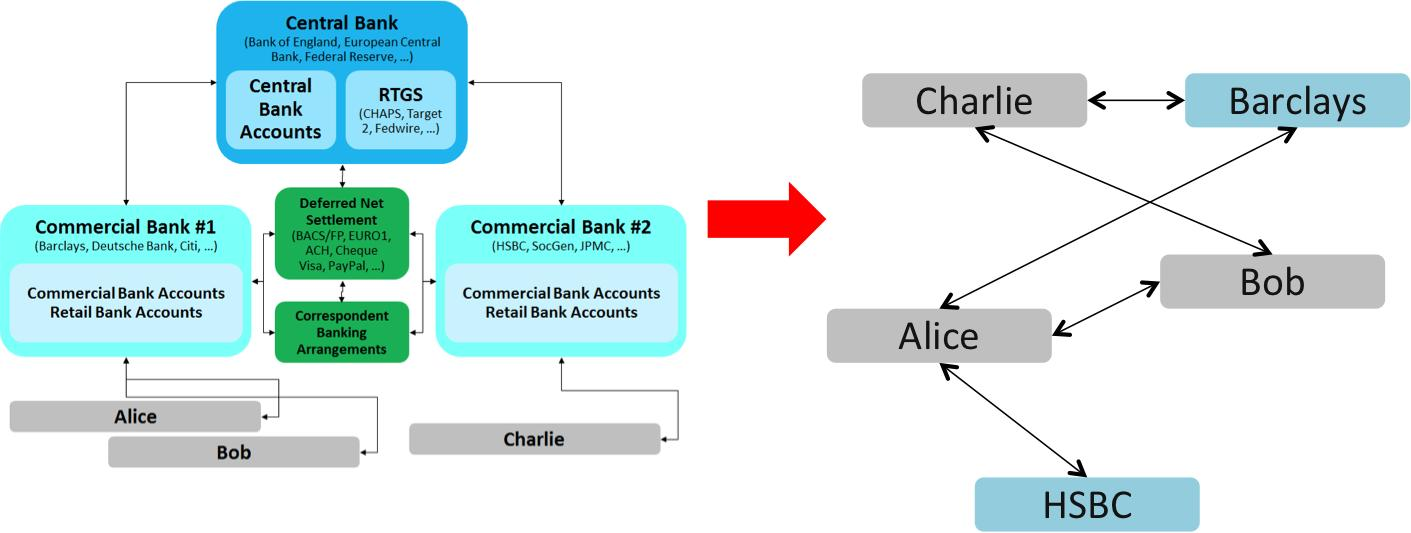
In traditional finance, assets are held in accounts, trades require intermediaries for matching and settlement, and there’s typically a time gap between execution and settlement. In XT, assets exist as blockchain tokens, trades are handled directly on-chain, and settlement/state updates are nearly instantaneous. These changes impact not just the technology, but the entire lifecycle of an asset.
Key structural comparisons include:
| Process Dimension |
XT System |
Traditional Financial System |
| Asset Entry |
Tokenized after custody |
Account registration |
| Asset Form |
On-chain token |
Account balance |
| Transaction Path |
Direct on-chain transfer |
Intermediary matching |
| Settlement Logic |
Trade equals settlement |
Trade/settlement separated |
| State Update |
Real-time on-chain |
Delayed update |
| System Structure |
On-chain/off-chain collaboration |
Centralized system |
XT fundamentally restructures traditional workflows: asset representation shifts from accounts to tokens, transaction paths move from intermediaries to direct blockchain execution, and settlement becomes synchronous rather than sequential.
These changes deliver improvements in efficiency and transparency, while also requiring careful alignment between blockchain mechanisms and real-world regulations.
Core Mechanisms in XT: Mapping, Synchronization, and Compliance
Several foundational mechanisms support stable system operation:
- Asset mapping ensures consistency between on-chain tokens and real-world assets, grounding the system in reality.
- State synchronization keeps blockchain records accurate, preventing discrepancies.
- Compliance constraints limit asset issuance and transfer, preserving stability across jurisdictions.
These mechanisms are woven throughout the workflow, ensuring seamless progression at every stage.
Conclusion: How XT Enables Full Asset Flow from the Real World to Blockchain
XT’s operation is a multi-stage, continuous process: custody establishes trust, tokenization brings assets on-chain, trading enables circulation, and settlement confirms status.
This closed loop allows real-world assets to be represented and transferred on blockchain networks. Compared to traditional finance, XT offers a fundamentally new approach to asset expression and transfer—not merely a replacement, but a reengineering of the process.
FAQ
Does XT operate entirely on-chain? No—custody and verification are off-chain, while blockchain handles status recording and trade execution.
Why is custody required? Physical assets can’t exist directly on-chain; custodians ensure their authenticity and control.
Are tokens the same as the assets? No—tokens represent rights to the asset, not the asset itself.
Can XT provide real-time settlement? In most cases, settlement is near real-time, depending on system design.
Why are trading and settlement combined? Blockchain enables state updates and trade records in a single step, reducing extra clearing processes.
Is the XT workflow universal? The core logic is common in RWA systems, but implementation details may vary by project.







