HOT vs ATOM: Comparing Performance and Features of Two Popular Text Editors

2025-10-20 00:16:07
Altcoins
Blockchain
Cosmos
Investing In Crypto
Web 3.0
Article Rating : 4.3
0 ratings
The article provides an in-depth comparison of HOT and ATOM, two prominent cryptocurrency assets, analyzing their investment potential based on price history, tokenomics, institutional adoption, technical development, and risk assessment. It aims to address investor concerns regarding which asset offers better value and potential for growth, with a focus on both market and non-market factors. Structured to provide a comprehensive look at price predictions, investment strategies, and risks, the article targets new, experienced, and institutional investors. Additional insights include expected price movements by 2030 and strategies for risk management, enhancing readability and keyword optimization for SEO.
HOT vs ATOM: Comparing Performance and Features of Two Popular Text Editors

Introduction: HOT vs ATOM Investment Comparison

In the cryptocurrency market, HOT vs ATOM comparison has always been a topic that investors cannot avoid. The two not only have significant differences in market cap ranking, application scenarios, and price performance, but also represent different cryptocurrency asset positioning.

Holo (HOT): Since its launch in 2018, it has gained market recognition for its distributed peer-to-peer (P2P) hosting platform for Holochain applications.

Cosmos (ATOM): Since its inception in 2019, it has been hailed as an "Internet of Blockchains," aiming to facilitate communication between different blockchain networks.

This article will comprehensively analyze the investment value comparison between HOT and ATOM, focusing on historical price trends, supply mechanisms, institutional adoption, technological ecosystems, and future predictions, and attempt to answer the question that investors care about most:

"Which is the better buy right now?"

I. Price History Comparison and Current Market Status

  • 2021: HOT reached its all-time high of $0.03126682 on April 6, 2021, likely due to overall crypto market bullishness.
  • 2022: ATOM hit its all-time high of $44.45 on January 17, 2022, possibly influenced by increased adoption of the Cosmos ecosystem.
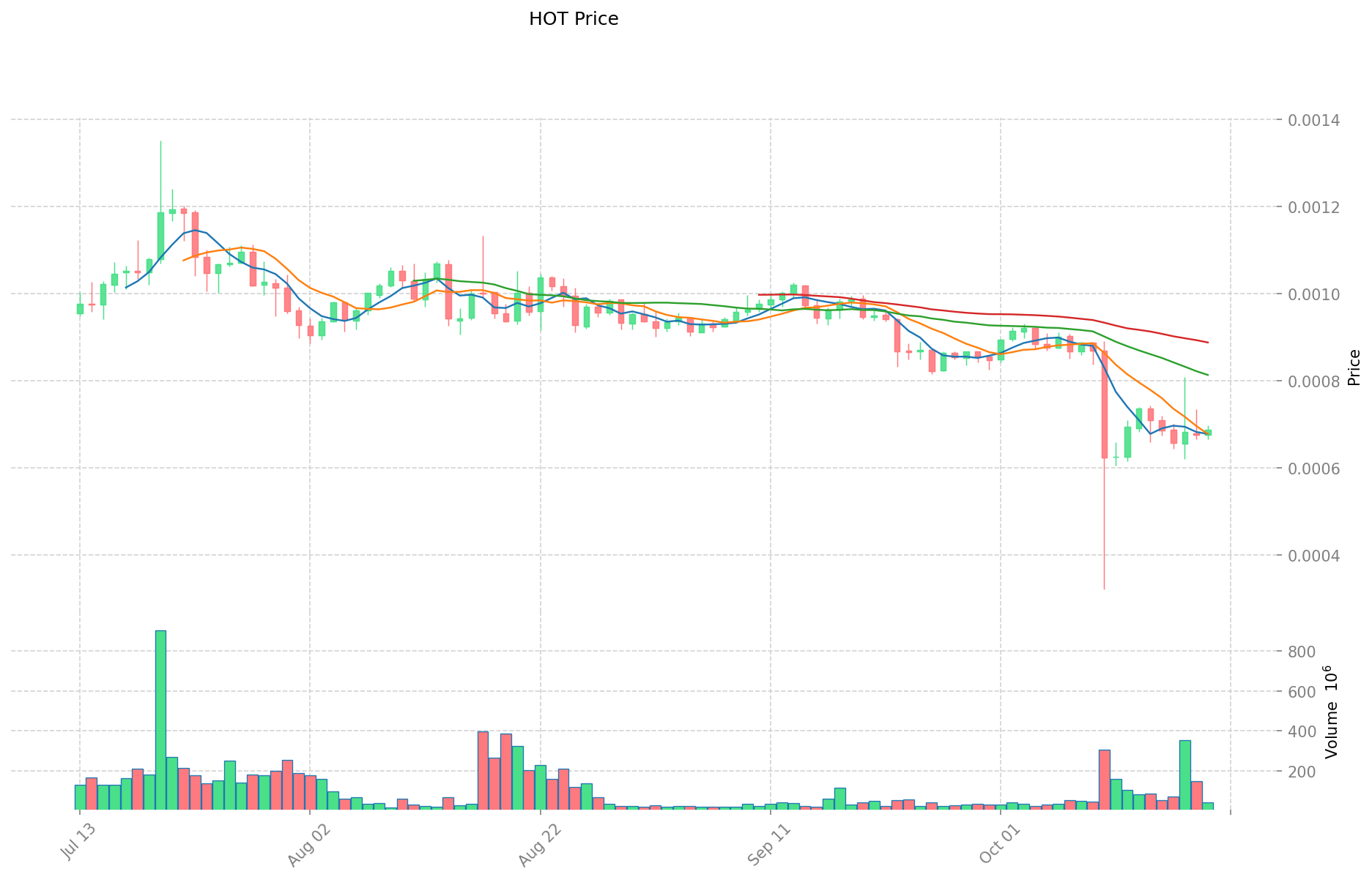
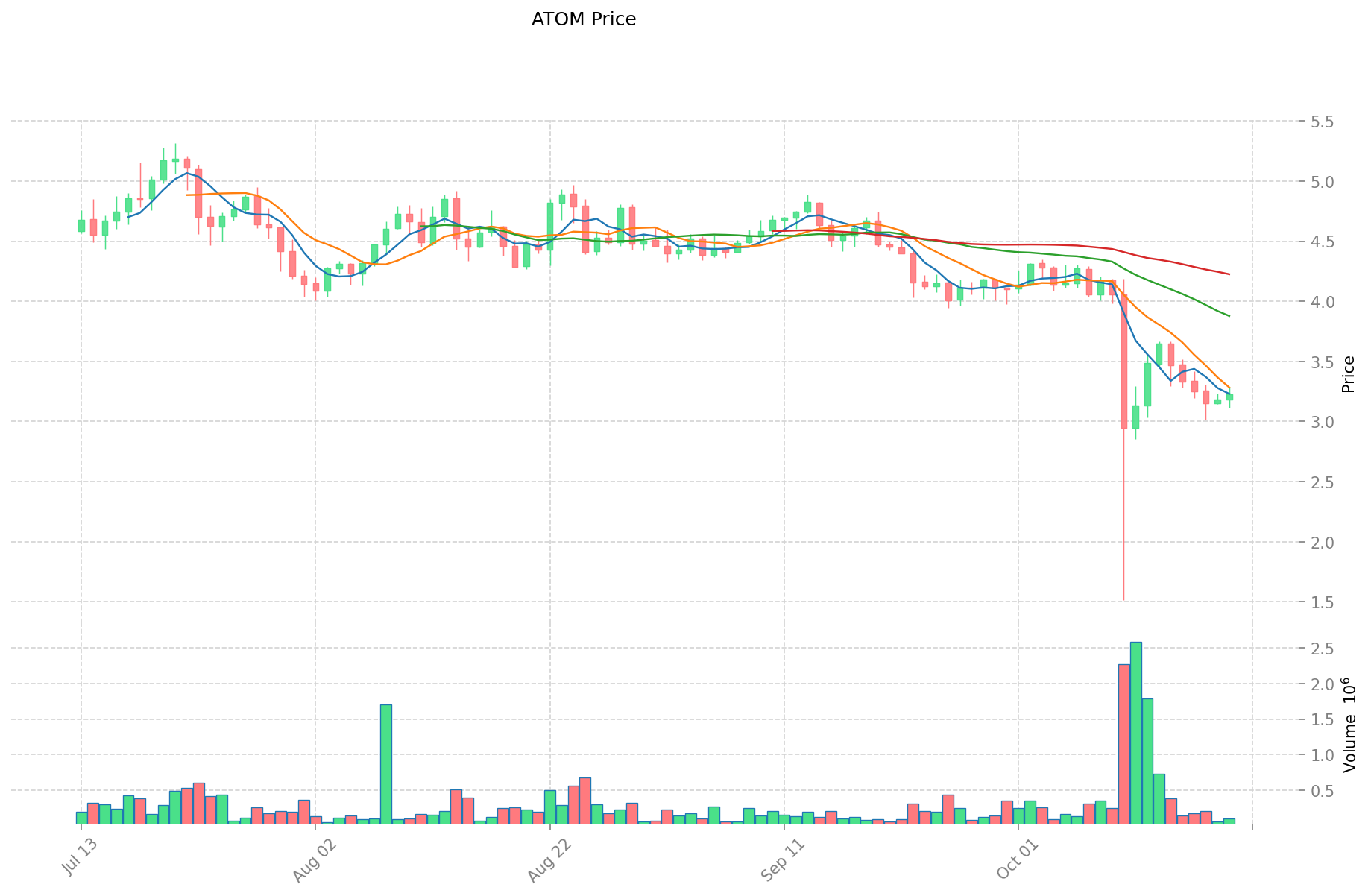
  • Comparative analysis: During the recent bear market, HOT dropped from its all-time high to a current price of $0.0006828, while ATOM declined from its peak to $3.22.

Current Market Situation (2025-10-20)

  • HOT current price: $0.0006828
  • ATOM current price: $3.22
  • 24-hour trading volume: HOT $27,701.84 vs ATOM $305,833.96
  • Market sentiment index (Fear & Greed Index): 29 (Fear)

Click to view real-time prices:

price_image1 price_image2

II. Core Factors Affecting the Investment Value of HOT vs ATOM

Supply Mechanism Comparison (Tokenomics)

  • HOT: Fixed total supply of 177,619,433,541 HOT tokens with no additional issuance
  • ATOM: Inflationary model with dynamic supply; annual inflation rate between 7-20% based on staking participation
  • 📌 Historical Pattern: HOT's fixed supply creates scarcity value during bull markets, while ATOM's inflation model rewards stakers but can put downward pressure on price without sufficient network growth.

Institutional Adoption and Market Applications

  • Institutional Holdings: ATOM has gained more institutional traction with presence in crypto investment funds and exchange-traded products
  • Enterprise Adoption: ATOM's interoperability features have attracted more enterprise applications in cross-chain settlements, while HOT's agent-centric architecture serves different use cases in distributed applications
  • Regulatory Attitudes: Both tokens face similar regulatory scrutiny in major jurisdictions, though ATOM's proof-of-stake consensus may face less environmental regulatory pressure than other cryptocurrencies

Technical Development and Ecosystem Building

  • HOT Technical Upgrades: Focused on building the Holochain framework for distributed computing without traditional blockchain limitations
  • ATOM Technical Development: Continuous improvement of the Inter-Blockchain Communication (IBC) protocol enabling cross-chain interoperability across the Cosmos ecosystem
  • Ecosystem Comparison: ATOM has a more developed ecosystem with numerous IBC-enabled chains, DeFi protocols, and interchain security features; HOT's ecosystem remains primarily focused on the Holochain development infrastructure

Macroeconomic Factors and Market Cycles

  • Inflation Performance: ATOM's staking rewards provide yield that can offset inflation effects, while HOT lacks similar yield mechanisms
  • Monetary Policy Effects: Both tokens show sensitivity to Federal Reserve policies and interest rate changes, with risk-off environments typically affecting smaller cap HOT more severely
  • Geopolitical Factors: ATOM's interoperability positioning potentially offers greater resilience against regional regulatory changes

III. 2025-2030 Price Prediction: HOT vs ATOM

Short-term Prediction (2025)

  • HOT: Conservative $0.0006384-$0.000672 | Optimistic $0.00096096
  • ATOM: Conservative $2.02734-$3.218 | Optimistic $4.15122

Mid-term Prediction (2027)

  • HOT may enter a growth phase, estimated price range $0.000726993792-$0.001029907872
  • ATOM may enter a bullish market, estimated price range $3.7548018205-$5.484541985
  • Key drivers: Institutional capital inflow, ETF, ecosystem development

Long-term Prediction (2030)

  • HOT: Base scenario $0.001200626352878 | Optimistic scenario $0.001248651406993
  • ATOM: Base scenario $7.044319357543687 | Optimistic scenario $7.748751293298056

View detailed price predictions for HOT and ATOM

Disclaimer

HOT:

年份 预测最高价 预测平均价格 预测最低价 涨跌幅
2025 0.00096096 0.000672 0.0006384 -1
2026 0.0009144576 0.00081648 0.0004408992 19
2027 0.001029907872 0.0008654688 0.000726993792 26
2028 0.00138362497056 0.000947688336 0.00070128936864 38
2029 0.001235596052476 0.00116565665328 0.001014121288353 70
2030 0.001248651406993 0.001200626352878 0.000864450974072 75

ATOM:

年份 预测最高价 预测平均价格 预测最低价 涨跌幅
2025 4.15122 3.218 2.02734 0
2026 4.7531469 3.68461 2.1370738 14
2027 5.484541985 4.21887845 3.7548018205 31
2028 6.937945611025 4.8517102175 3.39619715225 50
2029 8.193810800824875 5.8948279142625 4.185327819126375 83
2030 7.748751293298056 7.044319357543687 6.199001034638445 118

IV. Investment Strategy Comparison: HOT vs ATOM

Long-term vs Short-term Investment Strategies

  • HOT: Suitable for investors focused on distributed computing potential and long-term ecosystem growth
  • ATOM: Suitable for investors seeking interoperability solutions and yield through staking

Risk Management and Asset Allocation

  • Conservative investors: HOT: 20% vs ATOM: 80%
  • Aggressive investors: HOT: 40% vs ATOM: 60%
  • Hedging tools: Stablecoin allocation, options, cross-currency portfolios

V. Potential Risk Comparison

Market Risks

  • HOT: Higher volatility due to smaller market cap and less liquidity
  • ATOM: Potential dilution from inflationary tokenomics if network growth doesn't keep pace

Technical Risks

  • HOT: Scalability, network stability, and adoption of the Holochain framework
  • ATOM: Interchain security vulnerabilities, potential consensus issues in the multi-chain ecosystem

Regulatory Risks

  • Global regulatory policies may impact both, with ATOM potentially facing less scrutiny due to its proof-of-stake consensus and established ecosystem

VI. Conclusion: Which Is the Better Buy?

📌 Investment Value Summary:

  • HOT advantages: Unique distributed computing approach, fixed supply tokenomics
  • ATOM advantages: Established interoperability ecosystem, staking yields, institutional adoption

✅ Investment Advice:

  • New investors: Consider a higher allocation to ATOM for its more established ecosystem and staking benefits
  • Experienced investors: Balanced approach with both HOT and ATOM, leveraging HOT's growth potential and ATOM's ecosystem stability
  • Institutional investors: ATOM may be more attractive due to its larger market cap, liquidity, and institutional-grade infrastructure

⚠️ Risk Warning: The cryptocurrency market is highly volatile. This article does not constitute investment advice. None

VII. FAQ

Q1: What are the key differences between HOT and ATOM? A: HOT focuses on distributed computing with a fixed supply, while ATOM aims for blockchain interoperability with an inflationary model. ATOM has a more developed ecosystem and higher institutional adoption.

Q2: Which token has performed better historically? A: ATOM has generally shown better historical performance, reaching its all-time high of $44.45 in January 2022, compared to HOT's all-time high of $0.03126682 in April 2021.

Q3: How do the tokenomics of HOT and ATOM differ? A: HOT has a fixed total supply of 177,619,433,541 tokens, while ATOM has an inflationary model with an annual inflation rate between 7-20% based on staking participation.

Q4: Which token is considered more suitable for long-term investment? A: ATOM is generally considered more suitable for long-term investment due to its established ecosystem, staking benefits, and institutional adoption. However, HOT may offer higher growth potential for risk-tolerant investors.

Q5: What are the main risks associated with investing in HOT and ATOM? A: HOT faces higher volatility and adoption risks, while ATOM may experience potential dilution from its inflationary model. Both tokens are subject to market, technical, and regulatory risks common in the cryptocurrency space.

Q6: How do institutional investors view HOT and ATOM? A: Institutional investors tend to favor ATOM due to its larger market cap, higher liquidity, and more established ecosystem. HOT has less institutional traction compared to ATOM.

Q7: What are the price predictions for HOT and ATOM by 2030? A: By 2030, HOT is predicted to reach a base scenario of $0.001200626352878, while ATOM is expected to reach $7.044319357543687 in the base scenario. However, these predictions are speculative and subject to market conditions.

* The information is not intended to be and does not constitute financial advice or any other recommendation of any sort offered or endorsed by Gate.
Related Articles
NRN vs ATOM: Comparing Two Cutting-Edge Neural Network Architectures for Natural Language Processing

NRN vs ATOM: Comparing Two Cutting-Edge Neural Network Architectures for Natural Language Processing

This article provides a comprehensive investment comparison between Neuron (NRN) and Cosmos (ATOM), examining historical price trends, supply mechanisms, institutional adoption, and technical ecosystems. It addresses the key question, "Which is the better buy right now?" for investors interested in AI-powered gaming with NRN versus blockchain interoperability with ATOM. The structure includes a detailed analysis of market status, investment strategies, risk management, and future price predictions, offering tailored advice for new and experienced investors. For real-time prices and detailed predictions, visit Gate.
2025-10-12 00:15:57
Is Agoric (BLD) a good investment?: Analyzing the potential and risks of this blockchain platform

Is Agoric (BLD) a good investment?: Analyzing the potential and risks of this blockchain platform

The article examines whether Agoric (BLD) is a viable investment by analyzing its historical performance, market trends, technical indicators, and investment risks and opportunities. It addresses key questions about Agoric's distinct features, market position, and potential future price projections. Designed for both novice and seasoned investors, the piece offers strategic insights into risk management and investment strategies. By leveraging JavaScript-based development and interoperability with Cosmos, Agoric holds promising long-term potential yet faces high volatility and adoption challenges.
2025-11-22 09:23:11
Is Agoric (BLD) a good investment?: A comprehensive analysis of tokenomics, market potential, and risk factors for 2024

Is Agoric (BLD) a good investment?: A comprehensive analysis of tokenomics, market potential, and risk factors for 2024

The article offers a comprehensive analysis of Agoric (BLD) as an investment opportunity, focusing on its tokenomics, market potential, and associated risks as of December 2025. It examines BLD's price history, technological framework, supply dynamics, and market position, providing insights on its investment suitability for various investor profiles. Aimed at investors and traders, it highlights Agoric's JavaScript-based platform advantages and interoperability within the Cosmos ecosystem. The article's well-structured sections ensure ease of understanding, leveraging optimized keyword density for efficient scanning.
2025-12-23 23:22:43
Is CHEQD NETWORK (CHEQ) a good investment?: A Comprehensive Analysis of Tokenomics, Use Cases, and Market Potential in the Decentralized Identity Sector

Is CHEQD NETWORK (CHEQ) a good investment?: A Comprehensive Analysis of Tokenomics, Use Cases, and Market Potential in the Decentralized Identity Sector

The article provides a comprehensive analysis of CHEQD NETWORK (CHEQ), focusing on its investment potential within the decentralized identity sector. It explores CHEQ's market performance, historical price trends, and inherent investment risks. The discussion highlights whether CHEQ is a worthwhile investment, considering its significant price depreciation and current market dynamics. Key factors include tokenomics, supply scarcity, platform utility, and competitive risks. The content is targeted at investors seeking insights into CHEQ's viability, offering a well-structured evaluation of its future prospects and potential market catalysts. For up-to-date CHEQ prices, visit [Gate](https://www.gate.com/price/cheqd-network-cheq).
2025-12-22 02:26:59
Hedera (HBAR) 2025 Price Analysis and Investment Prospects

Hedera (HBAR) 2025 Price Analysis and Investment Prospects

Hedera (HBAR) has impressive market performance in 2025. The current HBAR price is $0.13764, with a market capitalization of $5.814 billion, firmly holding 21st place in cryptocurrencies. HBAR price forecast for 2025 shows positive signals, with analysts expecting it to break $0.20 by the end of the year. Hedera Hashgraph has enormous future value potential, and its key position in the Web3 ecosystem and long-term investment prospects have attracted the attention of numerous investors.
2025-06-23 08:24:40
Sei Network 2025 Development Status and Investment Opportunity Analysis

Sei Network 2025 Development Status and Investment Opportunity Analysis

Sei Network has become a leader in the blockchain industry by 2025, with its ecosystem thriving and DeFi applications emerging one after another. As a high-performance public chain, Sei Network far surpasses its competitors in trading speed and processing capacity due to its unique technological advantages. This article delves into the current development status, ecosystem, technological advantages, and investment strategies of Sei Network, providing readers with a comprehensive insight into Sei Network.
2025-06-24 13:40:42
Recommended for You
How do RSI, MACD, and Bollinger Bands signals indicate ZEC price trends in 2026?

How do RSI, MACD, and Bollinger Bands signals indicate ZEC price trends in 2026?

# Article Introduction This comprehensive guide analyzes how RSI, MACD, and Bollinger Bands technical indicators reveal ZEC price trends through 2026. The article examines RSI's shift from oversold to neutral territory (55.214), MACD's bullish crossover signals (+7.49 histogram), and the golden cross formation above $500 support levels. Designed for cryptocurrency traders and technical analysts, this resource addresses trend identification, institutional accumulation patterns, and signal reliability across multiple timeframes. Through volume-price divergence analysis on Gate, the article demonstrates how institutional capital flows validate ZEC's uptrend momentum beyond initial market expectations. Key sections explore indicator combinations for accurate entry/exit points, volatility measurements, and ZEC's superior technical performance compared to competing privacy coins.
2026-01-04 04:06:12
Vitalik Buterin’s 2026 Centrifugal Force: How Ethereum Pushes Back Against Centralized Powers and Market Challenges

Vitalik Buterin’s 2026 Centrifugal Force: How Ethereum Pushes Back Against Centralized Powers and Market Challenges

In-depth analysis of Vitalik Buterin's latest views and Ethereum's decentralized strategy for 2026, discussing his opposition to centralized giants, technological advancements, and the impact of current price trends on the future of the ecosystem.
2026-01-04 04:05:51
What is token economics model? How do token distribution, inflation mechanisms, and governance create crypto value?

What is token economics model? How do token distribution, inflation mechanisms, and governance create crypto value?

# Article Overview Token economics fundamentally determines cryptocurrency value through distribution architecture, deflationary mechanisms, and governance structures. This comprehensive guide examines how SHIB's community-first allocation model, 49.8% burn rate, and Layer-2 integration create sustainable scarcity while maintaining market resilience. Explore how BONE governance tokens empower 250,000+ ShibaSwap DAO participants to drive decentralized decision-making, and discover critical frameworks for assessing tokenomic health. Perfect for investors, traders, and crypto enthusiasts seeking to understand the mechanics behind token valuation beyond speculative price movements—learn why strategic token burning, staking incentives, and fair distribution patterns directly influence long-term cryptocurrency sustainability and real utility-driven value creation on platforms like Gate.

2026-01-04 04:03:44
What is Shiba Inu (SHIB) fundamental analysis: whitepaper logic, use cases, and 2030 price prediction?

What is Shiba Inu (SHIB) fundamental analysis: whitepaper logic, use cases, and 2030 price prediction?

# Article Introduction This comprehensive guide examines Shiba Inu (SHIB) fundamental analysis through its whitepaper vision, technological innovations, and ecosystem evolution. Discover how SHIB transformed from a meme coin into a multi-token ecosystem powered by Shibarium Layer-2 scaling solution, featuring aggressive burn mechanics reducing 589 trillion tokens and 4,000% user growth. The article addresses critical questions for SHIB investors: evaluating tokenomics strength, assessing Shibarium's 15 billion+ transactions against low TVL concerns, and understanding long-term sustainability factors. Perfect for cryptocurrency analysts, traders on Gate, and ecosystem participants seeking data-driven insights into SHIB's technical foundations, community governance model, and realistic 2030 price projections. Learn how SHIB's deflationary economics, DeFi infrastructure, and metaverse integration establish genuine utility beyond speculation while examining the gap between network activity and fundamental value
2026-01-04 04:01:07
U.S. Spot Crypto ETF Market Surge: Trading Volume Tops $2 Trillion, Revealing a New Trading Paradigm

U.S. Spot Crypto ETF Market Surge: Trading Volume Tops $2 Trillion, Revealing a New Trading Paradigm

The cumulative Trading Volume of the US Spot encryption ETF has surpassed 2 trillion USD, reflecting market maturity and increased capital activity. This article provides an in-depth analysis of trends and investment insights.
2026-01-04 03:58:52
How Does Compliance and Regulatory Risk Impact Cryptocurrency Exchanges in 2026?

How Does Compliance and Regulatory Risk Impact Cryptocurrency Exchanges in 2026?

# Article Introduction This comprehensive guide examines how compliance and regulatory risk reshape cryptocurrency exchange operations in 2026. The article addresses critical challenges faced by exchange operators, compliance teams, and institutional stakeholders navigating evolving SEC frameworks, KYC/AML requirements, and enforcement actions. It explores SEC regulatory ambiguities, the surge in 3,862 litigation cases, and how platforms like Gate implement advanced compliance systems to mitigate financial penalties. The guide analyzes regional compliance standards across US, EU, and Asia, highlighting operational cost impacts and competitive pressures. Designed for exchange executives, compliance officers, and crypto market participants, this resource provides actionable insights on regulatory frameworks, audit transparency protocols, and strategies for sustainable market participation amid intensifying regulatory scrutiny.
2026-01-04 03:57:58