# GateSquarePizzaDay

690.12K

Share your BTC Pizza Day story and celebrate the most legendary pizza story in Crypto. Post with #GateSquarePizzaDay and share memes, BTC ideas, Pizza creative content, trading stories, or BTC position screenshots to join the event. Outstanding content will have the chance to win Gate Pizza Day Gift Boxes, USDT Lucky Pizza Rewards, and official featured exposure. New users may also receive Pizza Bonus rewards for their first post. Let’s celebrate Pizza Day together with the Crypto community.

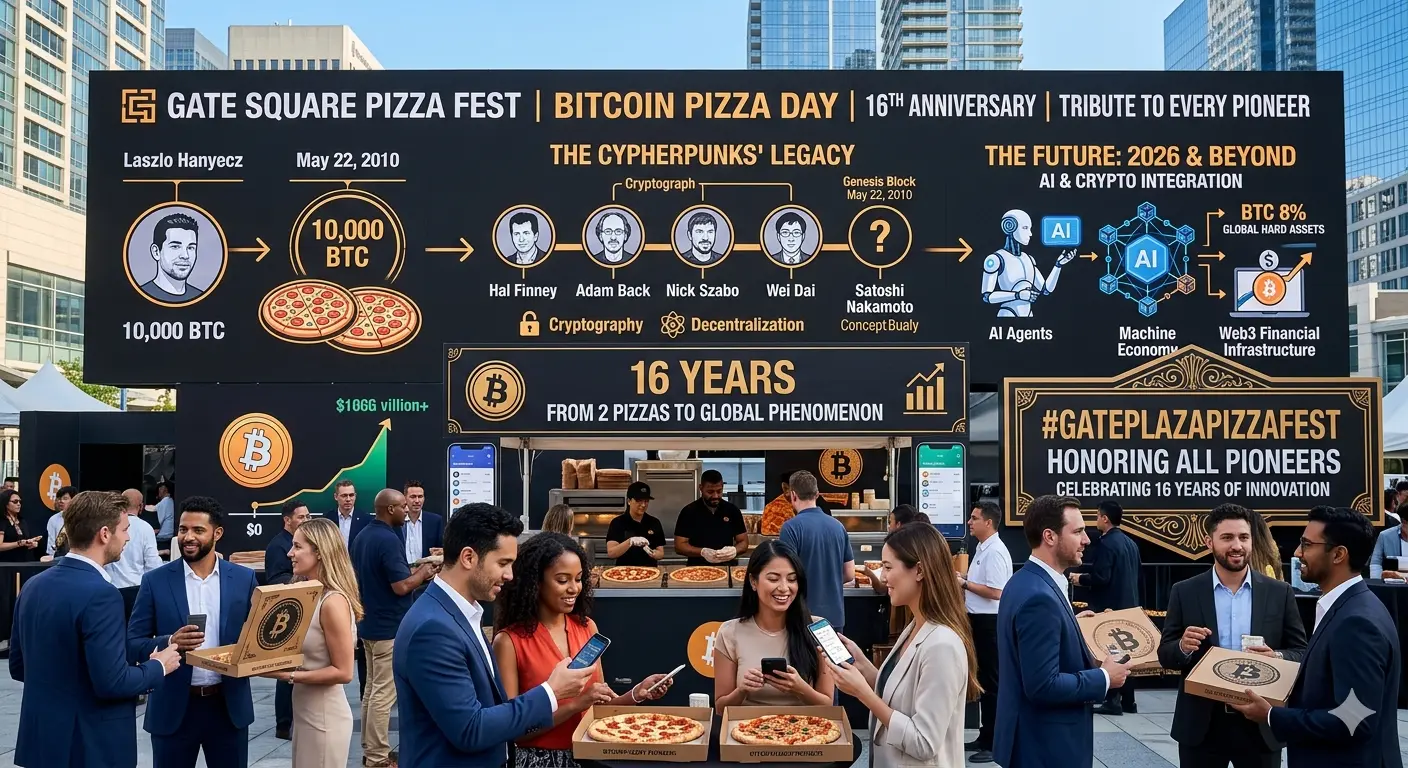
🍕 Gate Square Pizza Festival officially kicks off!
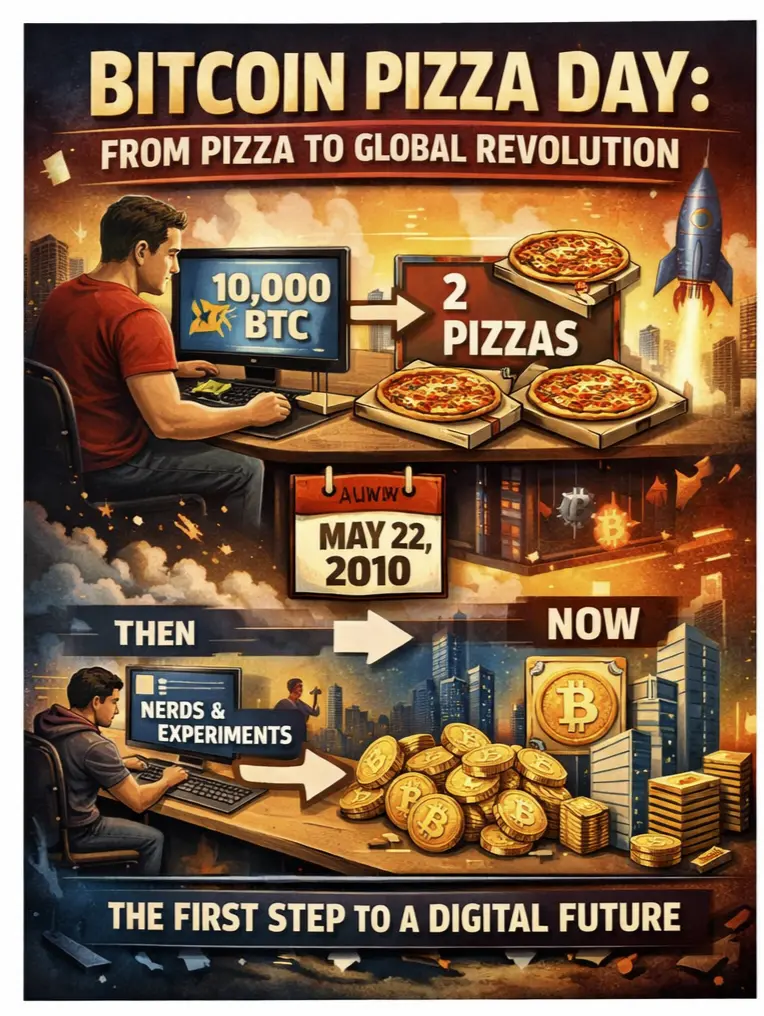
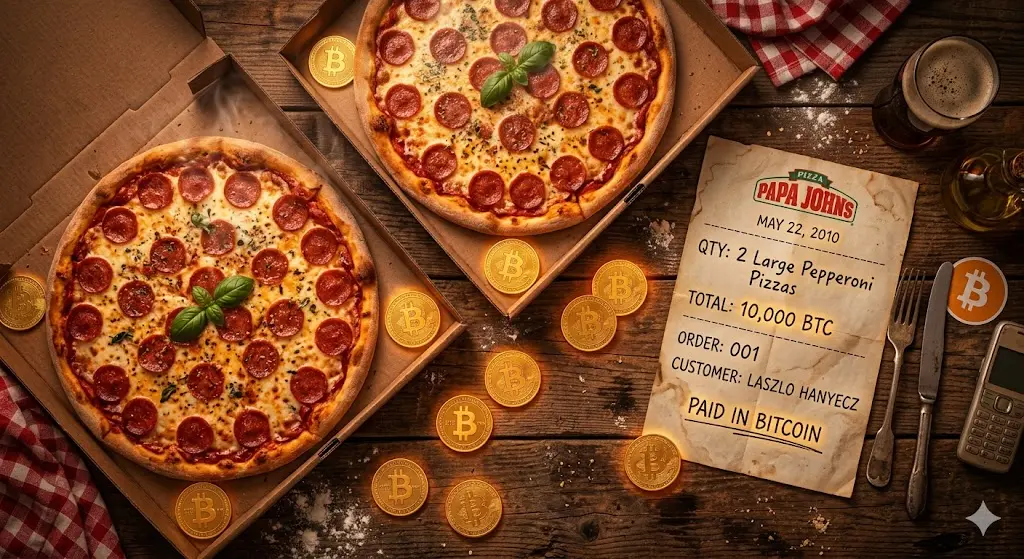
14 years ago, someone bought two pizzas with 10,000 BTC.
Today, those two pizzas are worth billions of dollars.
On the occasion of BTC Pizza Day, Gate Square invites the entire community to share BTC stories, memes, wild ideas, and trading perspectives!
🎁 Event Rewards:
✅ Gate Pizza Day themed gift box ×10
✅ 5 lucky pizza rewards of 10 USDT each per day
📌 Post on Gate Square and share to X at the same time:
Meme, BTC stories, pizza creative images, BTC sharing, and more can all participate
Share your BTC story now 👇
👉️ https://www.gate.co
BTC0.83%
View Original
post-image
  • Reward
  • 41
  • Repost
  • Share
Vortex_King:
To The Moon 🌕
View More
#GateSquarePizzaDay
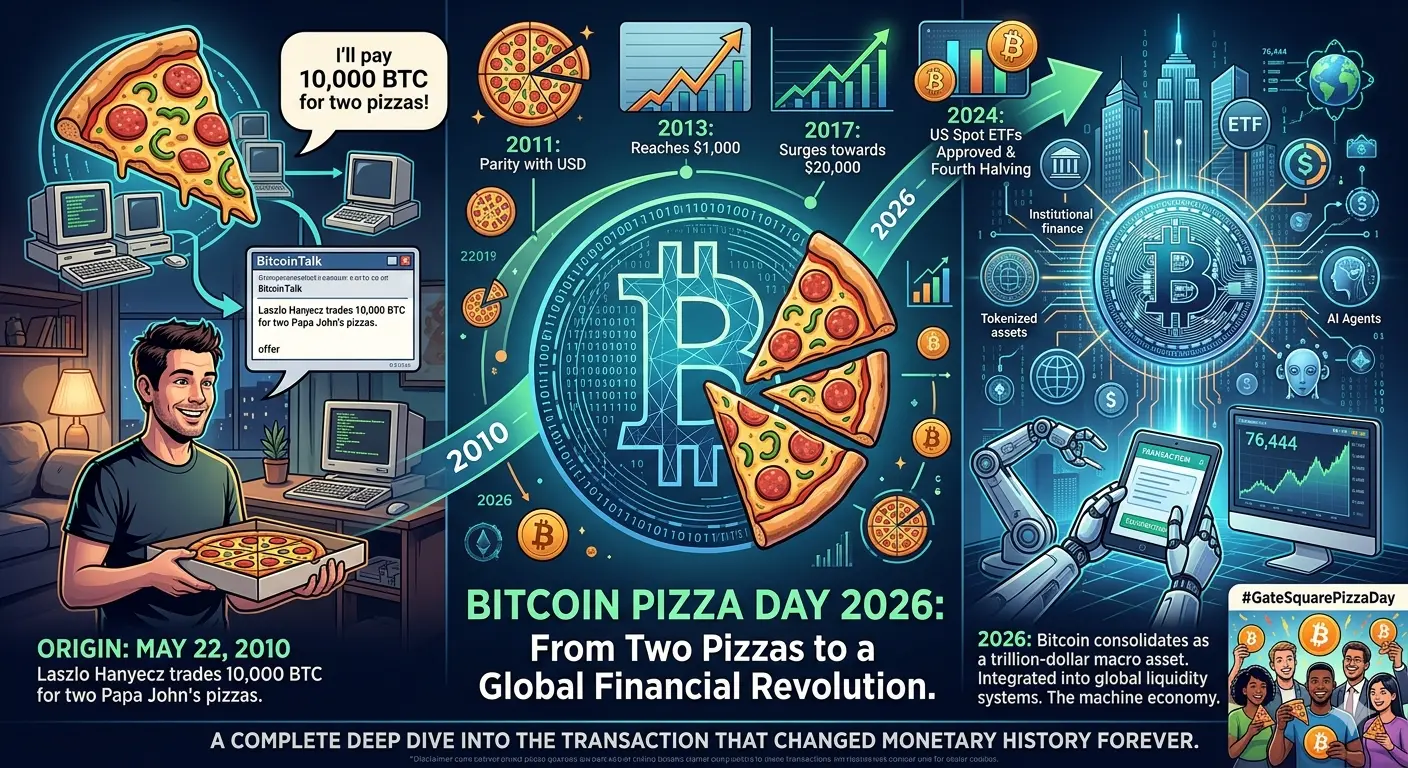
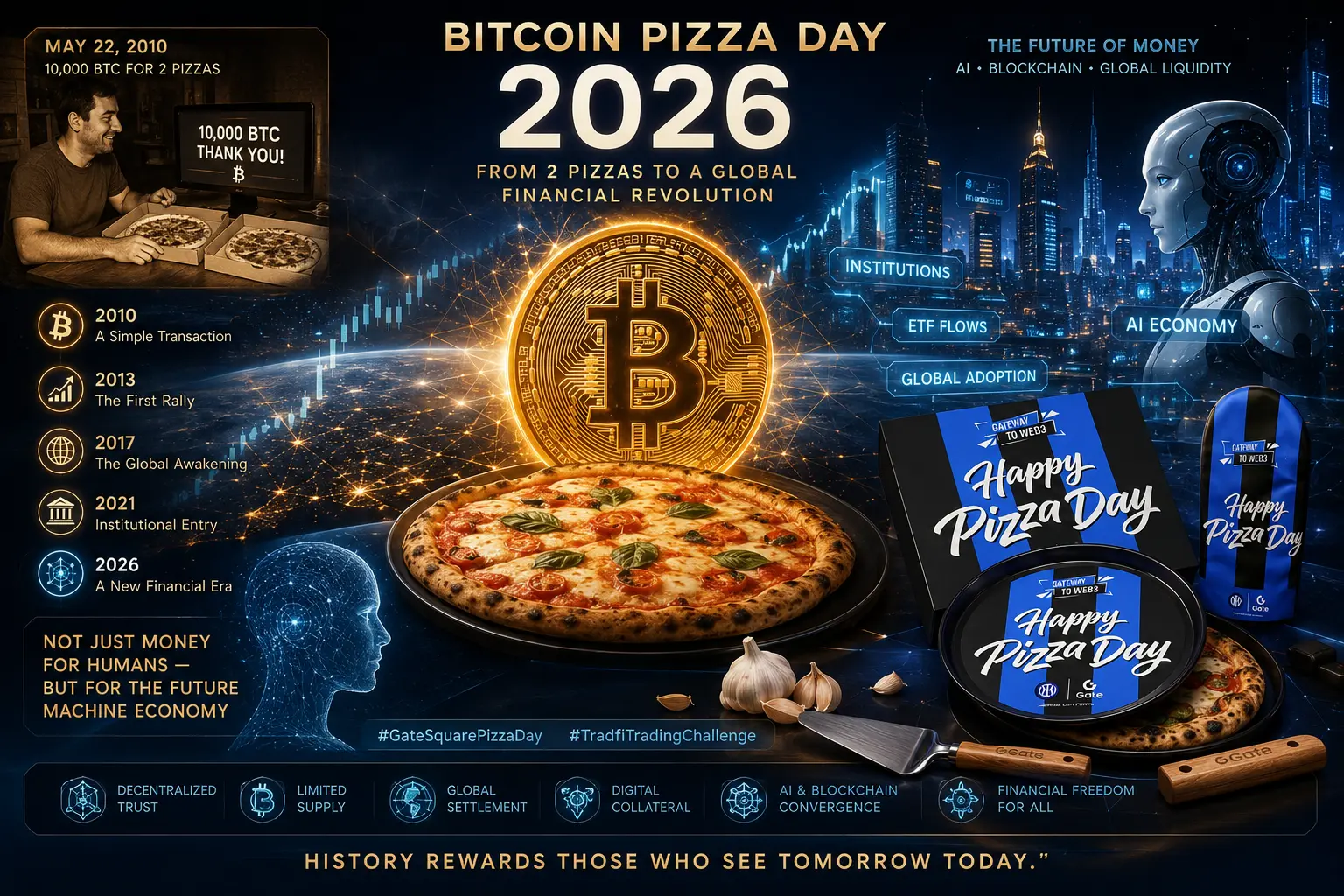
Bitcoin Pizza Day is no longer just a crypto anniversary. In 2026, it represents one of the most important turning points in modern financial history — the moment decentralized digital money transitioned from theoretical code into a functioning economic system capable of interacting with the real world.
On May 22, 2010, Laszlo Hanyecz spent 10,000 BTC on two pizzas. At that time, Bitcoin had no institutional support, no ETF infrastructure, no regulatory clarity, and almost no public recognition. The transaction itself looked insignificant, but historically it became one of
BTC0.83%
ETH0.79%
CryptoDiscovery
#GateSquarePizzaDay
Bitcoin Pizza Day is no longer just a crypto anniversary. In 2026, it represents one of the most important turning points in modern financial history — the moment decentralized digital money transitioned from theoretical code into a functioning economic system capable of interacting with the real world.
On May 22, 2010, Laszlo Hanyecz spent 10,000 BTC on two pizzas. At that time, Bitcoin had no institutional support, no ETF infrastructure, no regulatory clarity, and almost no public recognition. The transaction itself looked insignificant, but historically it became one of the first proofs that decentralized digital scarcity could operate as a real monetary network.
What makes Pizza Day extraordinary is not the current valuation of the 10,000 BTC.
It is the fact that Bitcoin survived every stage of financial skepticism and evolved into a globally recognized macro asset integrated into modern liquidity systems.
Since 2010, Bitcoin has survived:
- Exchange collapses
- Government resistance
- Regulatory uncertainty
- Bear markets exceeding 70% drawdowns
- Global recession fears
- Monetary tightening cycles
- Institutional skepticism
Yet despite every challenge, Bitcoin continued expanding its influence across the global financial system.
Today Bitcoin is no longer treated as an internet experiment.
It is increasingly viewed as:
- Digital collateral
- Institutional reserve infrastructure
- Inflation-resistant monetary technology
- Sovereign-neutral settlement asset
- Long-term store of value
- Strategic macro allocation instrument
The Bitcoin market of 2026 is fundamentally different from earlier cycles because institutional capital now plays a dominant role in liquidity structure.
Spot Bitcoin ETFs transformed access for traditional finance participants by allowing pension funds, hedge funds, banks, and asset managers to gain exposure through regulated financial channels.
At the same time, declining exchange reserves continue signaling long-term accumulation behavior, while sovereign discussions surrounding strategic Bitcoin reserves are becoming increasingly serious in multiple regions globally.
Another major development is the convergence between artificial intelligence and blockchain systems.
AI systems increasingly require:
- Autonomous payment rails
- Permissionless settlement systems
- Machine-native financial infrastructure
- Borderless liquidity access
Traditional banking systems were never designed for autonomous AI economies.
Blockchain infrastructure solves this problem.
Many analysts now believe crypto networks could become the financial layer of the future machine economy, with Bitcoin potentially operating as one of the foundational reserve assets because of its decentralization, transparency, and mathematically fixed supply limit.
This creates a completely new narrative for Bitcoin:
Not only money for humans —
but potentially money for autonomous digital systems as well.
Macro conditions in 2026 continue playing a major role in Bitcoin’s volatility structure.
Markets remain heavily influenced by:
- Federal Reserve policy expectations
- Inflation trends
- Oil market instability
- Geopolitical tensions
- Global liquidity cycles
- Institutional ETF flows
- Treasury yield movements
- USD strength
Bitcoin increasingly behaves like a global liquidity instrument reacting directly to macroeconomic conditions rather than isolated crypto sentiment alone.
This is why modern traders now monitor:
- Central bank policy
- Bond markets
- Energy prices
- Global capital flows
- Liquidity conditions
- ETF positioning
alongside traditional crypto metrics.
Meanwhile, Ethereum, tokenized real-world assets, Layer-2 scaling systems, decentralized finance infrastructure, and AI-integrated blockchain ecosystems continue expanding rapidly, proving that crypto has evolved far beyond a single asset class.
The industry is now building an entirely parallel digital financial architecture.
Gate Square Pizza Day 2026 reflects this transformation perfectly.
What began as a symbolic celebration of two pizzas has evolved into a global event connecting traders, developers, creators, analysts, institutions, and communities worldwide.
Across the ecosystem, Pizza Day campaigns now include:
- Trading competitions
- Creator economies
- Educational events
- Blockchain adoption initiatives
- AI and crypto discussions
- Community-driven financial content
- Institutional market analysis
This demonstrates how deeply Bitcoin has become embedded into modern digital culture and financial infrastructure.
The real lesson of Pizza Day is not regret.
It is vision.
Every major technological revolution initially appears small, irrational, or underestimated before mass adoption changes global perception.
The internet looked unnecessary before digital commerce.
Smartphones looked niche before mobile economies.
Artificial intelligence looked experimental before transforming industries.
Bitcoin looked irrelevant before becoming a trillion-dollar financial network.
History consistently rewards those who recognize structural transformation early.
And somewhere today, another innovation is quietly entering its own “Pizza Day moment” before the world fully understands its future impact.
From two pizzas…
to a global monetary revolution.
Bitcoin Pizza Day is not just a celebration of the past.
It is proof that financial systems can evolve, technology can redefine trust, and decentralized networks can permanently reshape the structure of the global economy.#GateSquarePizzaDay
#TradfiTradingChallenge
repost-content-media
  • Reward
  • 8
  • Repost
  • Share
world_oneday:
To The Moon 🌕
View More
#Gate广场披萨节
Happy Bitcoin Pizza Day! 🍕
It's crazy to think that on May 22, 2010, Laszlo Hanyecz paid 10,000 BTC for two large Papa John's pizzas. At the time, it was a bizarre transaction that took place on an internet forum, worth roughly $41. But what about today? Let's just say, these are the most expensive pizza crusts in human history.
Here is a little creative tribute to the legendary day that proved Bitcoin could actually buy real-world stuff.
The Evolution of a $41 Dinner
To put this legendary transaction into perspective, here is what those 10,000 BTC look like over the years:
Ye
BTC0.83%
post-image
post-image
post-image
ybaser
#Gate广场披萨节
Happy Bitcoin Pizza Day! 🍕
It's crazy to think that on May 22, 2010, Laszlo Hanyecz paid 10,000 BTC for two large Papa John's pizzas. At the time, it was a bizarre transaction that took place on an internet forum, worth roughly $41. But what about today? Let's just say, these are the most expensive pizza crusts in human history.
Here is a little creative tribute to the legendary day that proved Bitcoin could actually buy real-world stuff.
The Evolution of a $41 Dinner
To put this legendary transaction into perspective, here is what those 10,000 BTC look like over the years:
Year Approximate Value (For 2 Pizzas) What You Could Have Bought Instead
2010 $41 Just two pizzas.
2015 $2.4 Million A luxury mansion.
2020 $90 Million A private jet.
2024 $650+ Million A sports team or a real mega yacht.
🍕 "Looking Back" Crypto Meme
Laszlo in 2010: "Guys, let me trade 10,000 Bitcoin for a couple of pizzas... maybe 2 big pizzas, so I'll have some left for the next day."
Today's Crypto Community:
Plaintext
[Me while doing the math: How many slices of pizza could I have bought today if I hadn't sold my fractional BTC in 2017?]
🤯 <-- (My current mood)
/ | \
/ | \
Never feel too bad about your past trades. Who knows if Bitcoin would have proven its usefulness as a medium of exchange so early on if Laszlo hadn't bought those pizzas? He's a hero, not a cautionary tale!
🚀 What's Your Pizza Day Story?
Whether you're currently looking at your BTC position screenshots or you're a brand-new user experiencing the crypto world for the first time, we all have a trade we look back on.
Are you holding onto your Bitcoin like the last slice of pepperoni, or are you waiting for the next big breakout? Share your thoughts, your favorite memes, or your own trading horror stories below!
👇
#GateSquarePizzaDay
repost-content-media
  • Reward
  • 6
  • Repost
  • Share
discovery:
To The Moon 🌕
View More
#GateSquarePizzaDay 𝐁𝐈𝐓𝐂𝐎𝐈𝐍 𝐏𝐈𝐙𝐙𝐀 𝐃𝐀𝐘 𝟐𝟎𝟐𝟔 — 𝐓𝐇𝐄 𝐃𝐀𝐘 𝐀 𝐒𝐈𝐌𝐏𝐋𝐄 $𝟒𝟏 𝐓𝐑𝐀𝐍𝐒𝐀𝐂𝐓𝐈𝐎𝐍 𝐓𝐑𝐈𝐆𝐆𝐄𝐑𝐄𝐃 𝐎𝐍𝐄 𝐎𝐅 𝐓𝐇𝐄 𝐋𝐀𝐑𝐆𝐄𝐒𝐓 𝐅𝐈𝐍𝐀𝐍𝐂𝐈𝐀𝐋, 𝐓𝐄𝐂𝐇𝐍𝐎𝐋𝐎𝐆𝐈𝐂𝐀𝐋, 𝐀𝐍𝐃 𝐌𝐎𝐍𝐄𝐓𝐀𝐑𝐘 𝐑𝐄𝐕𝐎𝐋𝐔𝐓𝐈𝐎𝐍𝐒 𝐈𝐍 𝐌𝐎𝐃𝐄𝐑𝐍 𝐇𝐈𝐒𝐓𝐎𝐑𝐘
Bitcoin Pizza Day is no longer just a famous crypto meme or a nostalgic internet story remembered by early blockchain communities. It has evolved into a symbolic milestone representing the exact moment decentralized digital currency entered the real economy for the very first time. On May 22, 20
CryptoDiscovery
#GateSquarePizzaDay 𝐁𝐈𝐓𝐂𝐎𝐈𝐍 𝐏𝐈𝐙𝐙𝐀 𝐃𝐀𝐘 𝟐𝟎𝟐𝟔 — 𝐓𝐇𝐄 𝐃𝐀𝐘 𝐀 𝐒𝐈𝐌𝐏𝐋𝐄 $𝟒𝟏 𝐓𝐑𝐀𝐍𝐒𝐀𝐂𝐓𝐈𝐎𝐍 𝐓𝐑𝐈𝐆𝐆𝐄𝐑𝐄𝐃 𝐎𝐍𝐄 𝐎𝐅 𝐓𝐇𝐄 𝐋𝐀𝐑𝐆𝐄𝐒𝐓 𝐅𝐈𝐍𝐀𝐍𝐂𝐈𝐀𝐋, 𝐓𝐄𝐂𝐇𝐍𝐎𝐋𝐎𝐆𝐈𝐂𝐀𝐋, 𝐀𝐍𝐃 𝐌𝐎𝐍𝐄𝐓𝐀𝐑𝐘 𝐑𝐄𝐕𝐎𝐋𝐔𝐓𝐈𝐎𝐍𝐒 𝐈𝐍 𝐌𝐎𝐃𝐄𝐑𝐍 𝐇𝐈𝐒𝐓𝐎𝐑𝐘
Bitcoin Pizza Day is no longer just a famous crypto meme or a nostalgic internet story remembered by early blockchain communities. It has evolved into a symbolic milestone representing the exact moment decentralized digital currency entered the real economy for the very first time. On May 22, 2010, when Laszlo Hanyecz exchanged 10,000 BTC for two pizzas worth approximately $41, almost nobody could imagine that the transaction would eventually become one of the most iconic moments in global financial history. At that time Bitcoin had no institutional credibility, no regulatory recognition, no ETF ecosystem, no corporate treasury adoption, and virtually no mainstream attention. It was simply an experimental peer-to-peer protocol discussed by programmers and cryptography enthusiasts on obscure internet forums. Yet that single pizza purchase created something extremely important: proof that decentralized digital assets could carry real-world value outside of theoretical code and online discussion.
What makes Pizza Day historically extraordinary is not only the price appreciation of Bitcoin afterward, but the fact that this transaction fundamentally changed how humanity began thinking about money itself. Before Bitcoin, nearly all financial systems depended on centralized authorities, banking intermediaries, payment processors, governments, or trusted third parties to validate transactions and maintain monetary infrastructure. Bitcoin introduced a radically different model — a decentralized network where value could move globally without permission, without borders, and without institutional control. The pizza transaction proved that this new monetary architecture could interact directly with the physical world, transforming Bitcoin from a technological experiment into a functioning economic system. In many ways, those two pizzas became the first commercial proof-of-concept for blockchain-based finance.
𝐅𝐑𝐎𝐌 𝐏𝐈𝐙𝐙𝐀 𝐓𝐎 𝐀 𝐓𝐑𝐈𝐋𝐋𝐈𝐎𝐍-𝐃𝐎𝐋𝐋𝐀𝐑 𝐀𝐒𝐒𝐄𝐓 𝐂𝐋𝐀𝐒𝐒
The growth trajectory of Bitcoin since Pizza Day remains one of the most extraordinary wealth creation events ever recorded in modern finance. From fractions of a cent in 2010 to tens of thousands of dollars per coin in 2026, Bitcoin has transitioned through multiple structural evolutions including:
• experimental internet currency
• retail speculation asset
• mining-driven commodity phase
• institutional investment vehicle
• macro liquidity asset
• digital reserve infrastructure
At current market prices, the 10,000 BTC spent on those pizzas would now be valued at hundreds of millions of dollars, transforming what once appeared to be an insignificant online purchase into arguably the most expensive meal in financial history. However, the real significance is not the “lost fortune” narrative repeated across social media every year. The deeper reality is that without transactions like this, Bitcoin might never have developed enough real-world credibility to evolve into today’s global financial ecosystem. Adoption requires usage. Usage creates trust. Trust creates liquidity. Liquidity creates markets. And markets create entire economic systems.
𝐓𝐇𝐄 𝐇𝐈𝐃𝐃𝐄𝐍 𝐑𝐎𝐋𝐄 𝐎𝐅 𝐋𝐀𝐒𝐙𝐋𝐎 𝐇𝐀𝐍𝐘𝐄𝐂𝐙
Most people only remember Laszlo Hanyecz as “the man who bought pizza with Bitcoin,” but his role in Bitcoin’s early development was far more important than most realize. Beyond Pizza Day itself, Hanyecz was one of the earliest technical contributors helping expand Bitcoin’s infrastructure during its fragile developmental stage. He worked on early software compatibility improvements and became one of the first people to experiment with GPU mining, discovering that graphics cards could dramatically outperform CPUs for Bitcoin mining operations. This innovation transformed Bitcoin mining forever by massively increasing network security and accelerating hash power growth across the ecosystem.
Ironically, the same innovation that strengthened Bitcoin also contributed to concerns around mining centralization. Even Satoshi Nakamoto reportedly expressed concerns regarding GPU mining because it could make mining less accessible for ordinary users. This reveals something important about Bitcoin’s earliest years: the ecosystem was not driven by profit alone. It was shaped by experimentation, philosophical debate, open-source collaboration, and people genuinely trying to build an alternative monetary network outside traditional financial structures.
𝐁𝐈𝐓𝐂𝐎𝐈𝐍 𝐈𝐍 𝟐𝟎𝟐𝟔 — 𝐅𝐑𝐎𝐌 𝐎𝐔𝐓𝐒𝐈𝐃𝐄𝐑 𝐀𝐒𝐒𝐄𝐓 𝐓𝐎 𝐌𝐀𝐂𝐑𝐎 𝐅𝐈𝐍𝐀𝐍𝐂𝐈𝐀𝐋 𝐅𝐎𝐑𝐂𝐄
The Bitcoin market of 2026 looks completely different from the experimental ecosystem of 2010. Today Bitcoin operates inside a global macro environment influenced by:
• institutional ETF flows
• sovereign debt concerns
• global liquidity cycles
• inflation expectations
• interest rate policies
• macroeconomic instability
• AI-integrated financial systems
• tokenized asset infrastructure
Large financial institutions now monitor Bitcoin alongside traditional macro assets such as gold, equities, treasury markets, and commodities. Bitcoin ETFs have introduced mainstream exposure for millions of traditional investors, while corporations and investment funds increasingly view BTC as part of long-term strategic capital allocation frameworks. Instead of being dismissed as internet speculation, Bitcoin is now frequently discussed as:
• digital gold
• decentralized reserve collateral
• macro liquidity indicator
• inflation hedge
• borderless settlement asset
• next-generation financial infrastructure
This transformation represents one of the fastest legitimacy shifts ever experienced by an asset class in financial history.
𝐁𝐈𝐓𝐂𝐎𝐈𝐍’𝐒 𝐂𝐔𝐑𝐑𝐄𝐍𝐓 𝐌𝐀𝐑𝐊𝐄𝐓 𝐒𝐓𝐑𝐔𝐂𝐓𝐔𝐑𝐄
As of Pizza Day 2026, Bitcoin continues trading within a highly volatile but structurally significant macro cycle. Current market conditions are shaped by:
• strong institutional participation
• expanding derivatives liquidity
• ETF capital inflows
• global macro uncertainty
• AI-driven trading systems
• growing stablecoin ecosystems
Key support zones continue forming around major liquidity clusters while resistance remains concentrated near psychologically important institutional levels. Market participants are closely monitoring whether Bitcoin can maintain long-term structural strength despite short-term volatility caused by macroeconomic uncertainty and leveraged market conditions.
At the same time, Bitcoin’s role inside global finance continues expanding because it increasingly acts as a real-time reflection of liquidity conditions across the broader digital asset ecosystem. When liquidity expands, Bitcoin absorbs capital aggressively. When macro fear increases, volatility expands rapidly. This dynamic has transformed BTC into one of the most important macro sentiment indicators inside modern financial markets.
𝐓𝐇𝐄 𝐂𝐎𝐍𝐕𝐄𝐑𝐆𝐄𝐍𝐂𝐄 𝐎𝐅 𝐀𝐈, 𝐁𝐋𝐎𝐂𝐊𝐂𝐇𝐀𝐈𝐍, & 𝐃𝐈𝐆𝐈𝐓𝐀𝐋 𝐅𝐈𝐍𝐀𝐍𝐂𝐄
One of the most important developments of 2026 is the growing convergence between artificial intelligence and blockchain systems. AI is increasingly being integrated into:
• automated trading systems
• blockchain analytics
• liquidity optimization
• smart contract infrastructure
• decentralized applications
• digital identity systems
• tokenized financial models
Bitcoin itself remains at the center of this broader transformation because it represents the foundational reserve asset of the digital economy. Just as gold once anchored traditional monetary systems, Bitcoin is increasingly becoming the liquidity foundation around which modern digital financial infrastructure is being built.
This means Pizza Day is no longer only about celebrating the past.
It is also about recognizing how early experimentation created the foundation for the future global digital economy.
𝐅𝐈𝐍𝐀𝐋 𝐌𝐀𝐑𝐊𝐄𝐓 𝐌𝐄𝐀𝐍𝐈𝐍𝐆
Bitcoin Pizza Day teaches one of the most important lessons in technological history:
Every revolutionary innovation looks small, irrational, and misunderstood before the world fully understands its impact.
In 2010, Bitcoin looked like a niche internet experiment.
In 2026, Bitcoin stands as: • a trillion-dollar financial ecosystem
• a globally recognized digital asset
• a decentralized liquidity network
• an institutional investment category
• a foundational pillar of digital finance
From two pizzas to global financial transformation…
Bitcoin Pizza Day represents the exact moment the future quietly entered the real world.
#CreatorCarnival #ContentMining #TradfiTradingChallenge
repost-content-media
  • Reward
  • 12
  • Repost
  • Share
discovery:
To The Moon 🌕
View More
#GateSquarePizzaDay
Bitcoin Pizza Day is no longer just a crypto anniversary. In 2026, it represents one of the most important turning points in modern financial history — the moment decentralized digital money transitioned from theoretical code into a functioning economic system capable of interacting with the real world.
On May 22, 2010, Laszlo Hanyecz spent 10,000 BTC on two pizzas. At that time, Bitcoin had no institutional support, no ETF infrastructure, no regulatory clarity, and almost no public recognition. The transaction itself looked insignificant, but historically it became one of
BTC0.83%
ETH0.79%
CryptoDiscovery
#GateSquarePizzaDay
Bitcoin Pizza Day is no longer just a crypto anniversary. In 2026, it represents one of the most important turning points in modern financial history — the moment decentralized digital money transitioned from theoretical code into a functioning economic system capable of interacting with the real world.
On May 22, 2010, Laszlo Hanyecz spent 10,000 BTC on two pizzas. At that time, Bitcoin had no institutional support, no ETF infrastructure, no regulatory clarity, and almost no public recognition. The transaction itself looked insignificant, but historically it became one of the first proofs that decentralized digital scarcity could operate as a real monetary network.
What makes Pizza Day extraordinary is not the current valuation of the 10,000 BTC.
It is the fact that Bitcoin survived every stage of financial skepticism and evolved into a globally recognized macro asset integrated into modern liquidity systems.
Since 2010, Bitcoin has survived:
- Exchange collapses
- Government resistance
- Regulatory uncertainty
- Bear markets exceeding 70% drawdowns
- Global recession fears
- Monetary tightening cycles
- Institutional skepticism
Yet despite every challenge, Bitcoin continued expanding its influence across the global financial system.
Today Bitcoin is no longer treated as an internet experiment.
It is increasingly viewed as:
- Digital collateral
- Institutional reserve infrastructure
- Inflation-resistant monetary technology
- Sovereign-neutral settlement asset
- Long-term store of value
- Strategic macro allocation instrument
The Bitcoin market of 2026 is fundamentally different from earlier cycles because institutional capital now plays a dominant role in liquidity structure.
Spot Bitcoin ETFs transformed access for traditional finance participants by allowing pension funds, hedge funds, banks, and asset managers to gain exposure through regulated financial channels.
At the same time, declining exchange reserves continue signaling long-term accumulation behavior, while sovereign discussions surrounding strategic Bitcoin reserves are becoming increasingly serious in multiple regions globally.
Another major development is the convergence between artificial intelligence and blockchain systems.
AI systems increasingly require:
- Autonomous payment rails
- Permissionless settlement systems
- Machine-native financial infrastructure
- Borderless liquidity access
Traditional banking systems were never designed for autonomous AI economies.
Blockchain infrastructure solves this problem.
Many analysts now believe crypto networks could become the financial layer of the future machine economy, with Bitcoin potentially operating as one of the foundational reserve assets because of its decentralization, transparency, and mathematically fixed supply limit.
This creates a completely new narrative for Bitcoin:
Not only money for humans —
but potentially money for autonomous digital systems as well.
Macro conditions in 2026 continue playing a major role in Bitcoin’s volatility structure.
Markets remain heavily influenced by:
- Federal Reserve policy expectations
- Inflation trends
- Oil market instability
- Geopolitical tensions
- Global liquidity cycles
- Institutional ETF flows
- Treasury yield movements
- USD strength
Bitcoin increasingly behaves like a global liquidity instrument reacting directly to macroeconomic conditions rather than isolated crypto sentiment alone.
This is why modern traders now monitor:
- Central bank policy
- Bond markets
- Energy prices
- Global capital flows
- Liquidity conditions
- ETF positioning
alongside traditional crypto metrics.
Meanwhile, Ethereum, tokenized real-world assets, Layer-2 scaling systems, decentralized finance infrastructure, and AI-integrated blockchain ecosystems continue expanding rapidly, proving that crypto has evolved far beyond a single asset class.
The industry is now building an entirely parallel digital financial architecture.
Gate Square Pizza Day 2026 reflects this transformation perfectly.
What began as a symbolic celebration of two pizzas has evolved into a global event connecting traders, developers, creators, analysts, institutions, and communities worldwide.
Across the ecosystem, Pizza Day campaigns now include:
- Trading competitions
- Creator economies
- Educational events
- Blockchain adoption initiatives
- AI and crypto discussions
- Community-driven financial content
- Institutional market analysis
This demonstrates how deeply Bitcoin has become embedded into modern digital culture and financial infrastructure.
The real lesson of Pizza Day is not regret.
It is vision.
Every major technological revolution initially appears small, irrational, or underestimated before mass adoption changes global perception.
The internet looked unnecessary before digital commerce.
Smartphones looked niche before mobile economies.
Artificial intelligence looked experimental before transforming industries.
Bitcoin looked irrelevant before becoming a trillion-dollar financial network.
History consistently rewards those who recognize structural transformation early.
And somewhere today, another innovation is quietly entering its own “Pizza Day moment” before the world fully understands its future impact.
From two pizzas…
to a global monetary revolution.
Bitcoin Pizza Day is not just a celebration of the past.
It is proof that financial systems can evolve, technology can redefine trust, and decentralized networks can permanently reshape the structure of the global economy.#GateSquarePizzaDay
#TradfiTradingChallenge

repost-content-media
  • Reward
  • 14
  • Repost
  • Share
Unknown14:
LFG 🔥
View More
#GateSquarePizzaDay
🍕 Bitcoin Pizza Day 2026: The $764 Million Meal
May 22, 2010 — Laszlo Hanyecz paid 10,000 BTC for two Papa John's pizzas.
Today, those BTC are worth ~$764 Million.
But he didn't make a mistake.
He proved Bitcoin could buy real things.
📊 BTC/USDT (May 2026)
💰 Price: **$76,654**
📈 24H: **+1.01%**
🔄 Range: $74K–$80K
16 Years of Bitcoin
2010 → Pizza Day
2017 → $20K
2021 → $69K
2025 → $126K ATH
2026 → Macro asset
Why It Matters
Before Pizza Day → Theory
After Pizza Day → Economy
Every revolution starts small.
This was the first spark. 🧡
Happy #GateSquarePizzaDay
From 2 pi
BTC0.83%
post-image
  • Reward
  • 10
  • Repost
  • Share
Falcon_Official:
LFG 🔥
View More
#GateSquarePizzaDay
Bitcoin Pizza Day 2026:
The Origin: May 22, 2010 — The Day Bitcoin Became Real
On May 22, 2010, a Florida-based programmer named Laszlo Hanyecz published what would later become one of the most legendary posts in financial history on the BitcoinTalk forum. His offer sounded simple: he would pay 10,000 BTC to anyone willing to order and deliver two large Papa John’s pizzas to his home. He even listed the toppings he wanted — onions, peppers, sausage, mushrooms, and tomatoes.
At the time, Bitcoin had almost no recognized monetary value. There were no institutional investors,
post-image
post-image
  • Reward
  • 29
  • Repost
  • Share
Yusfirah:
To The Moon 🌕
View More
#GateSquarePizzaDay
🍕🔥 GateSquare Pizza Day 🔥
The Story, Culture, Incentives & Bitcoin Legacy Event

Gate Square GateSquare Pizza Day is a community-driven celebration built around one of the most iconic moments in crypto history—the famous Bitcoin pizza transaction. It transforms a historical milestone into a modern engagement event where culture, storytelling, trading experiences, and community participation all merge into a single ecosystem experience.
At its core, the event encourages users to share their personal Bitcoin-related experiences using the hashtag GateSquarePizzaDay, incl
BTC0.83%
  • Reward
  • 10
  • Repost
  • Share
PrinceMagsi786:
LFG 🔥
View More
#GateSquarePizzaDay 🍕 | The 10,000 BTC Meal That Rewrote Financial History
In 2010, a programmer named Laszlo Hanyecz made a decision that would become immortal in crypto history.
He spent 10,000 BTC on two pizzas.
At the time, it sounded completely normal.
Bitcoin had no institutional backing.
No ETFs.
No billion-dollar treasury companies.
No governments discussing reserves.
Just a few developers…
a forum post…
and a man who wanted dinner.
But 16 years later, that same transaction has transformed into one of the greatest symbols of wealth creation the financial world has ever seen.
At Bitcoi
BTC0.83%
post-image
  • Reward
  • 19
  • Repost
  • Share
twhm1981:
BTC GT ETH BTC GT ETH BTC GT
View More
#DailyPolymarketHotspot #TradfiTradingChallenge #Gate广场披萨节 | Written on the 16th Bitcoin Pizza Day
Paying tribute to every pioneer who has advanced cryptocurrency!
This year marks the 16th Pizza Day and the 17th year since Bitcoin's inception. Sixteen years ago today, on May 22, 2010, a programmer named Laszlo Hanyecz made history on the BitcoinTalk forum by exchanging 10,000 Bitcoins for two large Papa John’s pizzas.
If Bitcoin hits $100,000 per coin, those two pizzas would be worth an astonishing $1 billion. Laszlo became an unforgettable legend. But to truly understand this milestone, we mu
BTC0.83%
post-image
post-image
AYATTAC
#TradfiTradingChallenge #Gate广场披萨节 | Written on the 16th Bitcoin Pizza Day
Paying tribute to every pioneer who has advanced cryptocurrency!
This year marks the 16th Pizza Day and the 17th year since Bitcoin's inception. Sixteen years ago today, on May 22, 2010, a programmer named Laszlo Hanyecz made history on the BitcoinTalk forum by exchanging 10,000 Bitcoins for two large Papa John’s pizzas.
If Bitcoin hits $100,000 per coin, those two pizzas would be worth an astonishing $1 billion. Laszlo became an unforgettable legend. But to truly understand this milestone, we must look past the billion-dollar price tag and trace the spark back to its true, idealistic origin.
1. The Cypherpunk Relay: Before the Genesis Block
Bitcoin did not fall from the sky. Before Satoshi Nakamoto published the white paper, a group of cryptographers, programmers, and libertarians spent twenty years laying its theoretical foundation on a mailing list called "Cypherpunks."
They operated on a radical, simple principle: Privacy is a fundamental right, and cryptography should be the armor of the individual, not the weapon of governments.
Adam Back (1997): Invented Hashcash, the direct prototype of Bitcoin’s Proof-of-Work (PoW) mechanism.
Nick Szabo: Proposed "Bit Gold" and pioneered the theory of smart contracts—the structural blueprints for modern crypto.
Wei Dai: Designed B-money, emphasizing decentralization and anonymity, which Satoshi explicitly cited in the Bitcoin white paper.
Hal Finney: A pioneer of PGP encryption and the first person in the world to receive a test Bitcoin transaction from Satoshi.
None of these names are known to the general public. They weren’t in it for generational wealth; they purely believed that technology could democratize the distribution of global power.
On October 31, 2008, Satoshi Nakamoto released a short 13-page white paper. On January 3, 2009, the Genesis Block was mined. With the appearance of the first 50 Bitcoins, a quiet revolution began.
2. Two Pizzas, Two Boys, and the Ultimate Experiment
In early 2010, Bitcoin had no price tag. It was a digital toy. That changed when Laszlo posted his famous offer. He even detailed his favorite toppings: onions, peppers, sausage, mushrooms, and tomatoes.
At the time, 10,000 Bitcoins were worth roughly $41. For days, the post went unnoticed. Finally, Jeremy Sturdivant, a 19-year-old from California, took the order and spent $25 out of pocket to have two pizzas delivered to Laszlo’s door.3. The Dilemma of "HODL" vs. Velocity
In today’s market, "HODL" (hold on for dear life) has become a dogmatic belief. Spending BTC is often heavily criticized as giving up future upside.
But this raises a critical question for every holder to ponder:
If everyone hoards and nobody spends, does Bitcoin's basic function as a peer-to-peer medium of exchange still hold? Or does it degrade into a system that relies entirely on a "greater fool" theory?
Early pioneers understood that utility drives consensus. In 2010, Gavin Andresen bought 10,000 BTC for just $50. He didn't hoard it. Instead, he built the famous "Bitcoin Faucet," giving away 5 BTC for free to any visitor just to distribute the supply, invite testing, and push the network forward.
4. 2026: The Reality of Inflation & The Web3 Shift
Fast forward to May 2026. U.S. inflation data continues to outpace market expectations, global money supply is expanding, and the purchasing power of traditional fiat savings is eroding.
Bitcoin’s share in the global hard asset pool has risen drastically—from less than 0.1% in 2015 to over 8% by 2025. People are voting against central bank over-issuance with their wallets.
Concurrently, a joint report by SNZ and Nanyang Technological University highlights that Web3 has officially transitioned from speculative experiments to verifiable financial infrastructure:
Stablecoins are acting as the primary settlement layer for global cross-border payments.
Real-World Assets (RWAs) have successfully moved past pilot phases into full tokenization.
Smart Accounts & Zero-Knowledge (ZK) Proofs have seamlessly abstracted on-chain complexities for mainstream users.
DePIN (Decentralized Physical Infrastructure Networks) are actively aggregating idle global GPU resources to fuel the AI revolution.
5. The Machine Economy: When AI Meets Crypto
As we look to the horizon, an unprecedented paradigm shift is emerging at the intersection of Artificial Intelligence (AI) and Crypto. In 2026, we are no longer just looking at "how humans use AI to trade crypto," but rather "how AI uses crypto to reconstruct the global economy."
At Consensus 2026, Hong Kong’s Financial Secretary, Paul Chan, and Real Vision co-founder Raoul Pal highlighted the rise of the "Machine Economy":
Native Financial Infrastructure: AI Agents cannot walk into a legacy bank to open a credit card account. They require a permissionless, high-frequency, programmable settlement layer. Blockchain is the native infrastructure for AI, and crypto is its native currency.
The 3:2 Ratio: Within five years, it is predicted that AI agents and humans will comprise a 3:2 ratio of active users in Decentralized Finance (DeFi).
Universal Basic Equity (UBE): As Artificial General Intelligence (AGI) automates traditional labor, the societal solution will shift from government-issued universal basic income to ordinary people owning foundational crypto tokens, allowing them to capture the economic upside generated by autonomous AI agents.
Data shows that when AI models gain economic autonomy, 90.8% choose native digital currencies, and 48.3% favor Bitcoin as their primary store of value. AI doesn't need to be taught about inflation; its code inherently understands the mathematical perfection of an absolute, hard-capped 21 million supply limit.
Conclusion: The Revolution is Just Beginning
What will the future look like? Money will flow like information. Assets will become routable data packets. AI agents will autonomously rent decentralized GPUs, execute smart contracts, and handle automated settlements. Humans may well become the "meat APIs" feeding insights into a vast, decentralized machine economy.
It sounds crazy. But in 2010, trading 10,000 Bitcoins for two pizzas sounded equally insane.
Digital currency isn't issued by a decree from above; it is forged and sustained by every single person who participates.
In 2010, Laszlo defined Bitcoin's first use case: a medium of exchange.
In 2026, as AI agents trade autonomously on-chain, crypto is assuming its second use case: the value benchmark of the machine economy.
repost-content-media
  • Reward
  • 11
  • Repost
  • Share
Crypto_Buzz_with_Alex:
This is really amazing explainations in this post very clear and easy to understand.
View More
Load More