
#CapitalFlowsBackToAltcoins
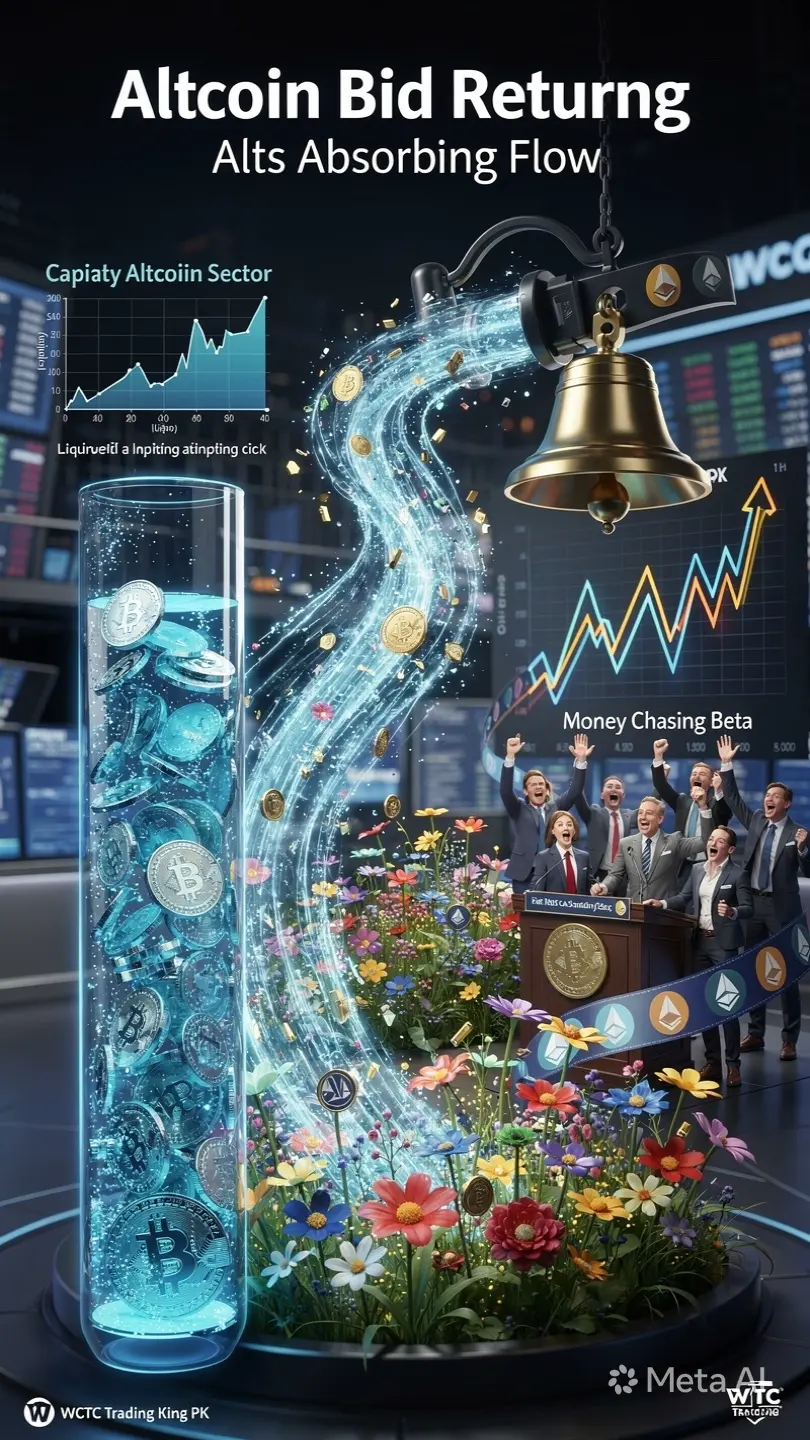
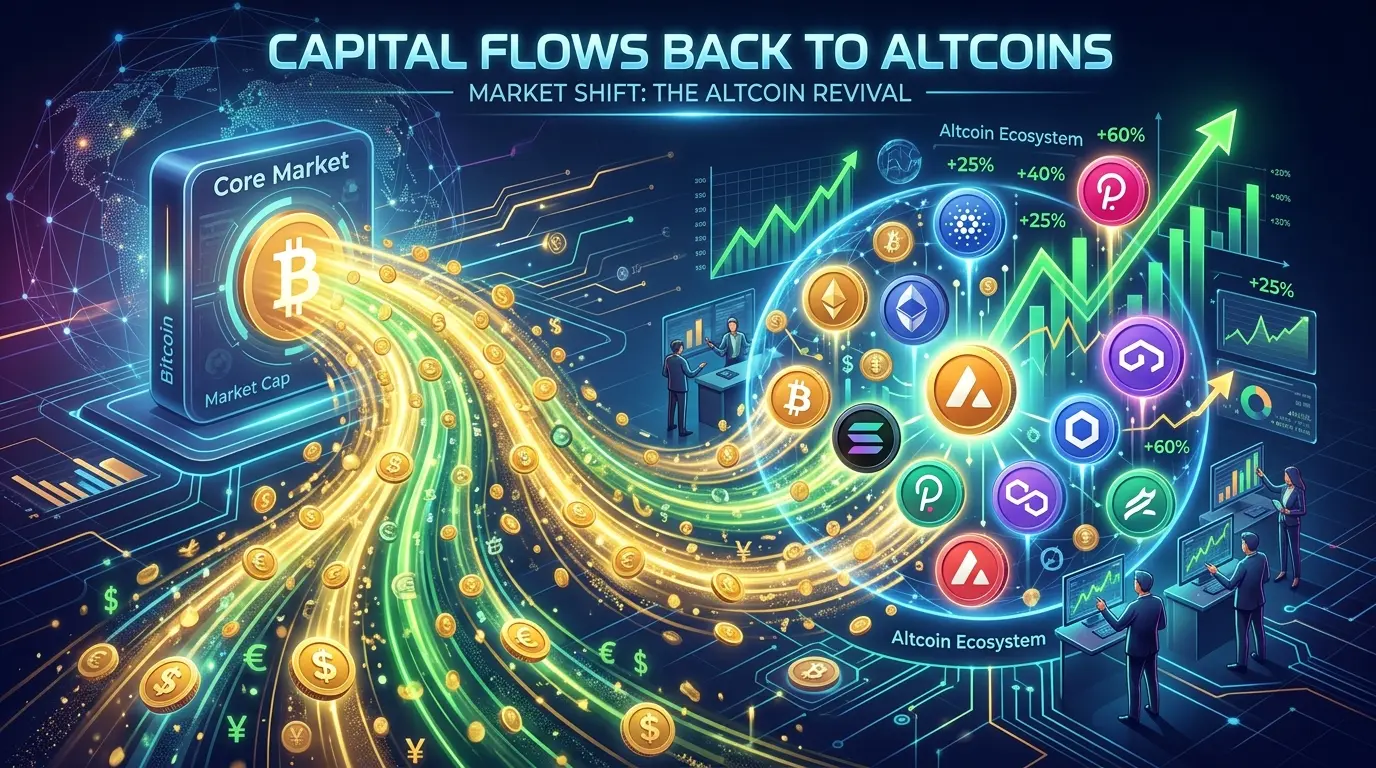
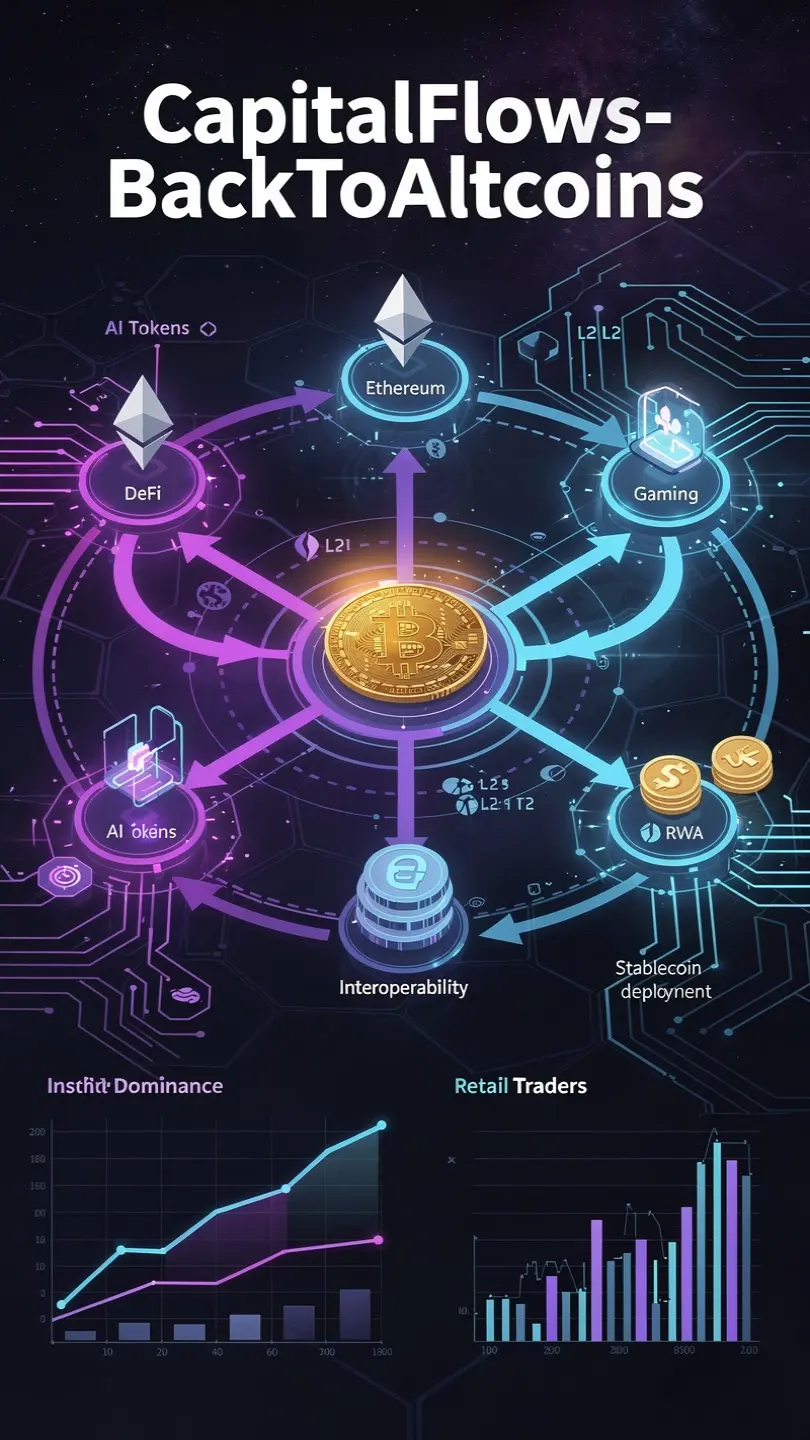
The capital rotation narrative is playing out in real time across crypto markets. After months of Bitcoin dominance and sideways consolidation in major alts, we are witnessing a structural shift where risk appetite is migrating down the liquidity curve. This is not merely a technical bounce but a fundamental repricing of altcoin risk premia as macro uncertainty begins to recede and institutional infrastructure matures.
The first driver of this rotation is the stabilization of Bitcoin itself. With BTC holding above the 80,000 level and institutional accumulation continuing through ETF channels, the market has established a floor that gives investors confidence to deploy capital into higher-beta assets. When the largest cryptocurrency stops stealing all the oxygen in the room, capital naturally seeks returns elsewhere. We are seeing this manifest in the volume data where SOL, XRP, and DOGE are capturing significant trading activity alongside the majors, suggesting that liquidity is no longer concentrated in just BTC and ETH pairs.
The second factor is the resurgence of on-chain activity and ecosystem development. Projects like Osmosis and Scallop are posting triple-digit gains not on speculation alone but on genuine protocol traction. DeFi primitives are evolving beyond the 2021 template with new mechanisms around concentrated liquidity, restaking, and real yield generation. The meme sector remains vibrant with PEPE and its derivatives showing sustained interest, but there is a notable quality gradient emerging where fundamentally sound infrastructure tokens are outperforming pure narrative plays. This selective appetite indicates a maturing investor base that can distinguish between sustainable value accretion and fleeting hype.
The third element is the technical setup across the altcoin complex. Many quality projects had been compressed to valuations that no longer reflected their current fundamentals or runway. The forced liquidations and capitulation of 2024 created a generation of holders with underwater positions who have now either exited or become long-term believers. This supply overhang has cleared, and the remaining float is held by stronger hands. When buying pressure returns to these markets, the moves are amplified by thin order books and compressed positioning. The result is the kind of explosive price action we are seeing in names like Stella and LooksRare, where a relatively modest inflow of capital generates outsized returns.
The sustainability of this rotation depends on whether Bitcoin can maintain its current range without a sharp correction that would drag the entire market lower. So far, the institutional bid has provided a backstop that did not exist in previous cycles. The Fear and Greed index sitting at neutral suggests there is room for sentiment to improve without reaching euphoric extremes. For traders and investors, this window represents an opportunity to accumulate positions in fundamentally sound projects before the broader market catches up to the underlying improvements in protocol economics and user adoption.
The capital rotation narrative is playing out in real time across crypto markets. After months of Bitcoin dominance and sideways consolidation in major alts, we are witnessing a structural shift where risk appetite is migrating down the liquidity curve. This is not merely a technical bounce but a fundamental repricing of altcoin risk premia as macro uncertainty begins to recede and institutional infrastructure matures.
The first driver of this rotation is the stabilization of Bitcoin itself. With BTC holding above the 80,000 level and institutional accumulation continuing through ETF channels, the market has established a floor that gives investors confidence to deploy capital into higher-beta assets. When the largest cryptocurrency stops stealing all the oxygen in the room, capital naturally seeks returns elsewhere. We are seeing this manifest in the volume data where SOL, XRP, and DOGE are capturing significant trading activity alongside the majors, suggesting that liquidity is no longer concentrated in just BTC and ETH pairs.
The second factor is the resurgence of on-chain activity and ecosystem development. Projects like Osmosis and Scallop are posting triple-digit gains not on speculation alone but on genuine protocol traction. DeFi primitives are evolving beyond the 2021 template with new mechanisms around concentrated liquidity, restaking, and real yield generation. The meme sector remains vibrant with PEPE and its derivatives showing sustained interest, but there is a notable quality gradient emerging where fundamentally sound infrastructure tokens are outperforming pure narrative plays. This selective appetite indicates a maturing investor base that can distinguish between sustainable value accretion and fleeting hype.
The third element is the technical setup across the altcoin complex. Many quality projects had been compressed to valuations that no longer reflected their current fundamentals or runway. The forced liquidations and capitulation of 2024 created a generation of holders with underwater positions who have now either exited or become long-term believers. This supply overhang has cleared, and the remaining float is held by stronger hands. When buying pressure returns to these markets, the moves are amplified by thin order books and compressed positioning. The result is the kind of explosive price action we are seeing in names like Stella and LooksRare, where a relatively modest inflow of capital generates outsized returns.
The sustainability of this rotation depends on whether Bitcoin can maintain its current range without a sharp correction that would drag the entire market lower. So far, the institutional bid has provided a backstop that did not exist in previous cycles. The Fear and Greed index sitting at neutral suggests there is room for sentiment to improve without reaching euphoric extremes. For traders and investors, this window represents an opportunity to accumulate positions in fundamentally sound projects before the broader market catches up to the underlying improvements in protocol economics and user adoption.