NEXST (NXT) is a Web3 entertainment platform built around this direction. Its core focuses on AI Agents, VR LIVE, RWA digital ticketing, and on-chain user interaction, while using the NXT token to connect artists, users, and entertainment platforms.
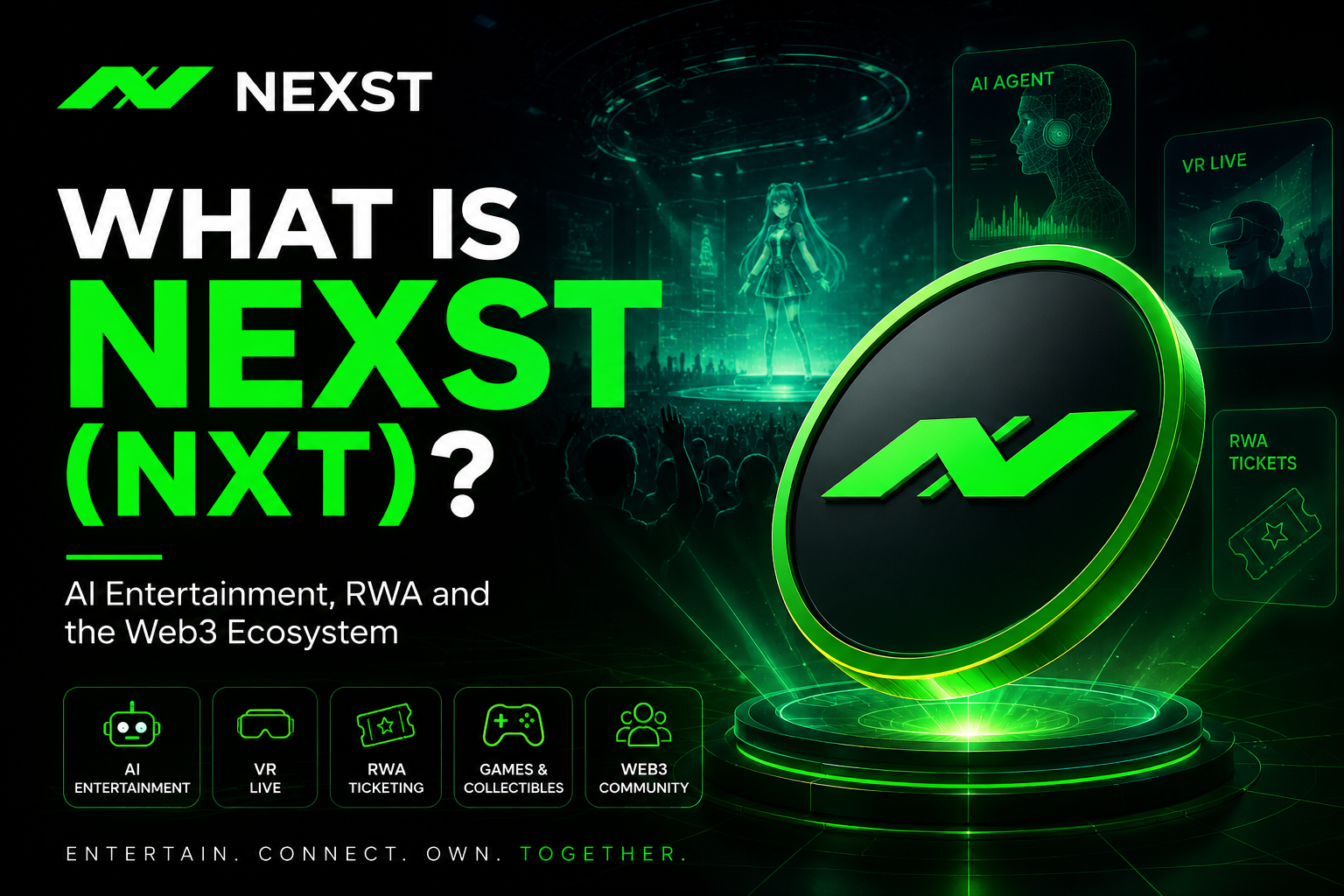
What Is NEXST (NXT)
Digital entertainment platforms are gradually shifting from one-way content consumption to interactive ecosystems. NEXST is designed to bring AI entertainment, virtual performances, and Web3 user systems together on one platform.
NEXST can be understood as a Web3 entertainment ecosystem that combines AI, VR, and blockchain-based mechanisms. According to official materials, the platform is built around modules such as AI Agents, digital ticketing, virtual livestreaming, gaming interaction, and digital collectibles, while aiming to create an on-chain fan economy structure.
From a mechanism perspective, NEXST is not simply an on-chain version of a traditional livestreaming platform. Its core idea is to use AI and Web3 technology so users are not only content viewers, but also participants in interactions, digital asset use, and platform ecosystem activities.
This structure means that entertainment content, user identity, and digital assets are becoming more closely connected, while NXT plays a role in value circulation and interaction coordination within the ecosystem.
Traditional entertainment platforms usually rely on centralized recommendations and one-way content distribution. NEXST, by contrast, places greater emphasis on an AI-driven interactive entertainment system. Its design focuses on using AI Agents, content generation, and user behavior analysis to increase user engagement.
Structurally, the platform uses AI systems to analyze user preferences, interaction behavior, and content needs. AI Agents can then help artists with content operations, fan engagement, and digital event management. The entire system is built around virtual interaction, real-time entertainment, and personalized recommendations.
According to the official mechanism, NEXST’s AI module is not only used to recommend content, but also participates in virtual character interaction, fan management, and online entertainment experiences. This means AI on the platform is not merely an auxiliary tool, but an important participation layer within the entertainment ecosystem.
Unlike traditional entertainment platforms, NEXST gives more weight to real-time interaction between AI and users. Its core purpose is not just to improve content distribution efficiency, but to create a more immersive Web3 entertainment experience.
What Are the Key Features of NEXST’s VR LIVE System
Virtual performances are becoming an important use case in Web3 entertainment. NEXST’s VR LIVE system focuses on using immersive interaction to make online entertainment feel more like real-time activities in a digital space.
Structurally, VR LIVE is not simply traditional livestreaming with virtual scenes added on top. Instead, it forms a complete system around digital identity, virtual space, and real-time interaction. Users can enter performance spaces through virtual characters and interact with artists, other users, or digital content.
Its main features include:
Together, these modules form a VR entertainment structure. Compared with traditional livestreaming platforms, VR LIVE places stronger emphasis on user participation and immersive experience.
This mechanism means online entertainment is moving from “watching content” to “joining activities.” For the Web3 entertainment ecosystem, VR LIVE is not only a technical upgrade, but also a shift in digital social and entertainment models.
How NEXST Uses RWA to Change Ticketing and the Fan Economy
Traditional ticketing systems have long faced problems such as scalping, counterfeit tickets, and opaque user data. NEXST seeks to use RWA and on-chain ticketing mechanisms to make digital tickets more transparent and verifiable.
From a mechanism perspective, the platform maps performance tickets, event access rights, or membership benefits into an on-chain asset system. The digital tickets held by users can serve not only as entry credentials, but may also function as identity verification, collectibles, and fan benefit tools.
| Comparison Dimension |
Traditional Ticketing |
NEXST RWA Ticketing |
| Ticketing records |
Centralized platform |
On-chain records |
| User identity |
Platform account |
Digital wallet |
| Ticket transfer |
Platform-controlled |
On-chain transfer |
| Collectible attributes |
Relatively weak |
Can be digitally preserved |
| Fan interaction |
One-way |
Community-based interaction |
This structure means tickets are no longer just proof of purchase. They begin to carry the attributes of digital assets. The design focuses on connecting ticketing, community identity, and fan interaction within one unified ecosystem.
What Role Does the NXT Token Play in the NEXST Ecosystem
NXT is the core utility token in the NEXST ecosystem. Its main role is to connect platform interaction, digital content, and ecosystem incentives.
Structurally, NXT is not used only for payments or transactions. It also serves as a bridge for user participation, platform activities, digital entertainment, and ecosystem interaction. Users can hold or use NXT to take part in certain platform functions and interactive scenarios.
Project documentation states that NXT will be used across multiple entertainment platform scenarios, including virtual events, digital assets, community interaction, and ecosystem incentives.
This mechanism means NXT is closer to an ecosystem asset within an entertainment platform than a simple payment token. Its design focuses on allowing entertainment interaction, digital identity, and user participation to form a more complete Web3 structure.
How NEXST’s AI Agents Connect Artists and Users
AI Agents are one of the core modules in NEXST’s entertainment structure. Their focus is to strengthen digital interaction between artists and fans through AI systems.
From a mechanism perspective, AI Agents can help artists with content management, user interaction, and digital event operations. At the same time, users can receive personalized entertainment experiences through the AI system, including content recommendations, virtual interaction, and community activities.
Official disclosures show that AI Agents are not limited to automated replies or recommendation algorithms. Instead, they are intended to form a “digital entertainment assistant” structure. The entire ecosystem revolves around AI, user behavior, and content operations.
This design means the fan economy is beginning to move from traditional social models toward AI-driven interaction. Compared with ordinary entertainment platforms, NEXST places greater emphasis on ongoing interactive relationships between users, digital characters, and virtual content.
How NEXST’s Gaming and Digital Collectibles System Takes Shape
Web3 entertainment ecosystems often combine gaming, digital collectibles, and community interaction into a single system. NEXST’s design follows this direction as well.
Structurally, gaming interaction and digital collectibles on the platform are not standalone modules. Instead, they are connected with VR LIVE, AI Agents, and the fan economy. Users can obtain related digital assets through entertainment activities, digital interaction, or platform mechanisms.
Its core lies in:
-
Extension of digital identity
-
Records of entertainment interaction
-
Proof of community participation
-
Virtual collectible assets
Together, these elements make up the digital asset system within Web3 entertainment.
Unlike traditional entertainment platforms, NEXST places more emphasis on users’ digital participation records during the entertainment process. Its design is not only about content consumption, but also about allowing user behavior to generate long-term digital value on-chain.
Traditional entertainment platforms are mainly built around content distribution, advertising, and centralized operations. NEXST places greater emphasis on AI entertainment, digital identity, and on-chain interaction systems.
From a mechanism perspective, users on traditional platforms are usually only viewers, while content and data are largely controlled by the platform. NEXST, on the other hand, attempts to use a Web3 structure to bring digital assets, community interaction, and AI entertainment into one ecosystem.
| Comparison Dimension |
Traditional Entertainment Platforms |
NEXST |
| User identity |
Platform account |
On-chain identity |
| Content interaction |
One-way viewing |
AI and community interaction |
| Digital assets |
Internal platform data |
On-chain digital assets |
| Ticketing system |
Centralized |
RWA on-chain ticketing |
| Entertainment format |
Standard livestreaming |
VR LIVE and AI entertainment |
This difference shows that NEXST is not focused only on upgrading entertainment platforms. It is also trying to build a Web3 entertainment ecosystem structure.
What Growth and Ecosystem Challenges Does NEXST Face
Web3 entertainment projects usually need to deal with content, user growth, and technical implementation at the same time. NEXST’s challenges are mainly concentrated around AI entertainment adoption, user retention, and digital ecosystem expansion.
Structurally, AI entertainment and VR LIVE place high demands on technical stability, content supply, and user experience. At the same time, RWA ticketing and digital asset systems must also deal with regulation, user education, and ecosystem coordination.
Its main challenges include:
-
Sustainable supply of entertainment content
-
Authentic AI interaction experience
-
Web3 user entry barriers
-
Speed of VR scene adoption
All of these factors will affect the platform’s ability to expand its ecosystem.
For NEXST, what truly matters is not just the number of technical modules it has, but whether AI entertainment, digital interaction, and Web3 user systems can create long-term synergy.
Conclusion
NEXST (NXT) is a digital entertainment platform built around AI entertainment, VR LIVE, RWA ticketing, and Web3 user interaction. Its core lies in using AI Agents, virtual performances, digital collectibles, and on-chain ticketing to connect artists, users, and digital assets within one unified ecosystem.
Looking at the overall structure, NEXST is not simply a livestreaming or entertainment platform. It is an attempt to build a more complete Web3 entertainment system. The NXT token plays a connecting role across platform interaction, ecosystem incentives, and digital entertainment scenarios.
FAQs
What kind of project is NEXST (NXT)?
NEXST is a digital entertainment platform that combines AI entertainment, VR LIVE, RWA ticketing, and Web3 social interaction, with a focus on building an on-chain fan economy and interactive ecosystem.
What is the NXT token used for?
NXT is used to connect entertainment interaction, digital assets, community activities, and ecosystem incentives on the platform. It is the core utility token in the NEXST ecosystem.
What are the features of NEXST’s VR LIVE?
VR LIVE emphasizes immersive virtual interaction. Users can use digital identities to participate in online entertainment, virtual concerts, and community interaction activities.
Why does NEXST introduce RWA ticketing?
RWA ticketing can improve ticket transparency and verifiability, while also strengthening digital collectible features and fan identity functions.
What does NEXST’s AI Agent do?
AI Agents are used to connect artists and users, including content operations, interaction recommendations, digital event management, virtual entertainment experiences, and related functions.