


Futures
Access hundreds of perpetual contracts
TradFi
Gold
One platform for global traditional assets
Options
Hot
Trade European-style vanilla options
Unified Account
Maximize your capital efficiency
Demo Trading
Introduction to Futures Trading
Learn the basics of futures trading
Futures Events
Join events to earn rewards
Demo Trading
Use virtual funds to practice risk-free trading
Launch
CandyDrop
Collect candies to earn airdrops
Launchpool
Quick staking, earn potential new tokens
HODLer Airdrop
Hold GT and get massive airdrops for free
Launchpad
Be early to the next big token project
Alpha Points
Trade on-chain assets and earn airdrops
Futures Points
Earn futures points and claim airdrop rewards


More




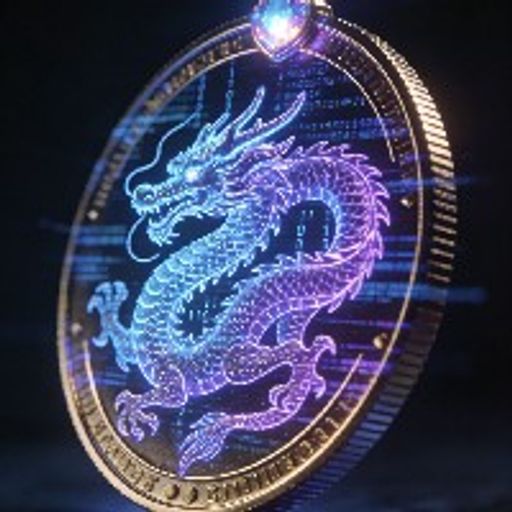

Flip a coin in the digital world: technology for instant decisions
In the modern era, flipping a coin no longer requires searching for a coin in your pocket. What was once a purely physical act has transformed into a fully digital experience accessible from any internet-connected device. This evolution responds to a simple but universal need: making quick, fair decisions without personal bias. From settling bets among friends to making business choices, the ability to generate random outcomes impartially remains as relevant as ever.
The science behind perfect randomness
To understand why digital simulators have become so reliable, it’s important to know how they work. When flipping a coin, you expect an outcome with exactly a 50% chance of heads or tails. Online tools achieve this precision through algorithms that generate random numbers mimicking the true impartiality of a physical flip.
The most advanced systems use complex mathematics to ensure no bias toward any result. Even when running thousands of flips simultaneously (like flipping a coin 10,000 times for statistical analysis), generators maintain this balanced distribution. Blockchain technology is being explored to add an extra layer of transparency, allowing anyone to verify the authenticity of each result without blindly trusting the provider.
Available tools: options for every need
Today, you have multiple ways to simulate the classic coin flip. Google Coin Flip is probably the most accessible: just type “flip a coin” in your browser, and the result appears instantly on the screen. It requires no downloads, takes up no space, and works on any device.
For those seeking more customization options, specialized platforms exist. FlipSim and JustFlipACoin offer enriched experiences with realistic animations, customizable coins, and the ability to run multiple flips. Some include sound effects that mimic a coin bouncing in the air, convincingly recreating the physical experience.
If you prefer complete portability, mobile apps like Heads or Tails work offline. These apps are ideal when traveling or in situations where connectivity isn’t guaranteed. Many also include history features to track result patterns over time.
For advanced uses, some generators allow special configurations: flipping multiple coins in a row, simulating different types of coins, or even integrating several coins flipped simultaneously. This makes the tools useful not only for everyday decisions but also for academic research and statistical analysis.
How to use these platforms: practical steps
Using a simulator is remarkably simple, though each platform has its own interface.
Choose your tool: Decide whether to use a browser-based option like Google, a specialized web platform, or a mobile app. Consider if you need offline functionality or advanced customization features.
Set up your flip: Depending on the platform, you can adjust parameters. Do you want to flip once or multiple times? Do you want animations? Do you need to select a specific type of coin? Make these adjustments before starting.
Generate the result: With a simple click, the simulator processes your request. Most platforms show an animation of the coin falling and then reveal whether it was heads or tails, often accompanied by visual and sound effects.
Record if needed: If the platform has a history function, consider documenting your results. This is especially useful if you perform multiple flips to identify patterns or cumulative probabilities.
Practical applications beyond personal decisions
While most people associate coin flips with simple daily decisions, businesses and educators have found innovative uses for these tools.
In marketing, brands incorporate virtual coin flips into contests and interactive promotions. The element of randomness encourages participation and creates a sense of fairness, especially in sweepstakes where multiple people compete for prizes. Digital tools enable scalability impossible with physical coins.
Video games and eSports platforms use coin flip systems to resolve ties or make random decisions within the game. The unpredictable element adds excitement and variability to the player experience, ensuring no two matches are identical.
In education, teachers use coin flip simulators to teach fundamental probability and statistics concepts. The interactive demonstration of how results converge toward the expected distribution (the law of large numbers) is much more impactful when students see thousands of flips executed in seconds.
Academic researchers also employ high-capacity generators to create statistical models, run Monte Carlo simulations, or validate hypotheses requiring thousands of iterations. Automation significantly reduces analysis time.
Frequently asked questions about digital coin flips
Do these flips truly produce fair and random results? While no system is mathematically perfect 100%, modern generators use sophisticated algorithms that ensure an almost impartial distribution. For critical applications, blockchain-based solutions offer additional verifiability.
Do I need to pay to access these tools? Most available options are completely free. Google Coin Flip costs nothing, and platforms like FlipSim offer free versions with full functionality.
Can I flip coins in bulk, say 100 or 10,000 times? Yes, many specialized simulators support these quantities. This capability is especially valuable for statistical analysis and academic research.
What if I don’t have internet access? Mobile apps like Heads or Tails work entirely offline, syncing data when the connection is restored.
Why do people still trust coin flips for important decisions? The inherent simplicity, absence of conscious bias, and psychological perception of “neutrality of the universe” make this method intuitively appealing even in the digital age.
The future of digital randomness
As technology advances, so do the ways we experience random events. Exploring blockchain to create transparent, immutable records of results is a step toward greater trust. Future applications might include integration with smart contracts, where digital coin flips automatically trigger transactions or state changes in decentralized systems.
The convergence of the millennia-old tradition of flipping a coin with modern technological capabilities shows how classic methods don’t disappear—they adapt. In an increasingly complex world, the accessibility of a simple tool that flips a coin—reliable, fair, and instant—will continue to be valuable, whether for everyday decisions or sophisticated scientific applications.