


Futures
Access hundreds of perpetual contracts
TradFi
Gold
One platform for global traditional assets
Options
Hot
Trade European-style vanilla options
Unified Account
Maximize your capital efficiency
Demo Trading
Introduction to Futures Trading
Learn the basics of futures trading
Futures Events
Join events to earn rewards
Demo Trading
Use virtual funds to practice risk-free trading
Launch
CandyDrop
Collect candies to earn airdrops
Launchpool
Quick staking, earn potential new tokens
HODLer Airdrop
Hold GT and get massive airdrops for free
Launchpad
Be early to the next big token project
Alpha Points
Trade on-chain assets and earn airdrops
Futures Points
Earn futures points and claim airdrop rewards


More


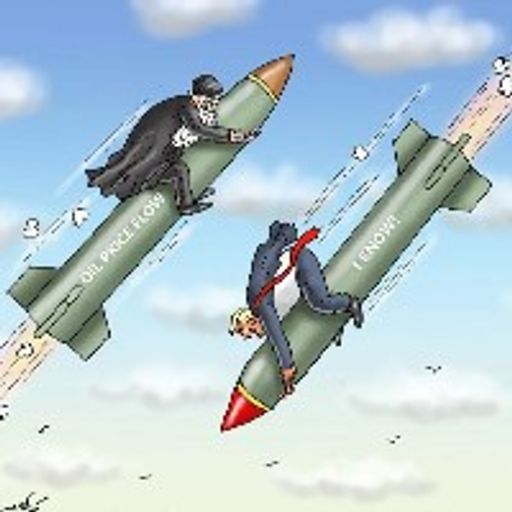



Brent crude oil surpasses $100, sparking inflation worries; US stocks and bonds both plummet, the US dollar rises for a second consecutive day, the yen crashes 2%, and gold and silver decline.
The conflict between the U.S. and Iran continues to escalate, with Brent crude oil prices closing above $100 per barrel for the first time since August 2022. Additionally, the private credit market is experiencing redemption pressures, and the dual shocks have caused a broad decline in U.S. stocks. Traders are no longer fully pricing in a Fed rate cut in 2026, leading to a sharp rise in short-term U.S. Treasury yields and the dollar reaching a nearly two-month high.
On Thursday, the S&P 500 fell 1.5%, hitting its lowest level since November last year. The Nasdaq dropped nearly 1.8%, and the Philadelphia Semiconductor Index declined close to 3.5%. The VIX fear index rose 12.63%.
(Daily movement of major U.S. stock indices)
The U.S.-Iran conflict has entered its 13th day, with both Trump and Iran’s new Supreme Leader issuing tough signals.
According to CCTV News, Iran’s new leader Mojtaba Khamenei stated that they will not abandon revenge, and the Strait of Hormuz will remain closed. Trump posted on social media that preventing Iran from acquiring nuclear weapons is “far more important” than oil prices. These statements add new uncertainties to the energy markets.
Wallstreetcn reported that the Trump administration plans to exempt the century-old Jones Act, allowing foreign ships to carry goods between U.S. domestic ports, in an effort to suppress oil prices. U.S. Energy Secretary Chris Wray said the U.S. Navy could begin escorting oil tankers through the Strait of Hormuz as early as the end of March.
The International Energy Agency warned that the conflict has caused the largest supply disruption in global oil markets history, affecting 7.5% of global crude oil supply and a larger share of export flows. Although overnight reports briefly indicated Iran denied mining the strait and allowed some ships to pass, causing oil prices to temporarily dip below $100, prices rebounded afterward.
Brent crude surged nearly 10% at one point, finally closing above $100 for the first time since August 2022. U.S. crude also rose nearly 9%.
(Prices of crude oil futures closing above $100)
Goldman Sachs warned that if the flow through the Strait of Hormuz remains constrained throughout March, Brent could surpass the 2008 record high of $147.50 per barrel.
The energy shock continues to weigh on market sentiment, with all three major U.S. indices falling more than 1.5%. Tech giants declined across the board, led by Tesla, which fell over 3%.
(Performance of the seven tech giants lagging behind the remaining 493 S&P components)
In addition to the energy shock, the $1.8 trillion private credit market is showing signs of new stress, becoming another major drag on U.S. stocks. Matt Maley of Miller Tabak said:
Banking sector declined overnight, with Morgan Stanley and Goldman Sachs falling over 4%. Wallstreetcn reported that Morgan Stanley and Cliffwater LLC’s private credit funds have restricted withdrawals due to surging redemption requests. Deutsche Bank disclosed its exposure to the sector is around $30 billion.
Blue Owl Capital publicly defended its recent sale of $1.4 billion in loans across three funds, claiming the transactions involved no guarantees or hidden incentives. Nonetheless, the firm remains a key market target for private credit risk exposure.
On the technical front, the S&P 500 is currently deep in a negative gamma zone. According to Bloomberg’s Michael Ball, in a market dominated by oil prices, any Iran-related headlines can trigger sharp market maker chasing moves, with downside protection still expensive and almost no upside positioning.
SpotGamma indicates resistance at 6,820 points and support at 6,600 points. Overall, individual stock holdings are defensive, with a clear skew toward puts, low demand for calls, and a decreasing number of stocks above the 200-day moving average.
(The S&P options gamma distribution: 6,700 points is a significant negative gamma concentration zone, influencing market volatility)
More notably, according to a JPMorgan trader, retail investors have shown signs of weakening for the first time this year, with weekly purchase volumes down about 30% from earlier levels. Due to war-related uncertainties, retail ETF net inflows this week decreased by 22%, breaking a nearly three-month support trend.
****(Retail ETF weekly net outflows for the first time in three months)
JPMorgan’s trader maintains a tactical bearish stance, sticking to the “long energy, short equities” strategy, and warns that if the situation remains unresolved before the futures market opens, risk assets could face more intense selling.
Oil prices and inflation concerns have dampened expectations for Fed easing. Macquarie estimates that if current oil prices persist, U.S. consumer inflation could rise by 0.6 percentage points in the near term, and the core PCE price index could increase by 0.4 percentage points.
Traders are currently pricing in less than one 25-basis-point rate cut in 2026. The two-year U.S. Treasury yield briefly jumped 11 basis points to 3.76%, up 20 basis points this week.
(Expectations for less than one 25-bp cut in 2026)
Trump pressured the Fed on social media, saying Chairman Powell “should cut rates immediately, not wait for the next meeting.” The market generally expects the Fed to hold steady at next week’s policy meeting, with investors focusing on any signals about future policy.
Stephen Brown of Capital Economics noted:
Kyle Rodda of Capital.com pointed out that the upcoming PCE data on Friday carries asymmetric risks:
With the Fed’s rate cut expectations fading, the dollar has risen for two consecutive days, reaching a nearly two-month high. The yen plunged 2%, depreciating over 300 points intraday and approaching the 160 level.
(Bloomberg dollar index rising for two days)
Elon Gu of Ultima Markets noted that the USD/JPY shows a bearish RSI divergence on the 2-hour chart, approaching the 160 psychological level, and short-term caution is advised regarding possible intervention by the Japanese Ministry of Finance.
Amid the strong dollar, gold and silver fell 2%, while Bitcoin continued to fluctuate narrowly around $70,000.
(BTC price in a converging triangle pattern)
On Thursday, U.S. stocks broadly declined, with airline ETFs down about 4%, and semiconductor ETFs leading sector declines. The seven tech giants all fell, led by Tesla, down over 3%. Morgan Stanley and Goldman Sachs dropped more than 4%. After hours, Adobe plunged 7% after releasing weak earnings guidance and announcing the resignation of its CEO.
European blue-chip stocks declined about 0.8%, with Deutsche Bank down about 5.3%, and BNP Paribas leading declines. France and Italy indices fell 0.7%, with Italian banks down 2.9%.
Two-year U.S. Treasury yields rose 10 basis points, surpassing 3.76%. UK yields generally increased about 9 basis points.
The dollar reached a nearly two-month high, with the yen plunging 2%, depreciating over 300 points intraday and approaching 160.
(Bloomberg dollar index rising for two days)
Elon Gu of Ultima Markets noted that USD/JPY shows a bearish RSI divergence on the 2-hour chart, approaching the 160 level, with short-term risk of intervention by Japan’s Ministry of Finance.
Amid the strong dollar, gold and silver declined 2%, while Bitcoin remained narrowly around $70,000.
(BTC in a converging triangle pattern)
On Thursday, U.S. stocks broadly declined, with airline ETFs down about 4%, and semiconductor ETFs leading sector declines. The seven tech giants all fell, led by Tesla, down over 3%. Morgan Stanley and Goldman Sachs dropped more than 4%. After hours, Adobe plunged 7% after issuing weak guidance and announcing CEO resignation.