


Futures
Access hundreds of perpetual contracts
TradFi
Gold
One platform for global traditional assets
Options
Hot
Trade European-style vanilla options
Unified Account
Maximize your capital efficiency
Demo Trading
Introduction to Futures Trading
Learn the basics of futures trading
Futures Events
Join events to earn rewards
Demo Trading
Use virtual funds to practice risk-free trading
Launch
CandyDrop
Collect candies to earn airdrops
Launchpool
Quick staking, earn potential new tokens
HODLer Airdrop
Hold GT and get massive airdrops for free
Launchpad
Be early to the next big token project
Alpha Points
Trade on-chain assets and earn airdrops
Futures Points
Earn futures points and claim airdrop rewards


More


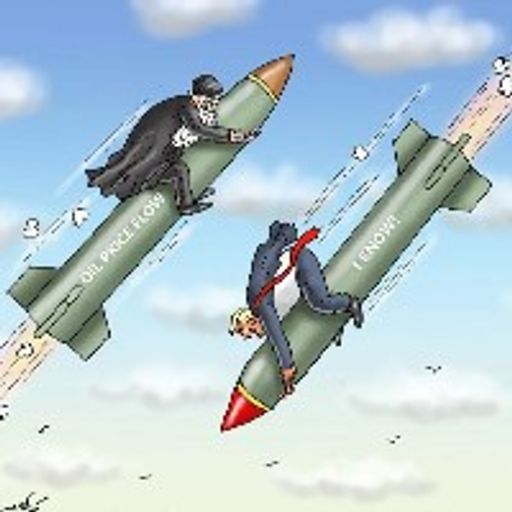



Oil Price Outlook For 2026 Raised As Israel-Iran Conflict Drags On
(MENAFN- Khaleej Times) [Editor’s Note: Follow Khaleej Times live blog amid ** US-Israel-Iran war** for the latest regional developments.]
Energy analysts on Thursday increased oil price forecasts as the Middle Eastern military conflict dragged on and Strait of Hormuz remained closed.
Recommended For You
Oil prices rose above $100 a barrel on Thursday as energy market shrugged off International Energy Agency’s (IEA) announcement of member countries releasing 400 million barrels reserves to bring stability to the energy market.
Fitch Ratings on Thursday raised its 2026 Brent oil price assumption to $70 a barrel from $63 a barrel due to the effective closure of the Strait of Hormuz, which it assumes to be temporary, following the outbreak of the Israel-Iran conflict. For WTI, it increased its forecast from $58 to $65 per barrel.
“We expect the current spike in prices to be followed by a drop to levels driven by market fundamentals once the strait reopens. However, the geopolitical risk premium is substantial, and there is uncertainty over the duration of the conflict and transit disruption. A more prolonged closure could drive our annual average oil and European gas prices higher,” Fitch analysts said.
** Stay up to date with the latest news. Follow KT on WhatsApp Channels.**
The global ratings agency noted that the limited 2026 increases to Brent and WTI reflect its view that the closure of the strait will be short-lived, as there are strong incentives to de-escalate or at least reduce the direct risks to transit, given the economic importance of the strait.
About 20 million barrels a day of crude oil and petroleum products transited the strait before the conflict, accounting for about a quarter of global seaborne oil trade and a fifth of global oil consumption.
The global oil market was oversupplied before the conflict, which could help mitigate annual oil price increases. Global supply increased by about 3 million barrels a day in 2025, while demand grew by well below 1 million barrels a day.
“We forecast supply growth of 2.4m bpd in 2026, with demand growth of about 0.8m bpd. Half of the 2025-2026 supply increases come from unaffected non-Opec+ producers. Opec+ spare production capacity is 4.3m bpd,” it said.
Goldman Sachs increased Brent forecast from $66 a barrel to $71 a barrel in the final quarter of this year as the US investment bank sees that the closure of the Strait of Hormuz would severely strain the oil flow. It hopes that the conflict will end soon and this will lead to a recovery in the supply.
Aaron Hill, chief market analyst at FP Markets, said Brent retested $100 on Thursday despite the IEA making a coordinated release of an eye-popping 400 million barrels from member nations’ strategic reserves.
“Considering that the Strait of Hormuz handles approximately 20 per cent of global seaborne oil flows, this offers under three weeks’ worth of supplies, assuming the Strait keeps its doors closed,” he said.
“It is clear that Trump is in a bind and cannot afford a prolonged conflict, as a sustained disruption in oil flow would cause him too many problems on the political front. Let’s be honest, the ‘TACO’ option seems to have worked in Greenland, but I just do not see this working here. The only real win, from the market’s perspective, is the reopening of the Strait. But given the latest strikes, Iran is certainly not opening up any time soon,” Hill added.
ALSO READ
Hormuz closure supercharges oil rally as markets brace for $100+ Oil rockets on Gulf flare-up, $100 in sight if Hormuz flows stall Oil faces $20 spike as Hormuz artery grinds to a halt
MENAFN12032026000049011007ID1110854239