


Futures
Access hundreds of perpetual contracts
TradFi
Gold
One platform for global traditional assets
Options
Hot
Trade European-style vanilla options
Unified Account
Maximize your capital efficiency
Demo Trading
Introduction to Futures Trading
Learn the basics of futures trading
Futures Events
Join events to earn rewards
Demo Trading
Use virtual funds to practice risk-free trading
Launch
CandyDrop
Collect candies to earn airdrops
Launchpool
Quick staking, earn potential new tokens
HODLer Airdrop
Hold GT and get massive airdrops for free
Launchpad
Be early to the next big token project
Alpha Points
Trade on-chain assets and earn airdrops
Futures Points
Earn futures points and claim airdrop rewards


More


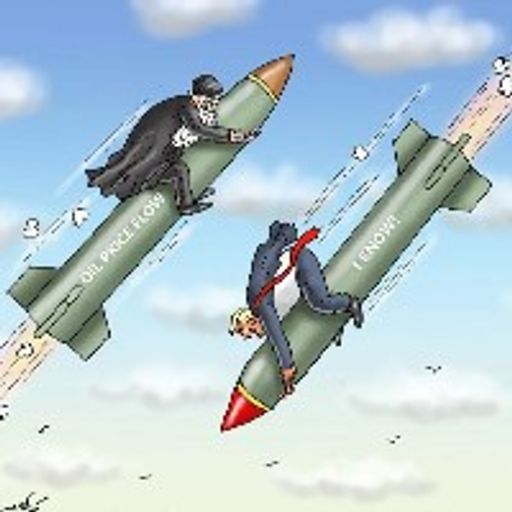



US and allies clash with Russia and China at UN over Iran nuclear program
Summary
US says Russia and China blocking sanctions committee work to protect Iran
China, Russia fail to stop Security Council discussion
Trump has used nuclear issue to justify attack on Iran
March 12 (Reuters) - The U.S. and Western allies clashed with Russia and China on Thursday over Iran’s nuclear intentions, as Washington sought at the United Nations to further justify the war it launched on Iran two weeks ago.
At a meeting of the 15-member U.N. Security Council, which is chaired this month by the U.S., Russia and China moved unsuccessfully to block a discussion about a committee established to oversee and enforce U.N. sanctions on Iran. They were overruled 11-2 with two abstentions.
The Reuters Iran Briefing newsletter keeps you informed with the latest developments and analysis of the Iran war. Sign up here.
Addressing the council, U.S. envoy to the United Nations Mike Waltz accused Moscow and Beijing of seeking to protect Tehran by blocking the work of the so-called 1737 Committee.
“All member states of the United Nations should be implementing an arms embargo against Iran, banning the transfer and trade of missile technology, and freezing relevant financial assets,” Waltz said.
“The U.N. provisions to be re-imposed are not arbitrary, but instead, narrowly scoped to address the threat posed by Iran’s nuclear, missile and conventional arms programs and Iran’s ongoing support for terrorism,” he said.
Waltz said both China and Russia did not want a functional sanctions committee “because they want to protect their partner, Iran, and continue to maintain defense cooperation that is now once again prohibited.”
Waltz noted that last week the U.N.'s International Atomic Energy Agency had reiterated that Iran was the only state in the world without nuclear weapons to have produced and accumulated uranium enriched up to 60 percent, and had refused to provide the IAEA access to this stockpile.
Russia’s U.N. ambassador Vasily Nebenzya accused the U.S. and its allies of whipping up “hysteria surrounding supposed plans Iran had to get a nuclear weapon” that were never corroborated by IAEA reports.
“This was done in order to undertake yet another military venture against Tehran and to ensure great escalation of the situation in the Middle East and beyond,” he said.
China’s representative, Fu Cong, called Washington the “instigator” of the Iranian nuclear crisis and said it had “resorted to blatant use of force against Iran during the negotiation process, which rendered the diplomatic efforts futile.”
Iran’s UN ambassador, Amir Saeid Iravani, told reporters later on Thursday that Iran’s nuclear program “has always been exclusively peaceful,” and Tehran would not recognize any attempt to enforce sanctions against it.
U.S. President Donald Trump has used Iran’s nuclear program to justify his war on Iran. He said this month that Iran would have had a nuclear weapon within two weeks had the U.S. not struck three key nuclear sites in June, a claim sources have said was not supported by U.S. intelligence assessments.
Britain and France told the Security Council that re-imposing sanctions on Iran was justified by Tehran’s failure to address concerns about its nuclear program.
France said the IAEA was no longer able to guarantee the peaceful nature of the program and that Tehran’s nuclear stockpile was sufficient for 10 nuclear devices.
Reporting by David Brunnstrom; Editing by Don Durfee, Mark Porter and Bill Berkrot
Our Standards: The Thomson Reuters Trust Principles., opens new tab
Share
X
Facebook
Linkedin
Email
Link
Purchase Licensing Rights