


"SAY"的搜索结果
预测市场思维:当概率取代恐惧,我们才能真正自由
原文标题:当一位父亲用预测市场缓解育儿焦虑
原文作者:Polyfactual
原文来源:
转载:Daisy, 火星财经
上周二早晨,我站在小学的接送队伍中,手扶着儿子的背包,僵在那里。刚刚过去的周末,又一场校园枪击事件占据了新闻的头条。
当他兴奋地跑进学校大楼时,我感到胸口那熟悉的紧绷感——一种令人揪心的感觉,仿佛随着他们逐渐在这个充满敌意的世界中变得更加独立,任何事情都可能发生。
开车去上班的路上,我播放了一本正在听的长篇有声书:《无声告白》(Say Nothing),一本关于北爱尔兰冲突(The Troubles)的历史记录——从1969年到1990年代末长达三十年的反殖
MarsBit News·2025-10-15 13:26
Michael Saylor:比特币协议在面对量子计算威胁时可通过软件升级应对潜在风险
Techub News 消息,据 CoinDesk 报道,Strategy 创始人 Michael Saylor 近日在接受采访时淡化量子计算对比特币的威胁,认为当威胁迫在眉睫时,比特币协议可通过软件升级应对潜在风险。他表示:「这主要是那些想向你推销下一个量子概念代币的人的营销手段。谷歌和微软不会出售能破解现代加密技术的计算机,因为这会毁了谷歌和微软——也会毁了美国政府和银行系统。」
目前已有多个方案研究如何使比特币工作量证明(PoW)抵御量子攻击,包括 BTQ 等初创公司开发的抗量子加密硬件。一位比特币开发者已提交改进提案(BIP),建议通过硬分叉将钱包地址迁移至量子安全地址。Say
BTC0.64%
Techub News·2025-06-09 01:08
华尔街 30 年从业者:债务、利率与比特币的避险逻辑
来源:If You Miss This Bitcoin Run, Don’t Say You Weren’t Told
整理&编译:lenaxin,ChainCatcher
编者按:
本文整理自Anthony Pompliano与Jordi Visser的视频访谈,Jordi是一位拥有30年华尔街经验的宏观策略投资专家。Jordi将以独到视角解读当前经济形势。在访谈中,Jordi还深入探讨了通胀、股市、比特币、AI等热点话题,并解析为何市场走势总与主流预期背道而驰。
ChianCatcher对内容进行了整理编译。
TL&DR
传统经济学教科书对“经济衰退”的定义,在当代经济结
BTC0.64%
CoinVoice·2025-05-22 04:01
华尔街 30 年从业者:债务、利率与比特币的避险逻辑
来源:If You Miss This Bitcoin Run, Don’t Say You Weren’t Told
整理&编译:lenaxin,ChainCatcher
编者按:
本文整理自Anthony Pompliano与Jordi Visser的视频访谈,Jordi是一位拥有30年华尔街经验的宏观策略投资专家。Jordi将以独到视角解读当前经济形势。在访谈中,Jordi还深入探讨了通胀、股市、比特币、AI等热点话题,并解析为何市场走势总与主流预期背道而驰。
ChianCatcher对内容进行了整理编译。
TL&DR
1. 传统经济学教科书对“经济衰退”的定义,在当代经济结
BTC0.64%
GateUser-6bbdc2fc·2025-05-21 15:46
一位联邦法官刚刚对证券交易委员会进行了打击。这意味着什么。- BlockTelegraph
*
*
*
*
*
If the SEC were a sports team measured by its “win” rate, it would be a runaway champ.
But that win-loss record suffered a mild hit — and its first ever loss in an “ICO” case — one that refers to the controversial method of crowd fundraising and that borrows from the public company “IPO” or initial public offering.
A federal judge denied the SEC a preliminary injunction against Blockvest after he granted a temporary restraining order on the same issue. We chat with Amit Singh, attorney and shareholder in Stradling’s corporate and securities practice group about the SEC’s fresh loss.
His take? They’ll be out for blood, next.
**For those not in the know, share the legal background leading up to this case.**
In October of this year, the Securities Exchange Commission filed a complaint against Blockvest LLC and its founder, Reginald Buddy Ringgold III. According to the complaint, Blockvest falsely claimed its planned December initial coin offering was “registered” and “approved” by the SEC and created a fake regulatory agency, the Blockchain Exchange Commission, which included a phony logo that was nearly identical to that of the SEC. The SEC also alleged Blockvest conducted pre-sales of its digital token, BLV, ahead of the ICO and raised more than $2.5 million.
The SEC’s complaint alleged violations of the anti-fraud provisions of the Securities Exchange and the Securities Act and violations of the Securities Act’s prohibitions against the offer and sale of unregistered securities in the absence of an exemption from the registration requirements.
U.S. District Judge Gonzalo Curiel issued a temporary restraining order “freezing assets, prohibiting the destruction of documents, granting expedited discovery, requiring accounting and order to show cause why a preliminary injunction should not be granted” on October 5, 2018.
On Tuesday, November 27, in the SEC’s first loss in stopping an ICO, judge Gonzalo Curiel stated that the SEC had not shown at this stage of the case that the BLV tokens were securities under the Howey Test, a decades-old test established by the U.S. Supreme Court for determining whether certain transactions are investment contracts and thus securities. If the tokens weren’t securities, all the SEC’s other allegations automatically fail Under the Howey Test, a transaction is an investment contract (or security) if:
– It is an investment of money;
– There is an expectation of profits from the investment;
– The investment of money is in a common enterprise; and
– Any profit comes from the efforts of a promoter or third party
Later cases have expanded the term “money” in the Howey Test to include investment assets other than money.
The judge said that the SEC failed to show investors had an expectation of profits. “While defendants claim that they had an expectation in Blockvest’s future business, no evidence is provided to support the test investors’ expectation of profits,” the judge wrote. Blockvest argued that the pre-ICO money came from 32 “test investors” and said the BLV tokens were only designed for testing its platform. It presented statements from several investors who said they either did not buy BLV tokens or rely on any representations that the SEC has alleged are false. The SEC responded by noting that various individuals wrote “Blockvest” or “coins” on their checks and were provided with a Blockvest ICO white paper describing the project and the terms of the ICO. Judge Curiel said that evidence, by itself, wasn’t enough: “Merely writing ‘Blockvest or coins’ on their checks is not sufficient to demonstrate what promotional materials or economic inducements these purchasers were presented with prior to their investments. Accordingly, plaintiff has not demonstrated that ‘securities’ were sold to [these] individuals.”
**Won’t the case proceed? Why is the denial of an injunction important here?**
This does not mean that the SEC cannot pursue an action against the defendants Rather it just means that the SEC didn’t meet the high burden required to receive a preliminary injunction of proving “(1) a prima facie case of previous violations of federal securities laws, and (2) a reasonable likelihood that the wrong will be repeated.”
The court determined that, at this stage, without full discovery and disputed issues of material facts, the Court could not decide whether the BLV token were securities. Since the SEC didn’t meet its burden of proving the tokens were securities in the first place, it couldn’t have shown that there was a previous violation of the federal securities laws So, the first prong was not met Further, the defendants agreed to stop the ICO and provide 30 days’ prior notice to the SEC if they intend to move forward with the ICO So, the court determined that there was not a reasonable likelihood that the wrong will be repeated As a result, the SEC’s motion for a preliminary injunction was denied.
Nonetheless, this is an important case as it is the first time the SEC went after an ICO issuer and the issuer pushed back and won (if only temporarily) It reminds us that, though most people think of the SEC as judge and jury in securities actions, that isn’t the case Ultimately, an issuer that pushes back may have a chance if it has the wherewithal to fight and if it has good arguments However, this does not mean that the SEC is done with them and we may very well see this case continue.
**Won’t media coverage of this case ultimately impair Blockvest’s ability to raise funds — its ultimate goal?**
That may very well be the case.
Unfortunately, unsophisticated investors could ultimately merely remember the Blockvest name and decide that it must be a good investment since they’ve heard of it (ala PT Barnum – “I don’t care what the newspapers say about me as long as they spell my name right.”). But I may be too cynical (hopefully I am). In any case, I would be surprised if Blockvest attempts to pursue an ICO without either registering the tokens or utilizing an exemption from the registration requirements. They clearly have a target on their back, so the SEC would love another crack at them I’m sure.
Plus, even though a preliminary injunction was denied here, the SEC still got what it wanted as Blockvest agreed not to pursue the ICO without giving the SEC 30 days’ prior notice of its intent to do so. So, the investing public was ultimately protected.
**What is the SEC’s current stance on what constitutes a security based on this case?**
The SEC will still point to the Howey Test Further, as stated in recent speeches by Hinman and others, the SEC seems to be focused not only on the utility of any tokens (i.e., they can be used on the platform for which they were created), but also on decentralization (that the efforts of the promoters are no longer required to maintain the value/utility of the tokens/platform).
However, the court in this case looked at the investment of money prong differently than has historically been the case Normally, the investment of money prong is assumed with little analysis as any consideration is considered “money” for purposes of the test But this case looked at the investment not from the purchaser’s subjective intent when committing funds, but instead based the analysis on what was offered to prospective purchasers and what information they relied on So, issuers are well advised to be very careful in how they advertise an offering.
Further, the expectation of profits prong wasn’t met because, according to Blockvest, these were just test investors So, it wasn’t clear these folks invested for a profit The tokens were never even used or sold outside the platform.
**Where does the Ninth Circuit sit in regards to what is a security?**
The Ninth Circuit follows the Howey Test.
However, the common enterprise element has received extensive and varied analysis in the federal circuit courts For example, while all circuits accept “horizontal” commonality as satisfying the common enterprise prong of the Howey Test, a minority of circuits (including the ninth) also accept “vertical” commonality in this analysis.
Horizontal commonality involves the pooling of assets, profits and risks in a unitary enterprise, while vertical commonality requires that profits of investors be “interwoven with and dependent upon the efforts and success of those seeking the investment or of third parties” (narrow verticality), or “that the well-being of all investors be dependent upon the promoter’s expertise” (broad commonality). SEC v. SG Ltd., 265 F.3d 42, 49 (1st Cir. 2001).
The Ninth Circuit is the only one to accept the narrow vertical approach (though it also accepts horizontal commonality), which finds a common enterprise if there is a correlation between the fortunes of an investor and a promoter.” Sec. & Exch. Comm’n v. Eurobond Exchange, Ltd., 13 F.3d 1334, 1339 (9th Cir., 1994). Under this approach a common enterprise is a venture “in which the ‘fortunes of the investor are interwoven with and dependent upon the efforts and success of those seeking the investment….'” Investors’ funds need not be pooled; rather the fortunes of the investors must be linked with those of the promoters, which suffices to establish vertical commonality. So, a common enterprise exists if a direct correlation has been established between success or failure of the promoter’s efforts and success or failure of the investment.
**Which Federal Circuits might offer an equal or even bigger split with the SEC?**
I wouldn’t really say that any courts split with the SEC as the SEC’s decisions take precedent over any decisions of those courts. However, there is a split among the circuits as described above with respect to what type of commonality is sufficient to find a common enterprise.
**What impact could the outcome of this case have on ICOs at large?**
This case may embolden companies who have already conducted ICOs to push back on any SEC actions that they might not otherwise fight as it shows that the SEC will always have to meet the burden of proving all factors of the Howey Test are met before the SEC has jurisdiction over the offering in the first place.
**Has the Supreme Court addressed anything crypto, crypto related, or analogous?**
The only case I know of where the Supreme court has addressed crypto currencies is Wisconsin Central Ltd. v. United States.
That was a case about whether stock counts as “money remuneration” The dissent in that case talked about how our concept of money has changed over time and said that perhaps “one day employees will be paid in bitcoin or some other type of cryptocurrency.” This goes against the IRS’s position that cryptocurrencies are property and should be taxed as such But, it was just a passing comment in the dissent. So, it has no precedential value. But, it may embolden someone to fight the IRS’s position.
BlockTelegraph·2024-12-19 05:53

瑞波币 vs. 证券交易委员会: 证券交易委员会 Likely to Drop Appeal, Say Former 美国商品期货交易委员会(CFTC) Lawyers and 瑞波 Advocates
瑞波币 vs. 证券交易委员会: 证券交易委员会预计将出现的态度转变
前美国商品期货交易委员会(CFTC)主席Chris Giancarlo和大佬-瑞波律师,包括Bill Morgan,暗示美国证券交易委员会(证券交易委员会)可能会降低对瑞波币实验室的诉讼。证券交易委员会可能会因领导层的潜在变动而产生转变,这种变动由
Moon5labs·2024-11-29 19:29
做中国版ChatGPT?腾讯、华为、京东都say no了
在头部科技厂商的最新叙事里,ToB赋能千行百业才是大模型落地的重点。
腾讯、华为之后,又一个姗姗来迟的大模型“虽迟但到”。
7月13日,在2023京东全球科技探索者大会暨京东云峰会上,京东正式推出大模型“言犀”。目前平台已开放预约注册,预计将于8月份正式上线。
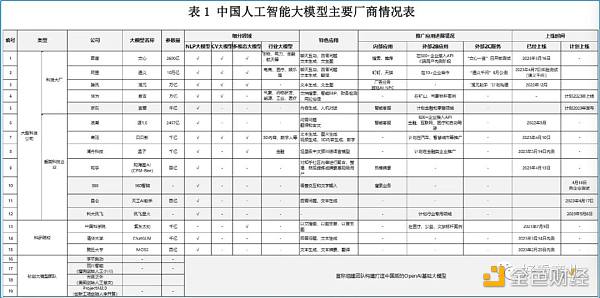
至此,头部互联网大厂的大模型产品悉数登场:百度有文心,阿里有通义,腾讯要做行业大模型,华为有盘古,京东有言犀,字节有火山方舟。
目前放眼全球,已经有数百个大模型上线;仅中国国内就发布了80多个。
图片来源:中国移动研究院发布的《我国人工智能大模型发展动态》
几天前举办的2023年WAIC(世界人工智能大会)展馆里,30多...
金色财经_·2023-07-14 09:12
加载更多