“Binance Life,” as a Meme narrative concept within the crypto community, originally emerged as a playful way for users to describe trading behavior and exchange ecosystems. With the rise of social media and highly interactive crypto communities, it gradually evolved from internet slang into a widely shared cultural symbol, used to capture a “crypto lifestyle” shaped by trading, volatility, and emotional experiences.
From an industry evolution perspective, crypto assets are shifting from a “technology-driven” phase toward a “narrative and attention-driven” structure. In this context, “Binance Life” represents a typical case of platform culture becoming symbolized, where trading behavior itself is abstracted into a shareable Meme narrative.
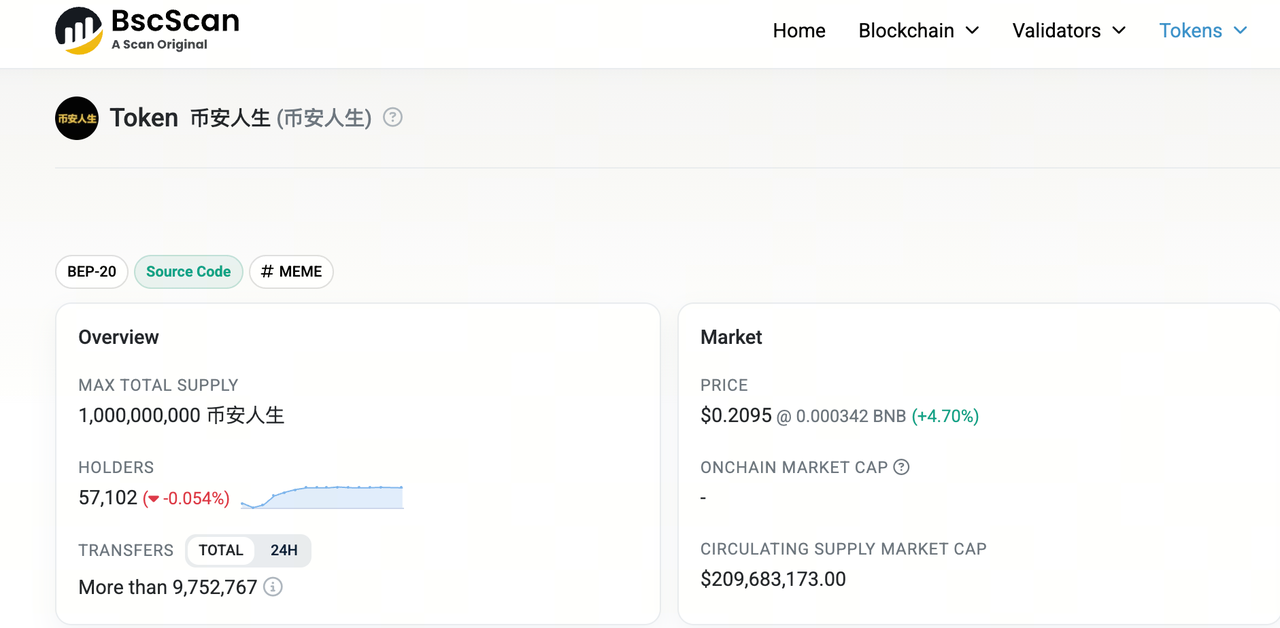
As a Meme narrative concept, “Binance Life” has also led to the creation of a namesake Meme token during its spread within communities. However, it is important to distinguish between the two: the former is a cultural and behavioral narrative, while the latter is a community-derived asset built on that narrative.

From an industry evolution standpoint, the crypto market is transitioning from a “technology-driven stage” to a “narrative and attention-driven stage.” Against this backdrop, “Binance Life” serves as a clear example of how platform behavior becomes cultural symbolism, with trading itself transformed into a shareable Meme expression.
Meme tokens typically do not rely on complex technology. Instead, they revolve around low-barrier issuance and high-intensity dissemination. Their core value does not come from cash flow or underlying assets, but from community consensus and the ability of a narrative to spread.
Within this structure, value formation depends on the combination of three forces: the level of community participation, the intensity of emotional spread, and the persistence of the narrative. In the case of “Binance Life,” where both narrative and token coexist, value depends more on the continued reinforcement of community consensus than on intrinsic financial returns.
As one of the world’s leading crypto ecosystems by trading volume, Binance provides a concentrated environment for high-frequency trading and rapid information flow. In this setting, user behaviors are repeatedly observed and gradually abstracted into cultural expressions.

“Binance Life” emerged as a symbolic outcome of this environment, integrating trading behavior, market volatility, and user sentiment into a unified narrative that reflects the collective experience of crypto participants.
The spread of Meme tokens typically follows a recognizable emotional diffusion path:
Key opinion leaders or core users initiate discussions, followed by community-driven secondary creations such as memes, short videos, and jokes, which then spread across multiple platforms to create emotional resonance.
In this process, the “Binance Life” label amplifies both narrative visibility and token attention, making it a dual carrier of culture and asset awareness.
Binance Life, BUILDon, and Dogecoin all belong to the Meme narrative ecosystem, but their structural origins differ significantly.
Dogecoin originated from internet culture, specifically the Doge meme, making it a native Meme asset. BUILDon leans more toward community collaboration, where value emerges through participation and co-creation. “Binance Life,” by contrast, originates from exchange-based user behavior, representing a platform-driven cultural symbol formed over time.
Structurally, Dogecoin emphasizes entertainment and culture, BUILDon focuses on organizational collaboration, while “Binance Life” reflects an abstraction of behavioral narratives.
Because “Binance Life” is fundamentally a narrative symbol, its value assessment is highly dependent on emotional dissemination, making it prone to cognitive biases. Common issues include mistaking cultural popularity for investment signals, interpreting short-term discussion as long-term value, and equating community sentiment with fundamental asset strength.
These biases stem from the common “separation between narrative and value” found in Meme assets, where perception is easily influenced by the intensity of dissemination.
The “Binance Life” token is a community-derived crypto asset built on this Meme narrative. However, it is not an official project issued by Binance, nor does it represent any endorsement from the exchange.
Its value is primarily driven by community spread, narrative popularity, and market sentiment, rather than underlying assets or institutional backing.
“Binance Life” is both a Meme narrative symbol and the foundation for a namesake Meme token. Through continuous social dissemination, it is repeatedly reinterpreted within the Binance ecosystem, becoming a representative case of “narrative-driven asset perception” in crypto culture.
This phenomenon highlights a broader shift in the crypto market toward a “narrative-driven cognition” phase, where community culture and tokenized expression jointly shape how value is understood.
It is both a Meme narrative concept and a namesake Meme token, but they are distinct: one is a cultural narrative, the other is a community-derived asset.
No. It is a community-created Meme token with no direct connection to Binance.
Because the crypto market heavily relies on attention and consensus-driven dissemination.
Dogecoin is a native Meme coin, while Binance Life is a platform-derived cultural symbol.
Primarily community dissemination, emotional consensus, and the persistence of the narrative.