As the BTCFi, or Bitcoin DeFi, concept continues to gain momentum, the market is paying renewed attention to Bitcoin’s on-chain financial capabilities. In the past, Bitcoin was mostly viewed as a store-of-value asset and lacked mature DeFi infrastructure. In recent years, the development of technologies such as Stacks, sBTC, and BitVM has given Bitcoin stronger smart contract and asset expansion capabilities.
Zest Protocol is one of the BTCFi protocols that has emerged in this context. Its goal is to build a lending market that is closer to the native Bitcoin ecosystem and provide infrastructure support for the future Bitcoin Layer2 financial system.
What Is the Background Behind Zest Protocol?
Bitcoin has long been the digital asset with the highest market capitalization in the crypto market. Yet compared with Ethereum, its on-chain financial ecosystem has developed at a relatively slow pace. Ethereum quickly built lending, DEX, stablecoin, and derivatives markets through smart contracts, while Bitcoin has mainly served as a store of value and an on-chain settlement network. As a result, large amounts of BTC have remained underutilized for long periods.
The rise of BTCFi has begun to change this trend. BTCFi refers to the decentralized finance ecosystem built around Bitcoin. Its goal is to provide BTC with more on-chain financial applications while preserving Bitcoin’s security and decentralization. As Layer2 technologies, cross-chain bridges, and Bitcoin smart contract solutions continue to develop, more protocols are exploring BTC lending, BTC yield assets, and Bitcoin-native stablecoin markets.
Zest Protocol is positioned as lending infrastructure for Bitcoin DeFi. Its core directions include:
-
BTC-collateralized lending
-
Native BTC yield markets
-
Bitcoin Layer2 financial protocols
-
BTCFi liquidity infrastructure
-
BTC credit markets for institutions and individuals
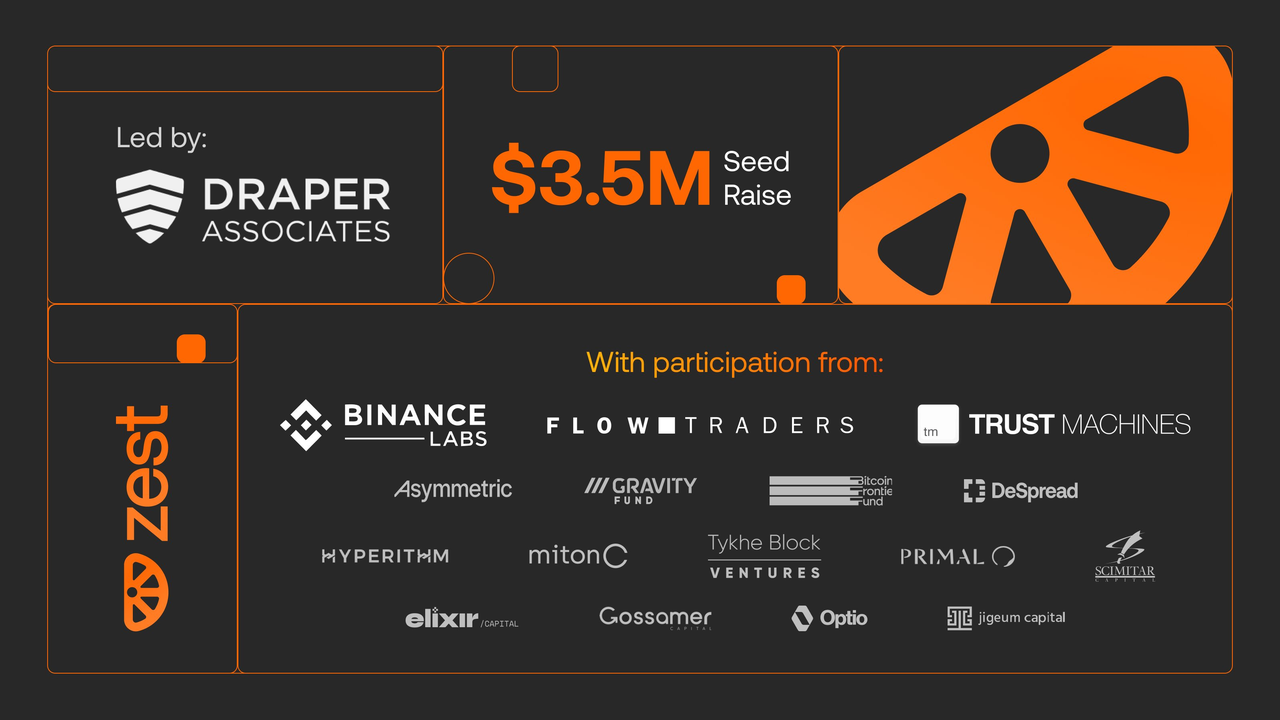
In May 2024, Zest completed a $3.5 million seed funding round led by Tim Draper, with participation from Binance Labs, Flow Traders, Trust Machines, and others.
How Does Zest Protocol Work?
Zest Protocol uses an overcollateralized lending model, similar to Aave and MakerDAO in Ethereum DeFi, but its asset structure and underlying environment are more closely aligned with the Bitcoin ecosystem.
Users first need to deposit assets such as BTC, sBTC, or STX into the protocol as collateral. The system calculates the user’s maximum borrowing capacity based on the collateral ratio. Borrowers can then borrow stablecoins or other assets, while depositors can earn yield through protocol interest rates.
The overall process mainly includes the following components:
| Function |
Role |
| Collateral deposit |
Users provide assets such as BTC, sBTC, and STX |
| Lending market |
The system calculates interest rates based on liquidity |
| Liquidation mechanism |
Risk liquidation is triggered when the collateral ratio is insufficient |
| Yield distribution |
Depositors receive interest income from lending |
| Smart contract execution |
On-chain logic is completed through the Stacks network |
Unlike Ethereum DeFi, the native Bitcoin network does not support complex smart contracts. For this reason, Zest Protocol mainly implements on-chain lending logic through the Stacks network and uses assets such as sBTC to expand Bitcoin’s financial capabilities.
What Roles Do Stacks and sBTC Play in Zest Protocol?
Stacks is a Layer2 network built on Bitcoin. It allows developers to run smart contracts and decentralized applications on top of Bitcoin’s security. Most of Zest Protocol’s lending logic relies on Stacks.
sBTC is a Bitcoin-pegged asset in the Stacks ecosystem. Its goal is to allow BTC to participate in smart contract interactions while maintaining a 1:1 relationship with BTC. Through sBTC, users can bring Bitcoin liquidity into Zest Protocol’s lending market.
The combination of Stacks and sBTC allows native Bitcoin assets to enter DeFi use cases, while Zest Protocol becomes an important financial application layer for those assets.
At present, Bitcoin Layer2 and BTCFi are still in the early stages of development. However, as the Nakamoto Upgrade and more Bitcoin smart contract solutions go live, BTCFi infrastructure is gradually becoming more mature.
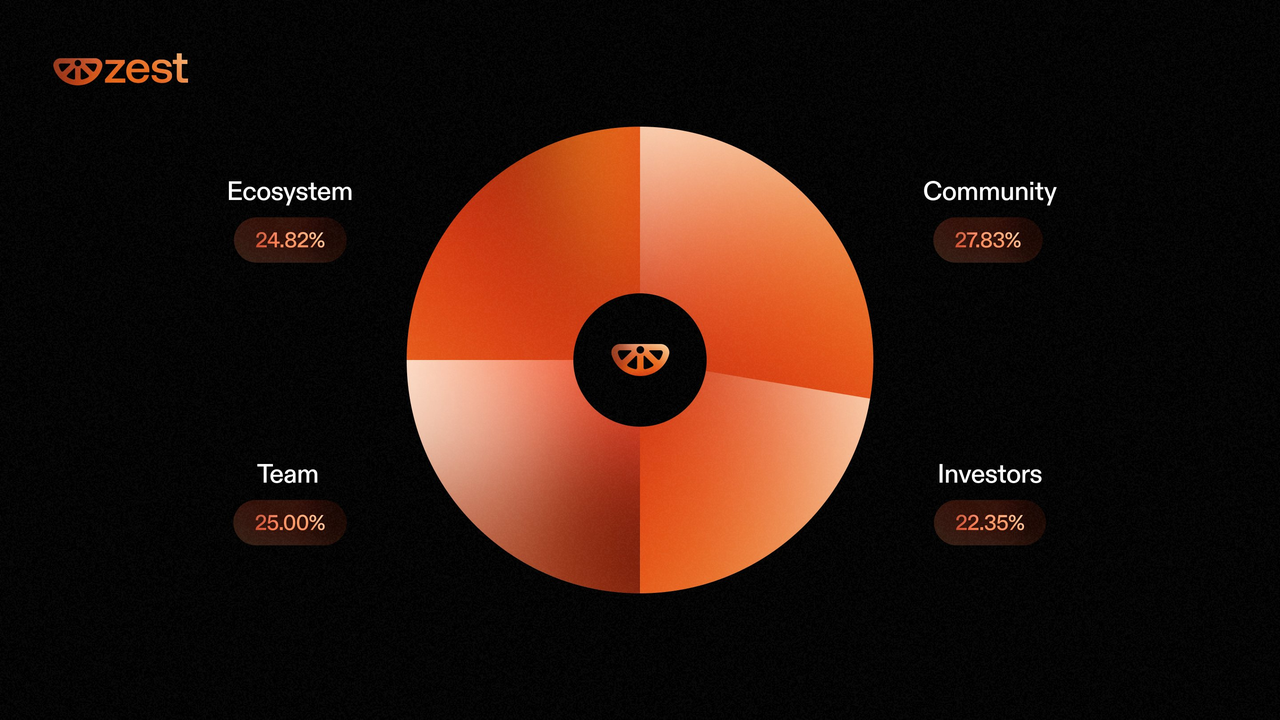
Zest Protocol Tokenomics
What Core Products Does Zest Protocol Support?
Zest Protocol is not just a single lending protocol. Its ecosystem also includes several BTCFi-related products.
BTC Borrow Market
BTC Borrow Market is Zest’s core lending market. It allows users to borrow stablecoin assets against BTC and sBTC collateral, improving the capital efficiency of BTC.
BTCz Yield Asset
BTCz is a yield-bearing BTC asset launched by Zest. Its goal is to provide users with an on-chain source of yield while maintaining BTC exposure.
Bitcoin Collateral Vaults
Bitcoin Collateral Vaults are an important direction Zest is advancing. Their goal is to enable Bitcoin-native collateralized lending without relying on the traditional custodial Wrapped BTC model.
This structure aims to reduce cross-chain bridge risk and improve the security of Bitcoin-native financial markets.
How Is Zest Protocol Different from Aave?
Zest Protocol and Aave are both decentralized lending protocols, but their underlying ecosystems and asset structures are clearly different.
| Comparison Dimension |
Zest Protocol |
Aave |
| Core Ecosystem |
Bitcoin / Stacks |
Ethereum |
| Core Assets |
BTC, sBTC |
ETH, USDC, and others |
| Smart Contract Environment |
Bitcoin Layer2 |
Ethereum EVM |
| Main Goal |
BTCFi lending |
General DeFi lending |
| Development Stage |
Early-stage BTCFi |
Mature DeFi |
Ethereum DeFi already has mature liquidity and an established application ecosystem, while BTCFi is still in the infrastructure-building stage. For this reason, Zest Protocol plays more of a role as a builder of Bitcoin-native financial markets.
What Risks Does Zest Protocol Face?
BTCFi is still an emerging field, so Zest Protocol faces several potential risks.
Smart Contract Risk
Although Stacks smart contracts emphasize security, on-chain protocols always carry the risk of vulnerabilities or attacks.
Liquidity Risk
Compared with Ethereum DeFi, the overall liquidity scale of Bitcoin Layer2 is still relatively small, which may affect lending efficiency and market depth.
Liquidation Risk
When the market price of BTC fluctuates sharply, users’ collateral positions may be forcibly liquidated by the system.
Cross-Chain and Custody Risk
Some BTCFi structures still rely on bridged assets and cross-chain mechanisms, which may create custody and bridge security risks.
Regulatory Uncertainty
As global regulators pay closer attention to DeFi and stablecoin markets, BTCFi protocols may face new regulatory requirements in the future.
Why Is BTCFi Attracting Market Attention?
Bitcoin has long had a massive asset base, but its on-chain financial activity has been relatively limited. The core logic of BTCFi is to allow BTC to exist not only as a store-of-value asset, but also as an asset that can participate in lending, yield, liquidity, and stablecoin markets, similar to ETH.
This trend means the Bitcoin ecosystem may gradually expand from “digital gold” into a complete on-chain financial system.
BTCFi protocols, including Zest Protocol, are trying to build:
-
Bitcoin-native lending markets
-
BTC stablecoin systems
-
BTC yield assets
-
Bitcoin Layer2 financial infrastructure
-
Native BTC collateral models
As more capital and developers enter the BTCFi sector, competition in the Bitcoin DeFi market is also intensifying.
Conclusion
As a decentralized lending protocol in the Bitcoin DeFi ecosystem, Zest Protocol mainly expands Bitcoin’s financial capabilities through the Stacks network and sBTC assets. Its goal is to allow BTC to participate in lending, yield generation, and on-chain liquidity markets while preserving Bitcoin’s security.
As the BTCFi concept develops rapidly, more protocols are beginning to explore Bitcoin-native financial infrastructure, and Zest Protocol is one of the important lending protocols in this area. Although BTCFi is still at an early stage, the development of Bitcoin Layer2, sBTC, and native BTC collateral models is helping Bitcoin evolve from a pure store-of-value asset into a productive asset that can participate in on-chain financial activity.
FAQs
Does Zest Protocol Support Native BTC?
Zest Protocol is advancing structures such as Bitcoin Collateral Vaults, aiming to enable a collateralized lending model that is closer to native BTC.
What Is BTCFi?
BTCFi is short for Bitcoin DeFi. It refers to the lending, stablecoin, yield asset, and on-chain financial ecosystem built around Bitcoin.
Which Chain Is Zest Protocol Built On?
Zest Protocol mainly runs on the Stacks network and connects to the Bitcoin network through Stacks.
Is ZEST a Governance Token?
ZEST is generally used in governance and incentive structures within the protocol ecosystem, but the specific tokenomics should be based on official information.
How Is Zest Protocol Different from Aave?
Zest Protocol is focused on the Bitcoin DeFi market, while Aave is mainly built within the Ethereum DeFi ecosystem. The two differ clearly in asset structure and underlying network.