Internet advertising has long depended on centralized platforms. Advertising platforms collect user data to deliver targeted ads and take the largest share of advertising revenue. Users contribute browsing behavior, interest preferences, and attention value, yet rarely receive any direct return. At the same time, problems such as data misuse, ad fraud, and poor ad experiences have become increasingly visible, creating an efficiency and trust crisis for the traditional digital advertising model.
As blockchain technology has developed, the advertising industry has begun exploring more transparent ways to distribute value. Basic Attention Token (BAT) emerged in this context. By using blockchain and token based incentives, it redefines how advertising value circulates, allowing users to benefit from their own attention while giving advertisers a more efficient and transparent environment for ad delivery.
What Is Basic Attention Token (BAT)?
As a utility token issued on Ethereum, Basic Attention Token (BAT) mainly serves the digital advertising ecosystem of the Brave browser. It is used to reward users for viewing ads, help advertisers pay for advertising, and allow content creators to earn income.
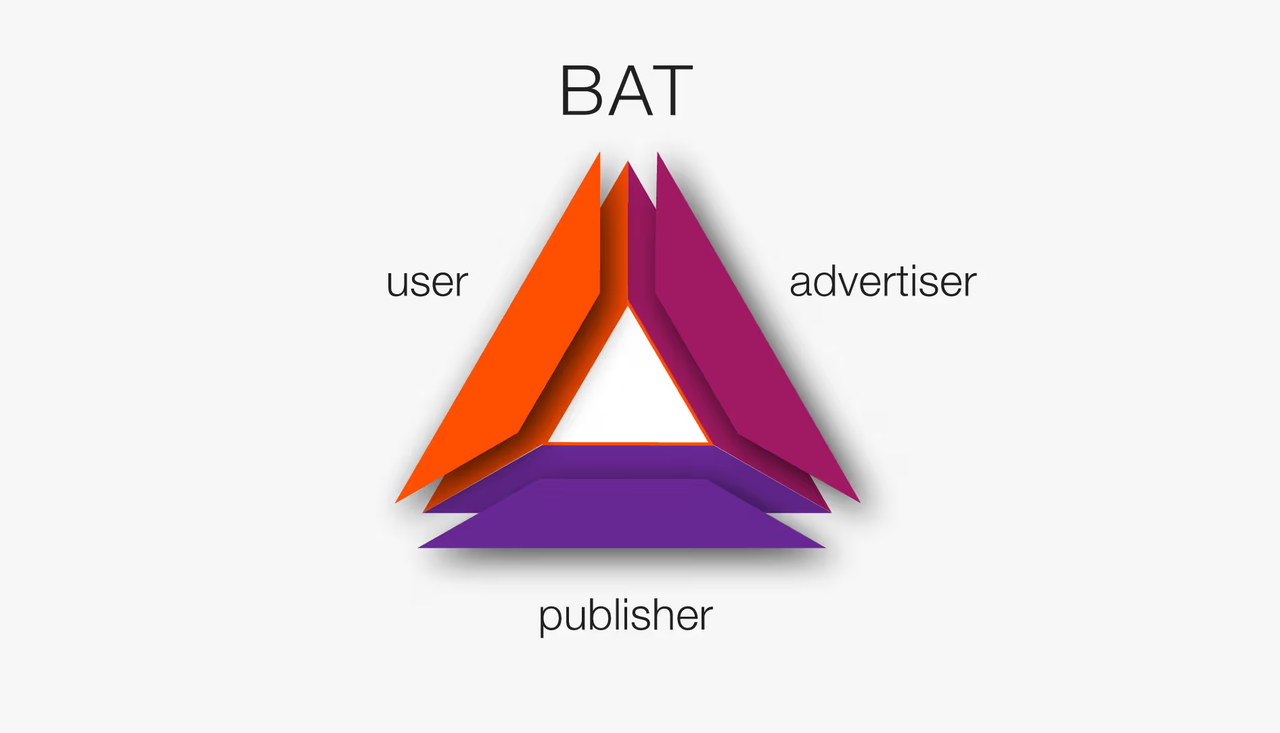
BAT’s core idea is to treat user “attention” as a measurable asset and use blockchain technology to build a transparent exchange mechanism for advertising value. Under this model, advertisers no longer pay only the platform. Instead, they use BAT to distribute part of that value to users and creators, creating a fairer advertising ecosystem.
How Does the Brave Browser Advertising Ecosystem Work?
Brave browser has built an advertising system centered on privacy protection. Users can choose to enable Brave Rewards, receive ad notifications in the browser, and earn BAT rewards for viewing ads. Ad matching is mainly completed on the local device and does not depend on centralized user data collection, which helps improve privacy protection.

Advertisers purchase advertising services through the Brave platform and use BAT to pay for ads. The platform then distributes part of the BAT to users and creators, allowing ad budgets to reach participants across the ecosystem. Compared with traditional platforms, this model reduces intermediary layers and improves the efficiency of ad revenue distribution.
What Is BAT’s Value Flow Mechanism?
The value flow of BAT mainly takes place among advertisers, users, and content creators. Advertisers pay BAT for ad delivery, users earn BAT rewards by viewing ads, and content creators can receive BAT through user tips or ad revenue sharing.
This mechanism prevents advertising value from being concentrated only in the hands of advertising platforms. Instead, value is distributed to the participants who actually contribute to the ecosystem. Users contribute attention, creators contribute content, and advertisers gain exposure opportunities. BAT serves as the medium for value settlement, forming a complete advertising incentive loop.
What Are the Main Uses of BAT?
The first core use of BAT is advertising payment. Advertisers use BAT in the Brave advertising ecosystem to purchase ad placements and pay costs based on ad delivery performance. BAT therefore becomes an important medium for the flow of advertising budgets.
The second use is user rewards. Users earn BAT by viewing privacy focused ads pushed by Brave, allowing the value of personal attention to receive a direct return. BAT can also be used to incentivize content creators. Users may tip BAT to website publishers, video creators, and other ecosystem participants, supporting content monetization.
How Does BAT Improve Digital Advertising Efficiency?
In the traditional advertising model, a large amount of budget is spent on intermediary platforms and invalid traffic. The BAT model improves the use of ad budgets by reducing intermediary layers. Advertisers’ spending can be converted more directly into real user engagement and content creator income.
At the same time, Brave browser reduces the risk of exposing users’ private data through local ad matching, enabling targeted ad delivery while protecting privacy. This model improves user acceptance and the advertising experience, which in turn can raise overall ad conversion efficiency.
What Challenges Does BAT Face?
Although BAT introduces an innovative model for distributing advertising revenue, its ecosystem expansion still faces certain challenges. BAT’s main use cases are concentrated inside the Brave browser, and its value growth depends heavily on the expansion of Brave’s user base. When user growth is limited, advertiser demand and token circulation may also be affected.
In addition, traditional digital advertising platforms still hold advantages in market scale and advertising resources. For BAT to become competitive in the broader advertising market, it needs to further expand ecosystem coverage and strengthen advertisers’ acceptance of decentralized advertising models.
Conclusion
Basic Attention Token (BAT) creates a new value distribution mechanism for the digital advertising industry by tokenizing user attention. Within the Brave browser ecosystem, advertisers, users, and content creators can use BAT to exchange value more transparently and efficiently, improving the problems of revenue concentration and privacy intrusion found in traditional advertising models.
As Web3 places greater emphasis on user data sovereignty and intermediary free value distribution, BAT demonstrates the application potential of blockchain technology in the advertising industry. Although its development remains limited by ecosystem scale, BAT, as an important practice in the attention economy, offers a new direction for innovation in digital advertising models.
FAQs
Is BAT the native token of the Brave browser?
Yes. BAT is the core token of the Brave browser advertising ecosystem, used for ad payments, user rewards, and creator revenue distribution.
How do users earn BAT rewards?
After enabling Brave Rewards, users can earn BAT rewards by viewing privacy preserving ads in the browser.
Can BAT only be used in the Brave browser?
BAT’s main use case is within the Brave ecosystem, but as an ERC-20 token, it can also be stored in compatible wallets and traded.
How is BAT different from traditional advertising points?
BAT runs on blockchain and has transferable and tradable properties, while traditional advertising points are usually limited to use within a closed platform.
Where does BAT’s value come from?
BAT’s value mainly comes from advertisers’ demand for Brave advertising services, as well as its practical use cases in user rewards and creator incentives.